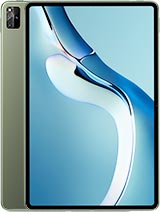
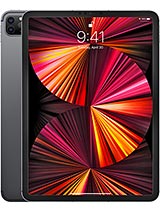
Apple iPad Pro 11 2021 review
Best suited to creative professionals and power users who need M1-class performance, Thunderbolt 4 connectivity, and a large screen in a portable form, and who already own or heavily use professional Mac software. Anyone shopping today should compare it directly to the current iPad Pro and iPad Air to understand whether a three-year-old LCD screen and camera suite justify the €870 price against what is available now.
This review is written with AI assistance from Apple’s published specifications and public benchmark data for the Apple iPad Pro 11 2021, and the rating is spec-based. GoSolo does not physically test devices; where we estimate real-world behaviour such as battery life or charge time, we say so. How we rate phones.
Overview
The iPad Pro 11 (2021) pairs M1 desktop-class power with a 120Hz Liquid Retina display and Thunderbolt 4 connectivity, making it the tablet for users who need a laptop replacement or serious creative work. The 5G option and long battery life are real strengths, but its 2021 positioning means newer iPad Pro models now offer better cameras, OLED screens, and more RAM at comparable prices.
Design & Build
The iPad Pro 11 is among the thinnest and lightest tablets on the market, at 5.9mm and 466g (Wi-Fi). The aluminum frame and glass back give it a clean, professional feel, and the flat edges follow the design language Apple settled on in recent years. However, the thin frame is not as rigid as it looks. Pressure or a drop will dent or bend it—a real durability concern for a device costing north of €800. The glass front scratches easily and can crack if mishandled. For professionals carrying this daily in bags, a case is almost mandatory, which negates the thinness advantage.
Display
The 11-inch Liquid Retina IPS LCD with 120Hz refresh, 600-nit brightness, and HDR10/Dolby Vision support is the strong point here. Scrolling is fluid, colors are punchy, and the 1668×2388 resolution (265 ppi) is sharp enough for text and detailed work. Brightness is sufficient for most indoor and outdoor use, though direct sunlight viewing requires angle adjustment—a known LCD limitation. The real caveat is that this is LCD, not OLED. By 2021 standards and certainly by 2026, the contrast feels hollow next to modern iPad Pro models with M2 and beyond; blacks are grayed-out, and color accuracy shifts noticeably when viewed off-angle. For a €870 device, that's a step backward compared to what flagship Android tablets and newer iPad Pros have shipped with.
Performance
The M1 chip (the same silicon in the 2020 MacBook Air) is desktop-grade silicon. It handles Adobe Premiere, Affinity Designer, Autodesk Fusion 360, and similar professional apps without hesitation. Multitasking across ten apps is seamless, video export finishes in minutes rather than hours, and 3D rendering in real-time is smooth. The 8-core GPU manages 4K 60fps video playback and complex 3D scenes without stutter. For a tablet, this is overkill in the best way—you are not hitting performance ceilings on creative work, coding, or data analysis. The 8GB RAM base is lean for a workstation, but the 16GB options in the 1TB and 2TB configs are appropriate for heavy lifting. This remains one of the fastest tablets ever made, even in 2026.
Software
iPadOS 14.5.1 at launch, with the ability to upgrade to iPadOS 26.4, ensures this device will stay current for years. Apple's track record of OS support is the longest in tablets. The M1 paired with iPadOS means you get a closer-to-Mac experience than traditional iPad software usually allows—professional apps run here that would never land on entry-level iPads. iPadOS itself has matured into a productive environment for real work, though it still lags macOS in file management, window management, and multitasking granularity. For many users, this is more than enough.
Camera
The rear camera setup is where the iPad Pro feels like a compromise. The 12MP main sensor with f/1.8 aperture, dual-pixel autofocus, and quad-LED flash captures sharp stills and video, but 12MP is modest for a 2021 flagship tablet. The 10MP ultrawide at 125° is useful for landscape shots and group photos, and the LiDAR scanner adds AR capability and depth sensing. Video quality is strong—4K up to 60fps with gyro stabilization—but the sensor limits low-light performance and fine detail. The 12MP front ultrawide is fine for video calls and selfies but adds nothing to creative work. Compared to 2021 rivals (Samsung Tab S7, etc.) and especially newer iPad Air models (which now pack better optics), this camera suite feels neglected. On a device positioned for professionals, it is a sore point.
Battery & Charging
The 7538 mAh battery delivers roughly 10 to 12 hours of mixed use, video playback, or creative work on one charge. Heavy 5G use or sustained video editing can trim an hour or two off that figure. Charging details are absent from the spec sheet, but Apple's typical 20W charger for iPad Pro is slow by modern standards. Fast-charging options are available in higher-tier configs, but charge time is not listed here. For a device aimed at professionals on the go, an all-day battery is essential, and this one delivers that. However, the slow default charger means topping up overnight is the practical reality.
Value & Verdict
At €870 (the listed price), this iPad Pro makes sense if you need laptop-replacement performance in a thin tablet form factor and benefit from Thunderbolt 4 connectivity for external storage and display output. The M1, 120Hz display, and up-to-2TB storage align it with creative professionals running desktop-class software. However, by 2026, you should seriously consider newer iPad Pro models—they offer OLED screens (a real upgrade from LCD), better rear cameras, M2 or later silicon, and often similar pricing for entry-level configs. The 2021 model is not obsolete, but it is no longer the best value in Apple's tablet lineup. For budget-conscious buyers, iPad Air offers most of the performance at a lower price; for professionals needing the absolute best, the latest iPad Pro is the move.
Verdict
Best suited to creative professionals and power users who need M1-class performance, Thunderbolt 4 connectivity, and a large screen in a portable form, and who already own or heavily use professional Mac software. Anyone shopping today should compare it directly to the current iPad Pro and iPad Air to understand whether a three-year-old LCD screen and camera suite justify the €870 price against what is available now.
- M1 chipset handles desktop apps, video editing, and CAD work as well as a MacBook; the 8-core GPU manages 4K playback and complex 3D rendering without stutter.
- 120Hz Liquid Retina display with 600 nits brightness and HDR10/Dolby Vision support makes scrolling and media consumption smooth and vibrant for a tablet in this class.
- Thunderbolt 4 and USB-C 4 connectivity enable fast external storage, external display output, and desktop-speed file transfers—rare on tablets even now.
- Up to 2TB storage with 16GB RAM in top configs supports heavy video editing, design work, and large file management without needing external drives.
- The 12MP main camera is dated for a 2021 flagship tablet; even iPad Air models now shoot 12MP with better optics, and competing tablets offer higher resolution or sensor upgrades.
- Liquid Retina LCD, not OLED: contrast and blacks lag behind newer iPad Pro and high-end Android tablets; colors shift when viewed off-angle in ways users of modern displays may notice.
- 466g (Wi-Fi) is respectable weight, but the thin 5.9mm aluminum frame lacks rigidity—it bends under pressure and dents if dropped, a concern for a device at this price point.
Apple iPad Pro 11 2021 Key Specifications
The essentials at a glance. See the full spec sheet.
| Released | 2021, April 20 |
|---|---|
| Display | 11.0 inches, 366.5 cm2 (~82.9% screen-to-body ratio), Liquid Retina IPS LCD, 120Hz, HDR10, Dolby Vision, 600 nits (typ) |
| Resolution | 1668 x 2388 pixels (~265 ppi density) |
| Chipset | Apple M1 |
| RAM & storage | 128GB 8GB RAM, 256GB 8GB RAM, 512GB 8GB RAM, 1TB 16GB RAM, 2TB 16GB RAM |
| Main camera | 12 MP, f/1.8, (wide), 1/3.0", 1.22µm, dual pixel PDAF 10 MP, f/2.4, 125˚ (ultrawide) TOF 3D LiDAR scanner (depth) |
| Selfie camera | 12 MP, f/2.4, 122˚ (ultrawide) |
| Battery | 7538 mAh |
| Software | iPadOS 14.5.1, upgradable to iPadOS 26.4 |
| Dimensions | 247.6 x 178.5 x 5.9 mm (9.75 x 7.03 x 0.23 in) |
| Weight | 466 g (Wi-Fi), 470 g (5G) (1.03 lb) |
| Build | Glass front, aluminum back, aluminum frame |
| Durability | Stylus support |
| Network | GSM / CDMA / HSPA / EVDO / LTE / 5G |
| NFC | No |
| USB | USB Type-C 4 (Thunderbolt 4), DisplayPort, magnetic connector |
Apple iPad Pro 11 2021 FAQ
Common questions, answered from the spec sheet.
Does the iPad Pro 11 2021 support 5G?
Yes. The iPad Pro 11 2021 supports 5G networks.
What chipset does the iPad Pro 11 2021 use?
The iPad Pro 11 2021 runs on the Apple M1.
What display does the iPad Pro 11 2021 have?
A 11.0 inches, 366.5 cm2 (~82.9% screen-to-body ratio) Liquid Retina IPS LCD, 120Hz, HDR10, Dolby Vision, 600 nits (typ), 1668 x 2388 pixels (~265 ppi density).
How big is the iPad Pro 11 2021 battery?
The iPad Pro 11 2021 has a 7538 mAh battery.
Does the iPad Pro 11 2021 have NFC?
No, the iPad Pro 11 2021 does not list NFC support.
Is the iPad Pro 11 2021 water resistant?
The iPad Pro 11 2021 carries a Stylus support rating.
Does the iPad Pro 11 2021 support a microSD card?
No, the iPad Pro 11 2021 does not support expandable storage.
Alternatives to consider
If the iPad Pro 11 2021 isn’t quite right, these are the closest calls.
![iPad Pro 11-inch (5th generation) [2021] product photo](https://api.mobileapi.dev/devices/874/thumb.png)
iPad Pro 11-inch (5th generation) [2021]
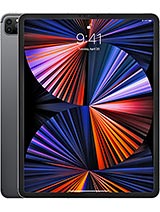
iPad Pro 12.9 2021
![iPad Pro 12.9-inch (5th generation) [2021] product photo](https://api.mobileapi.dev/devices/867/thumb.png)
iPad Pro 12.9-inch (5th generation) [2021]
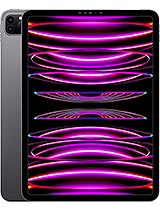
iPad Pro 11 2022
Pad 5 Pro