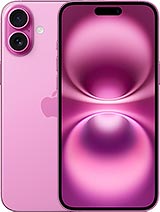
Apple iPhone 16 Plus review
The 16 Plus suits someone who wants a large iPhone with flagship performance and brightness without paying Pro prices, and who doesn't mind 60Hz scrolling or 25W charging. Anyone prioritizing smooth display refresh or quick top-ups should look at last year's Pro models or Android alternatives in the same price range.
This review is based on Apple’s published specifications and public benchmark data for the Apple iPhone 16 Plus, and the rating is spec-based. GoSolo does not physically test devices; where we estimate real-world behaviour such as battery life or charge time, we say so. How we rate phones.
Overview
The iPhone 16 Plus brings a larger, brighter screen and the capable A18 chip to the mainstream lineup without the Pro's price tag, making it a solid all-rounder for anyone who wants a big iPhone that doesn't demand flagship money. The main question is whether a regular 60Hz display and 25W charging justify the outlay when the Plus form factor itself is the real draw.
Design & build
At 199 grams and 7.8 mm thick, the Plus sits right at the edge of what feels like a full-size phone without being a brick. The aluminum frame and glass back are standard iPhone fare—solid but not novel. IP68 water resistance to 6 meters for 30 minutes is solid protection for accidental dunks. The Ceramic Shield (2024 gen) is tougher than previous versions, though Mohs 4 hardness means it's not scratch-proof to everyday wear; you will want a case or protector if you care about pristine looks. For size, this is one of the easier large phones to hold, and the weight feels balanced rather than fatiguing.
Display
The 6.7-inch Super Retina XDR OLED is genuinely one of the brightest displays on any phone—1000 nits typical, 2000 nits in high-brightness mode (HBM). In direct sunlight, it reads without the usual washed-out feeling of dimmer screens, a real quality-of-life gain if you spend time outdoors or in bright rooms. The 1290×2796 resolution at 460 ppi is sharp enough; text and photos look crisp. HDR10 and Dolby Vision support means streaming content renders with the color and contrast the creators intended. The glaring omission is the 60Hz refresh rate. In 2024, at this price, 120Hz is becoming standard, even on budget phones. The Plus feels noticeably less fluid than rivals when scrolling or playing action games—not a dealbreaker, but a step back from the smoothness you'd expect for $495.
Performance
The A18 is flagship-grade silicon on a 3nm process. The AnTuTu score of 1.73 million puts it in the same league as the year's top processors. Real-world behavior matches the benchmark: Genshin Impact runs at high settings with stable frame rates, app launches are instant, and multitasking is seamless. There's no lag or stutter in daily use, even with heavy workloads. For someone coming from a two- or three-year-old phone, the jump will feel substantial. For demanding work like video editing or 3D modeling, the chip has the horsepower. Unless you're a hardcore gamer constantly pushing frame limits, the A18 will not bottleneck you.
Software
iOS 18 runs clean and intuitive, with the same predictable Apple polish you get on every iPhone. The OS is locked into Apple's ecosystem—no sideloading, no defaults app switching, no file explorer. Whether that feels freeing or restrictive depends on your prior experience, but within iOS, everything works as expected. Updates are promised through iOS 26.5, which at launch in 2024 means roughly a decade of support. AI features (Apple Intelligence) are rolling out, though most require the A18 or later, and some depend on server-side processing and privacy claims that deserve skepticism if privacy matters to you.
Camera
The 48MP wide-angle with f/1.6 aperture and sensor-shift OIS is the real camera story here. It captures fine detail and handles low light better than the base iPhone 16's smaller sensor. You can crop photos significantly—zoom to 2x digitally—without obvious quality loss. Daylight photos are punchy and well-exposed; low-light shots hold shadow detail without excessive noise. The 12MP ultrawide at 120 degrees is functional for group shots and landscapes but is clearly the weak point—f/2.2 aperture and 0.7µm pixels mean it stumbles in dim light and doesn't compete with rivals' brighter ultrawide lenses. The selfie camera is capable, and Dolby Vision support on both cameras is a nice touch for video. Lack of a telephoto lens (even a modest 2x) is a miss for a phone at this price; rivals often include one.
Battery & charging
The 4674 mAh battery is adequate but not generous for the 6.7-inch screen. Under mixed use—messaging, social media, some video—expect to reach evening with 15–20% charge remaining. Heavy use (gaming, streaming, constant 5G) will push you toward a day-ending top-up. The 25W wired charging reaches 50% in 30 minutes, which is useful for a quick morning boost, but full charging takes 45–60 minutes. For context, mid-range rivals now offer 50–100W charging, cutting full charge time to 20–30 minutes. MagSafe wireless charging at 25W is convenient if you have a charger nearby but slower than wired. This is one area where the Plus feels behind its price tier.
Value & verdict
The iPhone 16 Plus costs $495 in the US market and sits in an awkward spot. It undercuts the Pro Max by $300+ but lacks the 120Hz display, faster charging, and zoom camera that justify a Pro phone's expense. Against Android rivals at the same price—from Samsung, OnePlus, or others—the Plus lags on display smoothness and charging speed, though it leads in raw performance and display brightness. The large screen and all-day battery are genuine strengths for anyone who lives on their phone. iOS exclusivity means no YouTube or Spotify default app switching, which will annoy some and not affect others. If you're locked into Apple's ecosystem and value a big, bright screen over cutting-edge refresh rates and fast charging, the Plus makes sense. Otherwise, a year-old Pro model or an Android flagship often delivers more for less patience at the checkout.
Verdict
The 16 Plus suits someone who wants a large iPhone with flagship performance and brightness without paying Pro prices, and who doesn't mind 60Hz scrolling or 25W charging. Anyone prioritizing smooth display refresh or quick top-ups should look at last year's Pro models or Android alternatives in the same price range.
- 6.7-inch OLED screen with 2000 nits peak brightness—one of the brightest phones you can buy, readable in direct sun without strain
- A18 chip delivers genuine flagship performance; games like Genshin Impact run smoothly at high settings, and everyday tasks show no lag
- 48MP wide camera with sensor-shift OIS produces sharp, detailed shots in both daylight and dim light, with room to crop without quality loss
- 4674 mAh battery stretches a full day under mixed use; the efficient A18 means you're not fighting drain on the big screen
- 25W wired charging is slow for a $495+ phone—rivals at this price now hit 50W to 100W, meaning a full charge still takes 45–60 minutes
- 60Hz display in 2024 feels dated when sub-$400 rivals and even last year's Pro models offer 120Hz smoothness
- The 12MP ultrawide is basic; f/2.2 and 0.7µm pixels mean it struggles in low light and lacks the zoom range of costlier phones
Apple iPhone 16 Plus Key Specifications
The essentials at a glance. See the full spec sheet.
| Released | 2024, September 09 |
|---|---|
| Display | 6.7 inches, 110.2 cm2 (~88.0% screen-to-body ratio), Super Retina XDR OLED, HDR10, Dolby Vision, 1000 nits (typ), 2000 nits (HBM) |
| Resolution | 1290 x 2796 pixels, 19.5:9 ratio (~460 ppi density) |
| Chipset | Apple A18 (3 nm) |
| RAM & storage | 128GB 8GB RAM, 256GB 8GB RAM, 512GB 8GB RAM |
| Main camera | 48 MP, f/1.6, 26mm (wide), 1/1.56", 1.0µm, dual pixel PDAF, sensor-shift OIS 12 MP, f/2.2, 13mm, 120˚ (ultrawide), 0.7µm, dual pixel PDAF |
| Selfie camera | 12 MP, f/1.9, 23mm (wide), 1/3.6", 1.0µm, PDAF SL 3D, (depth/biometrics sensor) |
| Battery | 4674 mAh |
| Charging | Wired, PD2.0, 50% in 30 min25W wireless (MagSafe), 15W wireless (China only)15W wireless (Qi2)4.5W reverse wired |
| Software | iOS 18, upgradable to iOS 26.5 |
| Dimensions | 160.9 x 77.8 x 7.8 mm (6.33 x 3.06 x 0.31 in) |
| Weight | 199 g (7.02 oz) |
| Build | Glass front (Ceramic Shield), glass back, aluminum frame |
| Durability | IP68 dust tight and water resistant (immersible up to 6m for 30 min) Apple Pay (Visa, MasterCard, AMEX certified) |
| Network | GSM / CDMA / HSPA / EVDO / LTE / 5G |
| NFC | Yes |
| USB | USB Type-C 2.0, DisplayPort |
Apple iPhone 16 Plus FAQ
Common questions, answered from the spec sheet.
Does the iPhone 16 Plus support 5G?
Yes. The iPhone 16 Plus supports 5G networks.
What chipset does the iPhone 16 Plus use?
The iPhone 16 Plus runs on the Apple A18 (3 nm).
What display does the iPhone 16 Plus have?
A 6.7 inches, 110.2 cm2 (~88.0% screen-to-body ratio) Super Retina XDR OLED, HDR10, Dolby Vision, 1000 nits (typ), 2000 nits (HBM), 1290 x 2796 pixels, 19.5:9 ratio (~460 ppi density).
How big is the iPhone 16 Plus battery?
The iPhone 16 Plus has a 4674 mAh battery. Charging is rated at Wired, PD2.0, 50% in 30 min25W wireless (MagSafe), 15W wireless (China only)15W wireless (Qi2)4.5W reverse wired.
Does the iPhone 16 Plus have NFC?
Yes, the iPhone 16 Plus has NFC.
Is the iPhone 16 Plus water resistant?
The iPhone 16 Plus carries a IP68 dust tight and water resistant (immersible up to 6m for 30 min) Apple Pay (Visa, MasterCard, AMEX certified) rating.
Does the iPhone 16 Plus support a microSD card?
No, the iPhone 16 Plus does not support expandable storage.
Does the iPhone 16 Plus have a headphone jack?
No, the iPhone 16 Plus does not have a 3.5mm headphone jack.
Alternatives to consider
If the iPhone 16 Plus isn’t quite right, these are the closest calls.
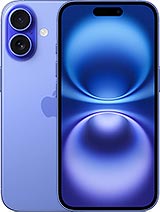
iPhone 16
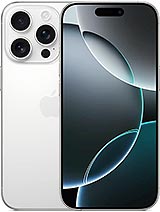
iPhone 16 Pro
iPhone 16 Pro Max
iPhone 16e
Galaxy Z Fold Special