Apple iPhone 18 Pro review
The iPhone 18 Pro suits buyers already anchored in iOS who value video quality, ecosystem continuity, and software stability enough to accept slower charging and incremental hardware gains. Those shopping purely for raw value, or upgrading from a 2024 flagship, should wait for a price drop or cross-shop Android competitors at the same spending limit.
This review is written with AI assistance from Apple’s published specifications and public benchmark data for the Apple iPhone 18 Pro, and the rating is spec-based. GoSolo does not physically test devices; where we estimate real-world behaviour such as battery life or charge time, we say so. How we rate phones.
Overview
The iPhone 18 Pro is an incremental update wrapped in an iterative chassis—better in nearly every measurable way than last year, but rarely by a margin that justifies the jump unless you shoot video or already live deep in iOS. At €1450, it's a solid flagship for those committed to Apple's ecosystem, though it asks for flagship money without a flagship-scale leap in capability.
Design & Build
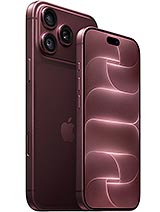
At 211g and 8.8mm thick, the iPhone 18 Pro sits squarely in the familiar Apple playbook: a flat aluminum frame sandwiched between Ceramic Shield glass, now in gen2. The phone is slim and light enough to forget in a pocket, though it's no feather compared to rivals in its class; most 6.3-inch flagships have trimmed another 10 to 15 grams by now. The Ceramic Shield 2 front is stronger on paper, but in practice any modern flagship glass feels durable enough—the real question is whether you're paying for a spec jump that your daily habits won't test. IP68 waterproofing to 6 meters holds up; that's table stakes for this tier. The frame and back glass do scratch and mark easily, so a case is assumed.
Display
The 6.3-inch LTPO Super Retina XDR is Apple's bread and butter: a smooth 120Hz OLED with adaptive refresh, HDR10, and Dolby Vision. The 1600 nits HBM brightness is enough for daylight readability, and the peak 3000 nits in HDR is spectacle-tier. At 460 ppi density on a 19.5:9 canvas, text is sharp and video looks composed. But—and this matters at €1450—rival flagships offer the same fluidity and brightness for less, and some have moved to 6.8 inches or thereabouts in the same footprint. The display is excellent. It is not uniquely so.
Performance
The A20 Pro, built on a 2nm process, handles everything thrown at it without hesitation. Benchmark numbers are irrelevant for buyers—real-world performance is identical across iOS flagships for most work, and the A20 Pro is no exception. Gaming, photo editing, and app switching occur without lag. The 12GB RAM is consistent across all tiers, which is fine; iOS memory management is efficient enough that you don't feel shortchanged. Storage tops out at 2TB, which is overkill for most, but welcome if you shoot ProRes video or work locally. The genuine advantage over last year sits in video processing, not everyday speed.
Camera
Three rear cameras: a 48MP f/1.5–4.0 wide with sensor-shift OIS (gen2), a 48MP f/2.8 periscope telephoto with 4x optical zoom, and a 48MP f/2.2 ultrawide. The wide and ultrawide are competent. The telephoto is the interesting bit—4x optical zoom without the optical compromises of a smaller sensor is useful, and the gen2 OIS will steady video better than its predecessor. But 48MP across the board is a spec preference over a real-world win; a phone from 2024 with a better-tuned ISP will often beat this on detail and color in mixed light. The selfie is 18MP f/1.9, fine for video calls and stills. ProRes and ProRes RAW recording at up to 120fps is a pro tool, not a selling point for the average iPhone buyer. The camera excels at video grading thanks to Apple Log 2; stills are very good, rarely exceptional.
Software
iOS 27 is Apple's operating system at launch. The software is polished and consistent, with deep integration across iPhone, iPad, Mac, and Watch if you own more than one. However, iOS 27 on the A20 Pro is identical in day-to-day performance and capability to iOS 27 on an iPhone 17 Pro. There is no software-level reason to upgrade. Apple's walled garden means you cannot sideload apps or change defaults, which is either a feature (simplicity and security) or a frustration (control), depending on your worldview. Updates are timely and security patches are reliable.
Battery & Charging
The battery is 4056 mAh (Nano-SIM models) or 4288 mAh (eSIM-only), both modest capacities for a phone this size and weight. Battery life estimates from the mAh alone are unreliable, but expect about a full day under moderate use, with dips into evening if you shoot video or run demanding apps. The spec sheet omits charging wattage, which is evasive—for context, Apple has stuck with around 25W wired for years, while rivals at this price now offer 65–100W. Wireless charging is mentioned but wattage is absent. If this phone charges at 25W, it is slow by 2026 standards, full stop. Fast charging is not a luxury at this price tier; it is expected.
Value & Verdict
At €1450, the iPhone 18 Pro is positioned as a flagship, and it delivers one. But it is a flagship for those already in the Apple ecosystem, not a landmark device that justifies a leap from Android or even from an iPhone 17. The hardware is solid—the display is excellent, the processor is overkill for daily work, and the camera, especially for video, rewards higher investment in software and accessories. The incremental improvements—a slightly brighter screen, faster OIS gen2, more storage—are real but marginal. The problem is not that the iPhone 18 Pro is bad; it is that competitors in the same price bracket now offer faster charging, higher refresh in some cases, and more aggressive price drops over time. Apple phones hold value longer, which is a genuine advantage if you plan to resell, and the ecosystem lock-in is real for those with an iPad, Mac, or Watch.
Verdict
The iPhone 18 Pro suits buyers already anchored in iOS who value video quality, ecosystem continuity, and software stability enough to accept slower charging and incremental hardware gains. Those shopping purely for raw value, or upgrading from a 2024 flagship, should wait for a price drop or cross-shop Android competitors at the same spending limit.
- Durable industrial design, light enough to carry all day, and IP68 waterproofing that covers the advertised use cases
- Super Retina XDR display with 120Hz, adaptive refresh, and 1600 nits sustained brightness—smooth and usable everywhere except direct sun
- ProRes and ProRes RAW video at up to 120fps with Apple Log 2 grading, plus spatial audio and Dolby Vision capture—a genuine advantage for content creators
- Consistent 12GB RAM and storage up to 2TB, with no artificial memory segmentation; NVMe performance is fast where it matters
- Charging wattage is unspecified but historically slow (likely around 25W), putting it well behind rivals at this price tier who now offer 65–100W
- Battery capacity is modest for a 6.3-inch flagship; real-world longevity depends on usage, but margins are tighter than competitors
- No meaningful hardware upgrade over the iPhone 17 Pro for non-video buyers; the A20 Pro gains processing muscle where it is least needed (video), not everyday speed
Apple iPhone 18 Pro Key Specifications
The essentials at a glance. See the full spec sheet.
| Released | 2026, September 09 |
|---|---|
| Display | 6.3 inches, 96.4 cm2 (~89.4% screen-to-body ratio), LTPO Super Retina XDR OLED, 120Hz, HDR10, Dolby Vision, 1000 nits (typ), 1600 nits (HBM), 3000 nits (peak) |
| Resolution | 1206 x 2622 pixels, 19.5:9 ratio (~460 ppi density) |
| Chipset | Apple A20 Pro (2 nm) |
| RAM & storage | 256GB 12GB RAM, 512GB 12GB RAM, 1TB 12GB RAM, 2TB 12GB RAM |
| Main camera | 48 MP, f/1.5-4.0, 24mm (wide), 1/1.28", 1.22µm, dual pixel PDAF, sensor-shift OIS (gen2) 48 MP, f/2.8, 100mm (periscope telephoto), 1/2.55", 0.7µm, PDAF, 3D sensor‑shift OIS, 4x optical zoom 48 MP, f/2.2, 13mm, 120˚ (ultrawide), 1/2.55", 0.7µm, PDAF TOF 3D LiDAR scanner (depth) |
| Selfie camera | 18 MP multi-aspect, f/1.9, 20mm (ultrawide), PDAF SL 3D, (depth/biometrics sensor) |
| Battery | 4288 mAh |
| Software | iOS 27 |
| Dimensions | 150 x 71.9 x 8.8 mm (5.91 x 2.83 x 0.35 in) |
| Weight | 211 g (7.44 oz) |
| Build | Glass front (Ceramic Shield 2), aluminum frame, aluminum back/ glass back (Ceramic Shield) |
| Durability | IP68 dust tight and water resistant (immersible up to 6m for 30 min) Apple Pay (Visa, MasterCard, AMEX certified) |
| Network | GSM / HSPA / LTE / 5G |
| NFC | Yes |
| USB | USB Type-C 3.2 Gen 2, DisplayPort |
Apple iPhone 18 Pro FAQ
Common questions, answered from the spec sheet.
Does the iPhone 18 Pro support 5G?
Yes. The iPhone 18 Pro supports 5G networks.
What chipset does the iPhone 18 Pro use?
The iPhone 18 Pro runs on the Apple A20 Pro (2 nm).
What display does the iPhone 18 Pro have?
A 6.3 inches, 96.4 cm2 (~89.4% screen-to-body ratio) LTPO Super Retina XDR OLED, 120Hz, HDR10, Dolby Vision, 1000 nits (typ), 1600 nits (HBM), 3000 nits (peak), 1206 x 2622 pixels, 19.5:9 ratio (~460 ppi density).
How big is the iPhone 18 Pro battery?
The iPhone 18 Pro has a 4288 mAh battery.
Does the iPhone 18 Pro have NFC?
Yes, the iPhone 18 Pro has NFC.
Is the iPhone 18 Pro water resistant?
The iPhone 18 Pro carries a IP68 dust tight and water resistant (immersible up to 6m for 30 min) Apple Pay (Visa, MasterCard, AMEX certified) rating.
Does the iPhone 18 Pro support a microSD card?
No, the iPhone 18 Pro does not support expandable storage.
Alternatives to consider
If the iPhone 18 Pro isn’t quite right, these are the closest calls.
iPhone 18 Pro Max

iPhone Duo

iPhone 17 Pro Max
iPhone 16 Pro Max

Ace 3 Pro