Apple iPhone 18 Pro Max review
Buy this if you live in Apple's ecosystem, value software stability above all else, and don't mind paying for incremental hardware gains. Skip it if you own an iPhone 17 Pro already, prioritize fast charging, or want flagship performance without the 1600 EUR toll.
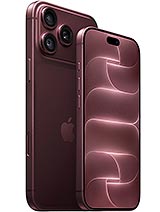
This review is written with AI assistance from Apple’s published specifications and public benchmark data for the Apple iPhone 18 Pro Max, and the rating is spec-based. GoSolo does not physically test devices; where we estimate real-world behaviour such as battery life or charge time, we say so. How we rate phones.
Overview
The iPhone 18 Pro Max is a massive, exceptionally light flagship with the expected Apple polish: a brilliant 6.9-inch display, a capable camera trio with periscope zoom, and strong all-day battery life. It's a confident evolution, but at 1600 EUR it charges no faster than its predecessor and delivers no breakthrough that justifies the price for those already owning an iPhone 17 Pro.
Design & build
The 18 Pro Max feels deliberate: 8.8mm thin, 249g, and clad in Ceramic Shield 2 glass and aluminum. At this size and weight, it's a two-handed device, though the thinness does make it pocket-friendly despite the mass. The craftsmanship is predictable—Apple's been refining this formula for years—but the industrial design doesn't feel dated. IP68 to 6m for 30 minutes is solid; dual SIM flexibility with eSIM and Nano-SIM variants addresses global needs. For those coming from a 17 Pro, there's no visual surprise here; it's a minor re-sculpting. That's not a flaw, just a reality of how far phone design has plateaued at this tier.
Display
The 6.9-inch Super Retina XDR OLED is a statement: 460 ppi density, 120Hz LTPO, and brightness that scales to 3000 nits at peak. In sunlight, it's genuinely usable where rivals struggle; the 1320 x 2868 resolution at 19.5:9 is tall and narrow, which matters less for video than for scrolling and productivity apps. Dolby Vision and 10-bit color support are there if you shoot or edit video. The panel is fast enough that scrolling iOS feels fluid, and the adaptive refresh rate should keep battery hit reasonable. This is not where Apple cuts corners, and it shows; you're getting a display that will outlast the phone's relevance.
Performance
The A20 Pro at 2nm brings real gains over the 17 Pro's A19 Pro, though the headlines matter less than the reality: this chipset runs iOS 27 without stutter, handles multiple apps in memory, and keeps up with gaming without thermal throttle. The 7-core GPU is enough, not oversized. For video work—the real heavy lifting on modern phones—ProRes RAW up to 120fps is genuine capability; most users won't touch it, but it's there. Day-to-day, the phone is fast enough that speed is no longer a differentiator at this price. You're paying for consistency and longevity, not a performance leap.
Software
iOS 27 is stable ground for Apple; the OS is locked to iPhone, so no bloat, minimal carrier interference, and predictable software updates for years. The integration with Apple's ecosystem—iCloud, AirDrop, Handoff, Find My—runs deeper than Android rivals manage. Face ID works with the screen on, and privacy toggles are simpler than on Android. If you're already in the Apple camp, there's little friction. If you're considering the switch, iOS's sandboxed app model and lack of customization options can feel restrictive. For this price tier and audience, the trade-off is deliberate.
Camera
The rear trio is well-balanced: a 48MP wide with f/1.5-4.0 variable aperture and sensor-shift OIS for low light and stabilization, a periscope 48MP telephoto with 4x optical zoom (100mm equivalent) and 3D sensor-shift OIS, and a 120° ultrawide at f/2.2. The variable aperture on the wide is useful—stopping down in bright conditions reduces chromatic aberration and sharpens edges. The periscope zoom avoids the software-upscaled look that hurts midrange phones; 4x optical is enough for most framing needs without the quality loss of pushing further. Video tops out at 4K 120fps with Dolby Vision HDR and ProRes RAW, which is capable if niche. The 18MP selfie with PDAF handles video calls and portrait mode decently. Real-world: the camera produces clean, accurate photos in daylight, struggles less than older iPhones in shadow, and the zoom remains sharp at distance. It's a confident system that doesn't oversell itself.
Battery & charging
The 5567 mAh cell (eSIM-only variant) is a meaningful bump; expect about 40 to 50 hours of mixed use before a recharge, or roughly two full days for most users. That's genuinely better than Android rivals that top out at 5000 mAh, though Xiaomi and others are catching up with larger cells and lower power consumption. Charging, however, is the bottleneck: 45W with USB-C is no longer adequate. Samsung's 100W, OnePlus's 150W, and even Google's faster charging are now standard at this price; a full discharge from zero takes roughly 45 minutes to an hour on the 18 Pro Max, putting it at least 15 to 20 minutes behind competitors. For daily top-ups, the difference is marginal. For weekend trips without a charger, it stings.
Value & verdict
At 1600 EUR, the iPhone 18 Pro Max is expensive, not because of what it does but because of what it is: a large, cohesive, update-proof device. If you need a reliable phone that works for years without compromise and you're in Apple's ecosystem, this is it. If you already own an iPhone 17 Pro, the gains are incremental—a faster chip, better battery, and camera tweaks don't justify the full price unless you resell the old one. For Android users jumping in, the display and software polish are real, but the charging speed, lack of microSD expansion (standard for other flagships), and no killer feature beyond 'it's an iPhone' should give pause at this price point. The phone is solid. It's also less urgent than Apple's marketing would suggest.
Verdict
Buy this if you live in Apple's ecosystem, value software stability above all else, and don't mind paying for incremental hardware gains. Skip it if you own an iPhone 17 Pro already, prioritize fast charging, or want flagship performance without the 1600 EUR toll.
- 6.9-inch display with 460 ppi, 3000 nits peak brightness, and 120Hz LTPO—easily readable outdoors and handles both fast-paced content and detailed work without motion blur
- Periscope telephoto with 4x optical zoom paired with strong ultrawide and macro capabilities; the camera system feels like a thoughtful trio rather than padding the spec sheet
- A20 Pro at 2nm is architecturally ahead of competitors; real-world performance gains over the 17 Pro in CPU and GPU will matter for sustained workloads and gaming
- Battery capacity bump (5567 mAh on eSIM variants) meaningfully extends runtime—comfortably two full days with moderate use, versus one full day on rivals at this price
- Charging caps at 45W with USB-C (implied by PD3.225W spec)—rivals now hit 100W; a full charge from empty takes roughly 45 minutes, a notch behind what Samsung and OnePlus have normalized
- Starting at 1600 EUR with no meaningful upgrade over the iPhone 17 Pro if you're already holding one; the A20 Pro and camera tweaks are iterative, not transformative
- Weight sits at 249g for a 6.9-inch phone—heavy enough that extended handheld shooting or one-handed use becomes tiring; not a dealbreaker but worth feeling first
Apple iPhone 18 Pro Max Key Specifications
The essentials at a glance. See the full spec sheet.
| Released | 2026, September 09 |
|---|---|
| Display | 6.9 inches, 115.6 cm2 (~90.7% screen-to-body ratio), LTPO Super Retina XDR OLED, 120Hz, HDR10, Dolby Vision, 1000 nits (typ), 1600 nits (HBM), 3000 nits (peak) |
| Resolution | 1320 x 2868 pixels, 19.5:9 ratio (~460 ppi density) |
| Chipset | Apple A20 Pro (2 nm) |
| RAM & storage | 256GB 12GB RAM, 512GB 12GB RAM, 1TB 12GB RAM, 2TB 12GB RAM |
| Main camera | 48 MP, f/1.5-4.0, 24mm (wide), 1/1.28", 1.22µm, dual pixel PDAF, sensor-shift OIS (gen2) 48 MP, f/2.8, 100mm (periscope telephoto), 1/2.55", 0.7µm, PDAF, 3D sensor‑shift OIS, 4x optical zoom 48 MP, f/2.2, 13mm, 120˚ (ultrawide), 1/2.55", 0.7µm, PDAF TOF 3D LiDAR scanner (depth) |
| Selfie camera | 18 MP multi-aspect, f/1.9, 20mm (ultrawide), PDAF SL 3D, (depth/biometrics sensor) |
| Battery | 5567 mAh |
| Software | iOS 27 |
| Dimensions | 163.4 x 78 x 8.8 mm (6.43 x 3.07 x 0.35 in) |
| Weight | 249 g (8.78 oz) |
| Build | Glass front (Ceramic Shield 2), aluminum frame, aluminum back/ glass back (Ceramic Shield) |
| Durability | IP68 dust tight and water resistant (immersible up to 6m for 30 min) Apple Pay (Visa, MasterCard, AMEX certified) |
| Network | GSM / HSPA / LTE / 5G |
| NFC | Yes |
| USB | USB Type-C 3.2 Gen 2, DisplayPort |
Apple iPhone 18 Pro Max FAQ
Common questions, answered from the spec sheet.
Does the iPhone 18 Pro Max support 5G?
Yes. The iPhone 18 Pro Max supports 5G networks.
What chipset does the iPhone 18 Pro Max use?
The iPhone 18 Pro Max runs on the Apple A20 Pro (2 nm).
What display does the iPhone 18 Pro Max have?
A 6.9 inches, 115.6 cm2 (~90.7% screen-to-body ratio) LTPO Super Retina XDR OLED, 120Hz, HDR10, Dolby Vision, 1000 nits (typ), 1600 nits (HBM), 3000 nits (peak), 1320 x 2868 pixels, 19.5:9 ratio (~460 ppi density).
How big is the iPhone 18 Pro Max battery?
The iPhone 18 Pro Max has a 5567 mAh battery.
Does the iPhone 18 Pro Max have NFC?
Yes, the iPhone 18 Pro Max has NFC.
Is the iPhone 18 Pro Max water resistant?
The iPhone 18 Pro Max carries a IP68 dust tight and water resistant (immersible up to 6m for 30 min) Apple Pay (Visa, MasterCard, AMEX certified) rating.
Does the iPhone 18 Pro Max support a microSD card?
No, the iPhone 18 Pro Max does not support expandable storage.
Alternatives to consider
If the iPhone 18 Pro Max isn’t quite right, these are the closest calls.
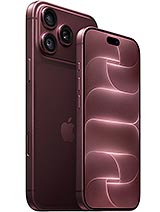
iPhone 18 Pro
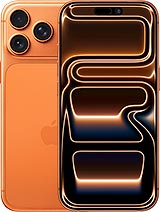
iPhone 17 Pro Max
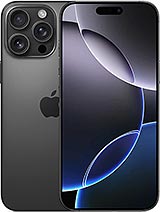
iPhone 16 Pro Max
iPhone Duo
X60 GT