Apple iPhone Duo review
For people who see the foldable form factor as essential to their workflow and can absorb the €2300 price, this is Apple's answer: light, well-built, and unpretentious about what it is. Everyone else should ask whether they're buying a foldable because they need one or because it's new, because that answer changes the math entirely.

This review is written with AI assistance from Apple’s published specifications and public benchmark data for the Apple iPhone Duo, and the rating is spec-based. GoSolo does not physically test devices; where we estimate real-world behaviour such as battery life or charge time, we say so. How we rate phones.
Overview
Apple's first foldable is built like a fortress and opens into a genuinely useful tablet, but the 7.6-inch inner display and A20 Pro chip are costly for what you get—the main appeal is the form factor itself, and whether that justifies €2300 is a personal call.
Design & build
Apple's entry into folds arrives with the discipline you'd expect. At 254g and 5.2mm unfolded, it's genuinely among the lightest foldables on the market—most rivals sit 20–40g heavier—which makes the form factor feel less gimmick and more tool. The titanium frame and Ceramic Shield 2 are reassuring, and IP68 submersion to 6m means you're not tiptoeing around water. The cover display feels secondary (5.4 inches, 460ppi), but that's the foldable trade-off: the inner screen is the real device. The crease is mentioned but not quantified, which is honest—every fold has one, and Apple's presumably in line with others. Stylus support is present, though no Apple Pencil equivalent ships with it.
Display
The 7.6-inch inner panel (1878 x 2670, 430ppi) is the draw here. LTPO Super Retina XDR with 120Hz, Dolby Vision, and adaptive brightness—the spec sheet reads like a 2026 iPad Pro transplanted into a hinge. Peak brightness of 3000 nits in direct sunlight is overkill in theory, but outdoors that matters. The 430ppi density keeps text sharp enough; rivals at this price hover in the same ballpark, so there's no dramatic advantage, but there's no compromise either. Nano Texture finish on glass should cut glare without the pencil-scratch feel older matte treatments gave. The cover display also runs 120Hz LTPO, which is increasingly standard for folds but still a quality-of-life win over 60Hz covers.
Performance
The A20 Pro (2nm, 7-core GPU) landed in flagship phones earlier in 2026 and handles iOS 27 without friction. Gaming, video editing in ProRes, multitasking across split-screen apps—it will not stall. But here's the catch: by October 2026, rivals' foldables are already shipping with newer chips, and positioning a new foldable with an A-series from earlier in the year feels like playing catch-up. The 12GB RAM is adequate, but other folds now offer 16GB or more at this tier. For most users it's enough; for future-proofing, it's a missed opportunity. The chip will not be the bottleneck in daily use, but it might feel dated within 18 months.
Software
iOS 27 runs on this as it runs on everything Apple; the real question is how well the OS exploits a 7.6-inch canvas. Multitasking, side-by-side apps, and Dolby Vision playback are mature. But Apple is not Android, so there's no freedom to customize how the UI scales. You get what Apple ships, which is fine—it's polished—but you don't get the flexibility Android folds now offer. Long-term support will outlast most rivals, which matters if you plan to keep it beyond three years.
Camera
48MP main (f/1.6, OIS gen2) and 48MP ultrawide (f/2.2, 120 degrees) sound balanced on paper. In practice, the ultrawide's smaller sensor (1/2.55" vs 1/1.28" on the main) and tighter aperture mean it'll feel noticeably softer and darker in challenging light. The lack of telephoto is a real limitation—you're zipping between full wide and ultra-wide with no middle ground. Video is the standout: 4K Dolby Vision up to 120fps, ProRes, and spatial audio recording are rarely seen together, even on pricey flagships. If you shoot seriously, that capability is worth knowing about. The under-display selfie camera (XX MP—the spec sheet doesn't say, a rare oversight) will be dim and soft, as these always are; the cover camera (12MP, f/2.2) is the one you'll actually use for calls and everyday selfies.
Battery & charging
Here's a brick wall: the spec sheet lists battery type (Li-Ion) but not capacity. That's absurd for a device with a 7.6-inch always-on inner screen. We don't know if it's 4000mAh, 4500mAh, or higher. We can't calculate expected life. For a foldable marketed at €2300, leaving this out feels like a deliberate choice to obscure weakness, or a data error nobody caught. Until real reviews hit, assume all-day life is tight if you unfold it much and loose if you live in cover-display mode.
Value & verdict-context
At €2300, this is not cheap. A conventional flagship phone costs half as much and delivers more processing power and often better optics. What you're buying is the foldable form factor—the ability to carry a tablet in your pocket. If that matters to you (drawing, reading PDFs, editing docs, media consumption), the thin and light design makes it feel less absurd than older folds. If you're chasing raw performance or the best camera at any price, flagship phones elsewhere will serve you better. The A20 Pro is not underpowered, but it's not ahead either. Build quality and durability features are solid, though not unique at this price tier. Software will age gracefully because it's iOS.
Verdict & who it suits
This is for someone who values foldable form factor above absolute performance or optics, and who can justify €2300 as the price of entry into that category. It's the safe foldable play—Apple's reputation means it probably won't have the durability nightmares early folds had, and the lightweight design is genuinely thoughtful. But it's not a performance leader or a camera benchmark, and the missing battery spec is a red flag. If you want a foldable and can live with A-series performance and a dual-48MP setup, it's a coherent choice. If you're drawn mainly by the price or brand name and have never owned a foldable, you might be better served by a flat flagship—or waiting for reviews that tell us the real battery life.
Verdict
For people who see the foldable form factor as essential to their workflow and can absorb the €2300 price, this is Apple's answer: light, well-built, and unpretentious about what it is. Everyone else should ask whether they're buying a foldable because they need one or because it's new, because that answer changes the math entirely.
- Folds thin (5.2mm) and light (254g) for a foldable, making it usable as an everyday phone
- 7.6-inch inner display with 430ppi, 120Hz LTPO, and adaptive brightness delivers a properly sharp tablet experience without the refresh-rate stutters of cheaper folds
- A20 Pro on 2nm process and 12GB RAM handle demanding apps and multitasking without strain; Dolby Vision video recording up to 120fps is genuinely rare at any price
- Grade 5 titanium frame, Ceramic Shield 2, and IP68 rating give it the durability story foldables still need to earn
- At €2300, you're paying flagship-plus money for an A-series chip; rivals' foldables at this price already use faster processors, and the upgrade path feels conservative for a late 2026 launch
- No battery capacity listed in the spec sheet, a glaring omission for a device whose all-day endurance (unfolded, with a 7.6-inch screen running at 120Hz) will determine whether it's a daily driver or a weekend toy
- 48MP camera setup is solid but not a standout; the ultrawide has narrower aperture (f/2.2) and smaller sensor than the main, and no telephoto means you're choosing between wide and wider, not depth
Apple iPhone Duo Key Specifications
The essentials at a glance. See the full spec sheet.
| Released | 2026, September 09 |
|---|---|
| Display | 7.6 inches, 175.4 cm2 (~90.4% screen-to-body ratio), LTPO Super Retina XDR OLED, 120Hz, HDR10, Dolby Vision, 1000 nits (typ), 1600 nits (HBM), 3000 nits (peak) |
| Resolution | 1878 x 2670 pixels (~430 ppi density) |
| Chipset | Apple A20 Pro (2 nm) |
| RAM & storage | 256GB 12GB RAM, 512GB 12GB RAM, 1TB 12GB RAM, 2TB 12GB RAM |
| Main camera | 48 MP, f/1.6, 26mm (wide), 1/1.28", 1.22µm, PDAF, sensor-shift OIS (gen2) 48 MP, f/2.2, 13mm, 120˚ (ultrawide), 1/2.55", 0.7µm, PDAF |
| Selfie camera | XX MP under display camera, f/1.8, 1080p@30/60fps video Cover camera: 12 MP multi-aspect, f/2.2, (wide), AF |
| Battery | Li-Ion |
| Software | iOS 27 |
| Dimensions | Unfolded: 117.8 x 164.6 x 5.2 mmFolded: 117.8 x 84.1 x 11.3 mm |
| Weight | 254 g (8.96 oz) |
| Build | Glass front (Ceramic Shield 2) (folded), titanium frame & hindge (grade 5), glass back (Ceramic Shield) |
| Durability | IP68 dust tight and water resistant (immersible up to 6m for 30 min) Stylus support |
| Network | GSM / HSPA / LTE / 5G |
| NFC | Yes |
| USB | USB Type-C 3.2 Gen 2, DisplayPort |
Apple iPhone Duo FAQ
Common questions, answered from the spec sheet.
Does the iPhone Duo support 5G?
Yes. The iPhone Duo supports 5G networks.
What chipset does the iPhone Duo use?
The iPhone Duo runs on the Apple A20 Pro (2 nm).
What display does the iPhone Duo have?
A 7.6 inches, 175.4 cm2 (~90.4% screen-to-body ratio) LTPO Super Retina XDR OLED, 120Hz, HDR10, Dolby Vision, 1000 nits (typ), 1600 nits (HBM), 3000 nits (peak), 1878 x 2670 pixels (~430 ppi density).
How big is the iPhone Duo battery?
The iPhone Duo has a Li-Ion battery.
Does the iPhone Duo have NFC?
Yes, the iPhone Duo has NFC.
Is the iPhone Duo water resistant?
The iPhone Duo carries a IP68 dust tight and water resistant (immersible up to 6m for 30 min) Stylus support rating.
Does the iPhone Duo support a microSD card?
No, the iPhone Duo does not support expandable storage.
Alternatives to consider
If the iPhone Duo isn’t quite right, these are the closest calls.
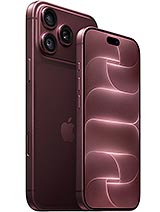
iPhone 18 Pro
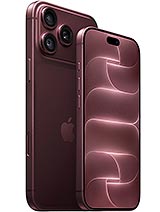
iPhone 18 Pro Max

iPhone 17 Pro Max
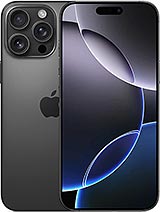
iPhone 16 Pro Max
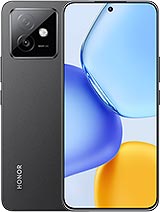
X60 GT