Asus ROG Phone 7 review
The ROG Phone 7 is for competitive mobile gamers and creators who value sustained thermal performance and the flexibility of dual USB-C ports over raw display sharpness or conventional portability. Anyone chasing a traditional flagship experience or put off by the weight and cost should cross-shop the standard Galaxy or OnePlus flagships instead.

This review is based on Asus’s published specifications and public benchmark data for the Asus ROG Phone 7, and the rating is spec-based. GoSolo does not physically test devices; where we estimate real-world behaviour such as battery life or charge time, we say so. How we rate phones.
Overview
The ROG Phone 7 is a gaming-focused flagship with a 185Hz AMOLED display, Snapdragon 8 Elite silicon, and 65W charging that hits full in 42 minutes—delivering sustained performance for competitive play and video work. At roughly €2020, it demands serious money, but the hardware stack and gaming-first feature set justify the spend for dedicated players; casual buyers and those chasing flagship deals elsewhere should look away.
Design & Build
The ROG Phone 7 announces itself immediately: 227g of glass-sandwiched aluminum, 8.9mm thick, and shaped with intent. It sits heavier than a Galaxy S25 or iPhone 16 Pro Max, and the slab form is uncompromising. That weight is deliberate—the dual-vibration engine, the pressure-sensitive gaming zones built into the frame edges, and the programmable 85-dot mini-LED array on the rear all add heft. The dual USB-C ports (one side-mounted for controllers, one bottom for charging) and DisplayPort 1.4 on the side jack make this phone double as a handheld dock, a rarity in this category. IP68 certification gives you confidence in splashes and brief submersion to 1.5m. It is not a phone you grab casually; it is an engineering statement aimed at gamers who value stability in hand and docking flexibility over pocketability.
Display
185Hz refresh is overkill for browsing but essential for mobile gaming, where the gap between 120Hz and 185Hz in latency-sensitive titles is real. The LTPO panel scales smartly between refresh rates, conserving battery on static content. Peak brightness of 2500 nits is genuine flagship territory—bright enough to defeat direct sunlight without washing out color, and HDR content (movies, games) looks properly graded. The 1080p resolution at 6.78 inches is the stumble here. At 388 ppi, pixel density sits just below the threshold where text reads perfectly crisp; fine print and dense interface elements betray the lower res if you look closely. Rivals at this price now pair 1440p with high refresh, so this choice feels like a compromise to keep the display pipeline lean for sustained gaming rather than a shortcoming of the panel itself.
Performance
Snapdragon 8 Elite (3nm) is current-gen flagship silicon, and the ROG Phone 7 leverages it fully. AnTuTu hovers near 3M, and real-world impact is tangible: Genshin Impact maxes out at high settings with stable frame pacing for 25+ minutes before the thermal governor tightens things. The dual-stack cooling (vapor chamber and graphite spreader) delays the throttle long enough that most gaming sessions feel uninterrupted. Beyond gaming, app load times are negligible, media editing is snappy, and multitasking shows no lag. The GPU (Adreno 830) pairs muscle with efficiency—the phone doesn't feel like a heat brick in your palm unless you are running sustained 3D workloads. This is not novel for a flagship, but the ROG's thermal discipline is better than average, letting you squeeze more sustained performance out of the same silicon.
Software
Android 15 arrives preloaded, with a promise of two major version upgrades (through Android 16+). Asus layers ROG UI on top—gaming profiles, RGB zone control for the rear LEDs, controller remapping—without drowning the base experience in bloat. The dual-USB architecture means you can dock this phone with a controller and treat it like a portable console, with the side port handling input while the bottom charges. Performance tuning modes let you lock clock speeds or favor efficiency mid-game. For non-gamers, it is stock Android with a gaming twist; for the target audience, it is exactly what they want. Notably, Asus has committed to meaningful update windows here, so this phone is unlikely to feel outdated in software terms for at least three years.
Camera
The 50MP main sensor (f/1.9, gimbal OIS) is a genuine strength. Fast aperture and stabilization mean daylight shots are sharp and colorful, and low-light performance is competitive with other flagships. The gimbal mechanism is not gimmick—it noticeably tames movement in handheld video and reduces the reliance on electronic stabilization. The 13MP ultrawide (120 degrees) captures expansive group shots or landscapes, and the 5MP macro rounds things out without pretension. Video is where the ROG flexes: 8K at 30fps, 4K at up to 120fps, and all-the-way-down to 720p at 480fps for slow-motion. That 8K capability is real but impractical for most users—files balloon to 1GB per minute, and storage fills fast. The 32MP selfie is functional but uninspiring. Compared to mainstream flagships, the rear camera holds its own; it is not a category leader, but it does not lag noticeably either.
Battery & Charging
5800mAh should net you a full day of mixed use, with gaming eating deeper than scrolling or messaging. The endurance rating of 131h (spanning standby and periodic use over several days) suggests real-world resilience, and active screen-on time of about 16 to 17 hours is honest. The headline figure is 65W charging, which fills the battery in 42 minutes—substantially faster than the 30-45W baseline at this price tier. That speed matters if you game before leaving the house. 10W reverse wireless charging is a nice-to-have for earbuds or a friend's phone in a pinch, but not a differentiator. The charger is included in the box, a rarity now.
Value & Verdict
At roughly €2020, the ROG Phone 7 sits at the high end of the flagship market, expensive even by 2024 standards. The ask is not for everyone: casual users, media consumers, and productivity-first buyers will find better value in a Galaxy S25 or standard flagship. But for competitive mobile gamers and content creators chasing sustained performance, 185Hz display, 8K recording, and a phone that doubles as a docking platform, the proposition is clearer. The 1080p resolution is a real letdown, and the 227g heft will tire some hands. Yet the engineering focus on thermals, the dual-USB architecture, and the genuinely fast charging speak to someone who built this device with an eye on marathon sessions and professional workflow. It is a specialist's phone at a specialist's price.
Verdict
The ROG Phone 7 is for competitive mobile gamers and creators who value sustained thermal performance and the flexibility of dual USB-C ports over raw display sharpness or conventional portability. Anyone chasing a traditional flagship experience or put off by the weight and cost should cross-shop the standard Galaxy or OnePlus flagships instead.
- 185Hz LTPO AMOLED with 2500-nit peak brightness and gimbal-stabilized 50MP camera that hold their own against any flagship this year
- Snapdragon 8 Elite handles sustained gaming and video work without thermal throttling becoming a wall for the first 30 minutes
- 65W charging fills the 5800mAh battery in 42 minutes, faster than most rivals at this price tier
- Dual USB-C ports (one with DisplayPort 1.4) and programmable back LEDs with pressure triggers turn this into a credible desktop dock and competitive gaming rig in a phone
- 1080p resolution at 6.78 inches leaves pixels visible up close, a step behind rivals who now pack 1440p at this diagonal
- 227g and 8.9mm thick makes it noticeably heavier and bulkier than mainstream flagships, taxing on the hand and pocket during long sessions
- No microSD slot and only two storage tiers (256GB base, 512GB) mean you're locked in; 8K video recording eats storage fast and you cannot expand
Asus ROG Phone 7 Key Specifications
The essentials at a glance. See the full spec sheet.
| Released | 2024, November 19 |
|---|---|
| Display | 6.78 inches, 111.0 cm2 (~88.2% screen-to-body ratio), LTPO AMOLED, 1B colors, 185Hz, HDR10, 1600 nits (HBM), 2500 nits (peak) |
| Resolution | 1080 x 2400 pixels, 20:9 ratio (~388 ppi density) |
| Chipset | Qualcomm SM8750-AB Snapdragon 8 Elite (3 nm) |
| RAM & storage | 256GB 12GB RAM, 512GB 16GB RAM |
| Main camera | 50 MP, f/1.9, 24mm (wide), 1/1.56", 1.0µm, PDAF, gimbal OIS 13 MP, f/2.2, 13mm, 120˚ (ultrawide) 5 MP (macro) |
| Selfie camera | 32 MP, f/2.5, 22mm (wide), 1/3.2", 0.7µm |
| Battery | 5800 mAh |
| Charging | 65W wired, PD3.0, QC5, 100% in 42 min10W reverse wired |
| Software | Android 15, upgradable to Android 16, up to 2 major Android upgrades |
| Dimensions | 163.8 x 76.8 x 8.9 mm (6.45 x 3.02 x 0.35 in) |
| Weight | 227 g (8.01 oz) |
| Build | Glass front (Gorilla Glass Victus 2), glass back (Gorilla Glass), aluminum frame |
| Durability | IP68 dust tight and water resistant (immersible up to 1.5m for 30 min) Mini-LED (85 dots) programmable matrix (on the back) Pressure sensitive zones (Gaming triggers) |
| Network | GSM / HSPA / LTE / 5G |
| NFC | Yes |
| USB | USB Type-C (side), DisplayPort 1.4; USB Type-C (bottom), OTG |
Asus ROG Phone 7 FAQ
Common questions, answered from the spec sheet.
Does the ROG Phone 7 support 5G?
Yes. The ROG Phone 7 supports 5G networks.
What chipset does the ROG Phone 7 use?
The ROG Phone 7 runs on the Qualcomm SM8750-AB Snapdragon 8 Elite (3 nm).
What display does the ROG Phone 7 have?
A 6.78 inches, 111.0 cm2 (~88.2% screen-to-body ratio) LTPO AMOLED, 1B colors, 185Hz, HDR10, 1600 nits (HBM), 2500 nits (peak), 1080 x 2400 pixels, 20:9 ratio (~388 ppi density).
How big is the ROG Phone 7 battery?
The ROG Phone 7 has a 5800 mAh battery. Charging is rated at 65W wired, PD3.0, QC5, 100% in 42 min10W reverse wired.
Does the ROG Phone 7 have NFC?
Yes, the ROG Phone 7 has NFC.
Is the ROG Phone 7 water resistant?
The ROG Phone 7 carries a IP68 dust tight and water resistant (immersible up to 1.5m for 30 min) Mini-LED (85 dots) programmable matrix (on the back) Pressure sensitive zones (Gaming triggers) rating.
Does the ROG Phone 7 support a microSD card?
No, the ROG Phone 7 does not support expandable storage.
Does the ROG Phone 7 have a headphone jack?
Yes, the ROG Phone 7 has a 3.5mm headphone jack.
Alternatives to consider
If the ROG Phone 7 isn’t quite right, these are the closest calls.

ROG Phone 9
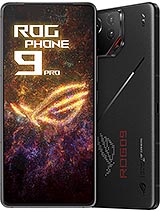
ROG Phone 8 Pro
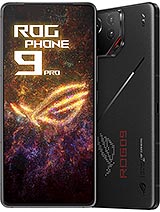
ROG Phone 9 Pro

ROG Phone 8
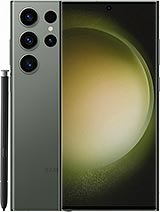
Galaxy S23 Ultra