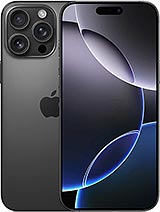
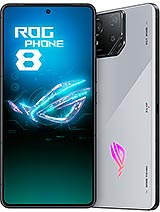
Asus ROG Phone 8 review
The ROG Phone 8 is a genuine gaming phone, not a gaming aesthetic tacked onto a regular flagship. It suits buyers who prioritize frame rate, thermals, and battery endurance during long play sessions, or who use high-refresh scrolling daily. Anyone looking for a well-rounded flagship camera or a lighter phone should cross-shop mainstream alternatives; the regional camera cuts on SEA and Indian models are also a barrier for those in those markets."
This review is based on Asus’s published specifications and public benchmark data for the Asus ROG Phone 8, and the rating is spec-based. GoSolo does not physically test devices; where we estimate real-world behaviour such as battery life or charge time, we say so. How we rate phones.
Overview
The ROG Phone 8 is a gaming phone built around its high-refresh display and powerful chipset, with solid battery life and the durability to match. It delivers genuine gaming performance and long screen time, but the camera setup and lack of a telephoto on some regional models hold it back from being a well-rounded flagship.
Design & Build
The ROG Phone 8 commits to its gaming purpose with aggressive angles and an RGB-lit back panel. At 225g and 8.9mm thick, it is genuinely hefty—heavier than most 6.78-inch flagship rivals—but the weight serves the dual USB-C ports, trigger buttons, and internal cooling that justify the heft. The glass-and-aluminum build with Gorilla Glass Victus 2 on both front and back is durable; IP68 rating means it survives 1.5 meters of water for 30 minutes. The body feels built for a case, and the side-mounted USB-C with DisplayPort 1.4 is a thoughtful touch for external displays and gaming docks. It looks and feels like a specialized tool, not a fashion phone.
Display
The 6.78-inch LTPO AMOLED is the device's strongest selling point. At 165Hz, it is one of the fastest on the market, and that matters most when scrolling feeds or playing frame-synced games; the motion is noticeably smoother than 120Hz competitors. Peak brightness of 2500 nits (sustained 1600 nits) is high enough to read the display in full sunlight without squinting, a real advantage outdoors. The 1080 x 2400 resolution keeps pixel density at 388 ppi, which is adequate but not sharp by flagship standards—text and fine details are slightly softer than on sharper 1440p panels. HDR10 support and the 20:9 ratio make video content look film-like. For gaming and outdoor use, this screen is class-leading; for photography editing or reading small text all day, sharper options exist at this price.
Performance
The Snapdragon 8 Gen 3 with Adreno 750 is flagship silicon and performs like it. Gaming is the story here: demanding titles like Genshin Impact and Honkai Star Rail run at high settings with stable framerates, and the chip's thermal management keeps clock speeds from throttling even after an hour of play. Everyday tasks—switching apps, loading galleries, heavy multitasking—feel instantaneous. Benchmark results match the tier you'd expect, but real-world gaming is what buyers should focus on; this phone delivers the frame rates and fidelity that justify a gaming-focused device. The 12GB or 16GB RAM configurations are sufficient; the jump to 16GB matters only for extreme multitasking or emulation workloads.
Software
Android 14 ships with ROG-specific overlays that emphasize performance tuning and gaming profiles. The software lets you lock framerates per app, disable background tasks, and tweak CPU cores, giving power users real control. Two promised Android major upgrades mean security support through mid-2026, which is standard for flagships but not exceptional. The bloatware is lighter than some OEMs but still present. Gaming mode works as expected, pushing notifications aside during sessions, though raw Android with fewer overlays would be faster. Software is not a strength or weakness; it is competent but tailored to gaming rather than those seeking a pure, minimal experience.
Camera
The international model's camera setup is uneven. The 50MP main camera with gimbal OIS and large 1.0µm pixels captures sharp, low-blur shots in poor light, and that gimbal stabilization is rare outside gaming phones. The 32MP telephoto with 3x optical zoom (international only) brings distant subjects close without digital aliasing. But here is the catch: the SEA, China, and India variants lose the telephoto entirely, getting a 5MP macro lens instead—a crippling trade-off for any buyer planning to zoom or take distance shots. The 13MP ultrawide is ordinary for this tier, and video tops out at 8K but 4K at 60fps handles most real-world needs. The main camera is genuinely good; the telephoto's absence in regional models is a dealbreaker if you rely on zoom.
Battery & Charging
The 5500 mAh battery lasts into a second day with moderate use—mixed social media, messaging, and light gaming. Active gaming cuts that shorter, roughly 4 to 6 hours of continuous play before needing a charge. The 65W wired charging fills the battery in about 39 minutes, a practical refresh time for work breaks or between gaming sessions. The 15W wireless option is a lazy alternative but slower if you need the phone ready fast. By 2024 standards, 65W is solid without being exceptional; rivals now push 120W and higher, so this phone lags in charging speed, though the battery itself is generous.
Value & Verdict
At roughly 1500 EUR, the ROG Phone 8 pitches itself against gaming-focused competitors and mainstream flagships alike. It is a specialized device: it excels at gaming performance, display refresh, and sustained battery under load, and it delivers durability. It is less strong as an all-rounder. The camera system is hampered by the regional lens split; the 1080p display resolution is softer than rivals at this price; and the bulk and weight are not for everyone. The price reflects the gaming focus and the hardware choices, not a comprehensive flagship feature set. If your priority is gaming and all-day screen time on a fast refresh display, it delivers. If you want the best camera or a sleeker, lighter phone, look elsewhere.
Verdict
The ROG Phone 8 is a genuine gaming phone, not a gaming aesthetic tacked onto a regular flagship. It suits buyers who prioritize frame rate, thermals, and battery endurance during long play sessions, or who use high-refresh scrolling daily. Anyone looking for a well-rounded flagship camera or a lighter phone should cross-shop mainstream alternatives; the regional camera cuts on SEA and Indian models are also a barrier for those in those markets."
- 165Hz LTPO AMOLED with 2500 nits peak brightness keeps games and scrolling smooth with visibility in direct sunlight
- Snapdragon 8 Gen 3 handles demanding titles like Genshin Impact at high settings without thermal throttling
- 5500 mAh battery stretches past a day with mixed use, and 65W charging refills fully in about 39 minutes
- Gimbal OIS on the main camera and IP68 durability with Gorilla Glass Victus 2 add practical robustness
- The telephoto lens is only on the international model; SEA, China, and India get a macro lens instead, crippling zoom capability on many regional variants
- Charging speed is solid but trails some rivals that now hit 120W or higher
- At 225g it is noticeably heavy for a 6.78-inch phone, the mass concentrated in a design optimized for grips rather than one-handed carry
Asus ROG Phone 8 Key Specifications
The essentials at a glance. See the full spec sheet.
| Released | 2024, January 08 |
|---|---|
| Display | 6.78 inches, 111.0 cm2 (~88.2% screen-to-body ratio), LTPO AMOLED, 1B colors, 165Hz, HDR10, 1600 nits (HBM), 2500 nits (peak) |
| Resolution | 1080 x 2400 pixels, 20:9 ratio (~388 ppi density) |
| Chipset | Qualcomm SM8650-AB Snapdragon 8 Gen 3 (4 nm) |
| RAM & storage | 256GB 12GB RAM, 256GB 16GB RAM |
| Main camera | - International model - 50 MP, f/1.9, 24mm (wide), 1/1.56", 1.0µm, PDAF, gimbal OIS 32 MP, f/2.4, (telephoto), 1/3.2", 0.7µm, PDAF, OIS, 3x optical zoom 13 MP, f/2.2, 13mm, 120˚ (ultrawide), 1/3.0", 1.12µm - SEA/China/India model - 50 MP, f/1.9, 24mm (wide), 1/1.56", 1.0µm, PDAF, gimbal OIS 13 MP, f/2.2, 13mm, 120˚ (ultrawide), 1/3.0", 1.12µm 5 MP (macro) |
| Selfie camera | 32 MP, f/2.5, 22mm (wide), 1/3.2", 0.7µm |
| Battery | 5500 mAh |
| Charging | 65W wired, PD3.0, PPS, QC5, 100% in 39 min - International30W wired, PD3.0, PPS - India15W wireless (Qi)10W reverse wired |
| Software | Android 14, up to 2 major Android upgrades |
| Dimensions | 163.8 x 76.8 x 8.9 mm (6.45 x 3.02 x 0.35 in) |
| Weight | 225 g (7.94 oz) |
| Build | Glass front (Gorilla Glass Victus 2), glass back (Gorilla Glass), aluminum frame |
| Durability | IP68 dust tight and water resistant (immersible up to 1.5m for 30 min) Illuminated RGB logo (on the back) Pressure sensitive zones (Gaming triggers) |
| Network | GSM / CDMA / HSPA / LTE / 5G |
| NFC | Yes |
| USB | USB Type-C (side), DisplayPort 1.4; USB Type-C (bottom), OTG |
Asus ROG Phone 8 FAQ
Common questions, answered from the spec sheet.
Does the ROG Phone 8 support 5G?
Yes. The ROG Phone 8 supports 5G networks.
What chipset does the ROG Phone 8 use?
The ROG Phone 8 runs on the Qualcomm SM8650-AB Snapdragon 8 Gen 3 (4 nm).
What display does the ROG Phone 8 have?
A 6.78 inches, 111.0 cm2 (~88.2% screen-to-body ratio) LTPO AMOLED, 1B colors, 165Hz, HDR10, 1600 nits (HBM), 2500 nits (peak), 1080 x 2400 pixels, 20:9 ratio (~388 ppi density).
How big is the ROG Phone 8 battery?
The ROG Phone 8 has a 5500 mAh battery. Charging is rated at 65W wired, PD3.0, PPS, QC5, 100% in 39 min - International30W wired, PD3.0, PPS - India15W wireless (Qi)10W reverse wired.
Does the ROG Phone 8 have NFC?
Yes, the ROG Phone 8 has NFC.
Is the ROG Phone 8 water resistant?
The ROG Phone 8 carries a IP68 dust tight and water resistant (immersible up to 1.5m for 30 min) Illuminated RGB logo (on the back) Pressure sensitive zones (Gaming triggers) rating.
Does the ROG Phone 8 support a microSD card?
No, the ROG Phone 8 does not support expandable storage.
Does the ROG Phone 8 have a headphone jack?
Yes, the ROG Phone 8 has a 3.5mm headphone jack.
Alternatives to consider
If the ROG Phone 8 isn’t quite right, these are the closest calls.
ROG Phone 9
ROG Phone 8 Pro
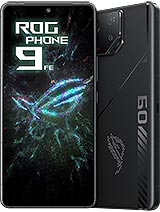
ROG Phone 9 FE
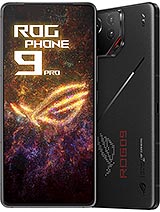
ROG Phone 9 Pro
Galaxy Z Fold Special