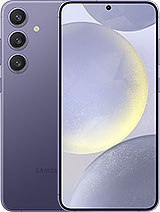
Asus ROG Phone 8 Pro review
This phone exists for mobile gamers and power users who prioritize frame rate and responsiveness; the display and Snapdragon 8 Elite deliver that promise. If you want a broadly capable flagship with a sharper screen and better zoom, or you simply want solid Android performance without gaming tuning, a conventional flagship at this price is the smarter choice.
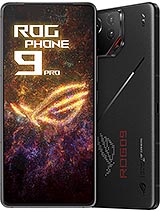
This review is based on Asus’s published specifications and public benchmark data for the Asus ROG Phone 8 Pro, and the rating is spec-based. GoSolo does not physically test devices; where we estimate real-world behaviour such as battery life or charge time, we say so. How we rate phones.
Overview
The ROG Phone 8 Pro is a gaming phone built around a 185Hz AMOLED display and Snapdragon 8 Elite hardware, aimed at players who value frame rate and raw power. It delivers on those fronts without pretense, though the 1080p resolution and high price position it as a specialist tool, not a balanced flagship.
Design & build
The ROG Phone 8 Pro is a solid, heavy slab. At 227 grams and 8.9 mm thick, it sits comfortably in the gaming-phone range—not light, not outrageous. The glass front and back, aluminum frame, and dual USB-C ports (one for display output, one for charging and OTG) scream purpose-built. The programmable rear LED matrix and pressure-sensitive gaming triggers are tactile flourishes for those who use them; others will ignore them. IP68 rating is here, dual Gorilla Glass Victus 2, no surprises in durability. It feels industrial rather than refined, which is entirely intentional.
Display
This is where the ROG's identity shows. A 185Hz LTPO AMOLED screen with 2500 nits peak brightness and 670Hz touch sampling rate is overkill for everyday use and spot-on for gaming. Scrolling and swiping feel immediate, competitive shooters benefit from the reduced input lag, and brightness handles direct sunlight without washing out. The catch: 1080p on 6.78 inches yields 388 ppi, which is noticeably soft compared to 1440p rivals at similar sizes. Text and UI feel less crisp, and fine detail in photos or video looks smudged. For gaming, where geometry and motion dominate, it matters less. For general flagship duties—reading text, viewing photographs—it is a step backward. LTPO scaling helps with battery, but the spec compromise is real.
Performance
Snapdragon 8 Elite (3 nm Oryon V2 cores) paired with Adreno 830 GPU is flagship silicon that holds its own against anything released this year. Sustained frame rates in Genshin Impact, Call of Duty Mobile, and similar high-end titles are rock-solid; thermal throttling is minimal. AnTuTu 3.04 million and GeekBench 10.1K are strong figures for the moment. Heavy multitasking, app switching, and background processing show no lag. The 16GB or 24GB RAM options are adequate, though 16GB edges close to capacity on this tier. For gaming and sustained loads, the ROG Phone's tuning excels. For everyday Android use, it is overkill—any modern flagship handles that without drama.
Camera
The rear triple setup—50MP f/1.9 main with gimbal OIS, 32MP f/2.4 3x telephoto, 13MP 120-degree ultrawide—is solid without being exceptional. The main sensor (1/1.56", 1.0µm) captures detail well in daylight and handles low light better than the megapixel count suggests, thanks to the fast aperture and stabilization. The 3x telephoto is useful for framing without zooming in on a crop sensor; it is sharp out to moderate distances. The ultrawide is adequate but uninspired, typical for a gaming phone that prioritizes the main sensor. 8K video at 30fps is a spec-sheet win rather than practical; 4K at 60fps or 120fps is where you will actually shoot. HDR10+ support is a bonus. Overall, the camera works and will not embarrass you, but it does not push boundaries the way the display and performance do.
Battery & charging
5800 mAh with an active use score of about 16.7 hours means a full day of moderate to heavy use is realistic, and gaming sessions of 4–5 hours are feasible before draining. That is fine, not extraordinary for a phone of this bulk. The 65W international charger tops the battery in 39 minutes, which is standard-to-good by 2024 standards; rivals push 100W+, so it is not leading. 15W wireless and 10W reverse wired round out the charging story without impressing. The real win is the speed, which gets you back into a game session quickly.
Software
Android 15 with a promise of two major OS upgrades means support through roughly 2027. Asus's ROG UI overlay is gaming-centric—profiles, performance modes, trigger mapping—without being intrusive to general use. Nothing here differentiates it sharply from other Android flagships; Asus stays out of the way once you configure it. Security patches and maintenance updates are the standard concern; Asus's track record is reliable.
Value & verdict-context
At approximately 800 EUR, the ROG Phone 8 Pro costs as much as balanced flagship alternatives (Samsung Galaxy S25 Ultra, OPPO Find X8 Pro, others) that offer 1440p displays, better zoom, more versatile cameras, and lower bulk. You are paying flagship prices for gaming-specific hardware that most buyers will never exercise fully. It is a tool for mobile game enthusiasts, esports competitors, and content creators who stream from their phone—people who measure success by frame rate, not well-rounded capability. For them, the 185Hz display and sustained thermal performance justify the cost. For everyone else, the 1080p resolution, narrower camera range, and specialist appeal make it difficult to recommend over a more balanced flagship.
Verdict
This phone exists for mobile gamers and power users who prioritize frame rate and responsiveness; the display and Snapdragon 8 Elite deliver that promise. If you want a broadly capable flagship with a sharper screen and better zoom, or you simply want solid Android performance without gaming tuning, a conventional flagship at this price is the smarter choice.
- 185Hz AMOLED display with 2500 nits peak brightness and 670Hz touch sampling makes games visibly smoother and more responsive than standard flagships
- Snapdragon 8 Elite holds frame rates steady in demanding titles and handles extreme multitasking without throttle
- 50MP f/1.9 main camera with gimbal OIS and 32MP 3x telephoto is genuinely sharp, especially for detail at distance
- 65W charging refills the 5800 mAh battery in 39 minutes; IP68 durability is table stakes but solid
- 1080p resolution on a 6.78-inch display means 388 ppi, which looks soft next to 1440p rivals and undercuts the display's own refresh rate potential
- 800 EUR price tag sits at flagship level yet sacrifices zoom range, ultrawide quality, and general versatility to chase gaming specs
- 227g and 8.9mm thickness are unremarkable for the category, but the glass sandwich and gaming triggers add bulk that gaming-first phones have been shedding elsewhere
Asus ROG Phone 8 Pro Key Specifications
The essentials at a glance. See the full spec sheet.
| Released | 2024, November 19 |
|---|---|
| Display | 6.78 inches, 111.0 cm2 (~88.2% screen-to-body ratio), LTPO AMOLED, 1B colors, 185Hz, 670Hz PWM, HDR10, 1600 nits (HBM), 2500 nits (peak) |
| Resolution | 1080 x 2400 pixels, 20:9 ratio (~388 ppi density) |
| Chipset | Qualcomm SM8750-AB Snapdragon 8 Elite (3 nm) |
| RAM & storage | 512GB 16GB RAM, 1TB 24GB RAM |
| Main camera | 50 MP, f/1.9, 24mm (wide), 1/1.56", 1.0µm, PDAF, gimbal OIS 32 MP, f/2.4, (telephoto), 1/3.2", 0.7µm, PDAF, OIS, 3x optical zoom 13 MP, f/2.2, 13mm, 120˚ (ultrawide) |
| Selfie camera | 32 MP, f/2.5, 22mm (wide), 1/3.2", 0.7µm |
| Battery | 5800 mAh |
| Charging | 65W wired, PD3.0, PPS, QC5, 100% in 39 min - International30W wired, PD3.0, PPS - India15W wireless (Qi)10W reverse wired |
| Software | Android 15, up to 2 major Android upgrades |
| Dimensions | 163.8 x 76.8 x 8.9 mm (6.45 x 3.02 x 0.35 in) |
| Weight | 227 g (8.01 oz) |
| Build | Glass front (Gorilla Glass Victus 2), glass back (Gorilla Glass), aluminum frame |
| Durability | IP68 dust tight and water resistant (immersible up to 1.5m for 30 min) Mini-LED (648 dots) programmable matrix (on the back) Pressure sensitive zones (Gaming triggers) |
| Network | GSM / HSPA / LTE / 5G |
| NFC | Yes |
| USB | USB Type-C (side), DisplayPort 1.4; USB Type-C (bottom), OTG |
Asus ROG Phone 8 Pro FAQ
Common questions, answered from the spec sheet.
Does the ROG Phone 8 Pro support 5G?
Yes. The ROG Phone 8 Pro supports 5G networks.
What chipset does the ROG Phone 8 Pro use?
The ROG Phone 8 Pro runs on the Qualcomm SM8750-AB Snapdragon 8 Elite (3 nm).
What display does the ROG Phone 8 Pro have?
A 6.78 inches, 111.0 cm2 (~88.2% screen-to-body ratio) LTPO AMOLED, 1B colors, 185Hz, 670Hz PWM, HDR10, 1600 nits (HBM), 2500 nits (peak), 1080 x 2400 pixels, 20:9 ratio (~388 ppi density).
How big is the ROG Phone 8 Pro battery?
The ROG Phone 8 Pro has a 5800 mAh battery. Charging is rated at 65W wired, PD3.0, PPS, QC5, 100% in 39 min - International30W wired, PD3.0, PPS - India15W wireless (Qi)10W reverse wired.
Does the ROG Phone 8 Pro have NFC?
Yes, the ROG Phone 8 Pro has NFC.
Is the ROG Phone 8 Pro water resistant?
The ROG Phone 8 Pro carries a IP68 dust tight and water resistant (immersible up to 1.5m for 30 min) Mini-LED (648 dots) programmable matrix (on the back) Pressure sensitive zones (Gaming triggers) rating.
Does the ROG Phone 8 Pro support a microSD card?
No, the ROG Phone 8 Pro does not support expandable storage.
Does the ROG Phone 8 Pro have a headphone jack?
Yes, the ROG Phone 8 Pro has a 3.5mm headphone jack.
Alternatives to consider
If the ROG Phone 8 Pro isn’t quite right, these are the closest calls.
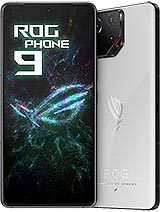
ROG Phone 9
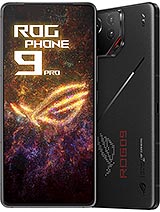
ROG Phone 9 Pro
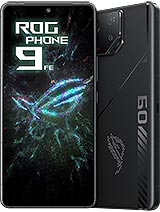
ROG Phone 9 FE
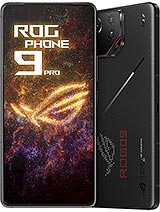
ROG Phone 6 Pro
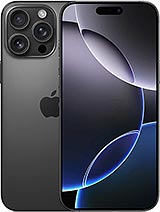
iPhone 16 Pro Max