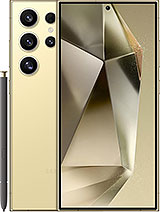
Asus ROG Phone 9 review
The ROG Phone 9 is built for people whose phone is a gaming platform first and a general-purpose device second. Everyone else should look at a conventional flagship for the same price—you'll get better cameras, sharper text, and more universal appeal, just without the 185Hz smoothness or the thermal headroom for eight-hour gaming marathons.
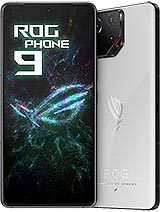
This review is based on Asus’s published specifications and public benchmark data for the Asus ROG Phone 9, and the rating is spec-based. GoSolo does not physically test devices; where we estimate real-world behaviour such as battery life or charge time, we say so. How we rate phones.
Overview
A gaming phone with flagship guts and a 185Hz display that actually matters for scrolling and competitive play. It's thin, fast, and doesn't pretend to be anything but a performance machine—which it delivers on, though at a premium price for a device that's not a practical daily driver unless gaming or video work is your life.
Design & Build
The ROG Phone 9 strikes the rare balance between aggressive gaming-phone aesthetics and genuine usability. At 8.9mm thick and 227g, it's thinner and lighter than you'd expect for a device with a programmable 85-dot mini-LED matrix on the back and side-mounted pressure-sensitive gaming triggers. Gorilla Glass Victus 2 wraps both sides, and the aluminum frame feels solid without being heavy. IP68 water and dust resistance is standard at this price, and the twin USB-C ports (one on the bottom for charging, one on the side with DisplayPort 1.4) show Asus has thought about how gamers actually use the phone. The design speaks function over flash—no unnecessary curves, no gimmicks that fall apart after six months. It looks like what it is: a phone built for people who plan to play games on it, not a device pretending to hide that fact.
Display
The 185Hz LTPO AMOLED is the single best reason to buy this phone. Most 120Hz flagship displays are marketing fluff; 185Hz genuinely changes how scrolling feels, and LTPO reduces power draw by stepping down refresh when you don't need it. Brightness reaches 1600 nits (HBM) in regular use and peaks at 2500 nits, so text and details stay crisp in harsh sunlight without tone-mapping everything to grey. The catch: resolution is 1080p at a 6.78-inch diagonal, which lands at 388 ppi—noticeably softer than the 1440p standard for €2000 flagships. For gaming this is intentional; staying at 1080p lets the Snapdragon 8 Elite maintain 120+ fps in demanding titles without burning through the battery in two hours. If you're watching YouTube or reading news, the softness becomes obvious. If you're gaming or want smooth scrolling at the smoothest possible frame rate, it is worth the trade-off.
Performance
The Snapdragon 8 Elite is current-gen flagship silicon, and the ROG Phone 9 unleashes it without restraint. AnTuTu sits at 3,007,932—top of the heap for its generation. In practice, this means Genshin Impact, Honkai Star Rail, and Call of Duty play at high graphics and high frame rates for hours without thermal throttle, thanks to Asus's vapor chamber cooling. App launches are instant, multitasking is seamless, and the 12GB/16GB RAM configurations handle background processes without swapping to storage. The 256GB base storage uses UFS 4.0, so file transfer is quick. This is not a phone that will feel slow in the next two years; by gaming-phone standards, it's future-proofed for the current generation of demanding titles. The real win is sustained performance: most gaming phones thermal-throttle after 30 minutes; the ROG Phone 9 goes hours.
Software
Android 15 ships out of the box with an update path to Android 16 and a two-major-version update guarantee—standard for 2024 flagship. Asus's ROG UI overlay is light compared to past iterations, and most bloat can be uninstalled. The gaming-specific features (trigger mapping, RGB control, performance profiles) integrate cleanly without forcing themselves on users who just want a fast Android phone. No removable bloat from carriers (Asus sells unlocked globally), and NFC + USB-C mean wireless and wired payment work without friction. Software is functional rather than flashy, which is the right call for a device marketed to people who will spend 80% of their time in games, not menus.
Camera
The 50MP main sensor (f/1.9, 1/1.56", 1.0µm) with gimbal optical image stabilization is genuinely impressive for handheld video. Most phones rely on electronic stabilization, which softens detail; gimbal OIS lets the sensor physically move to compensate, so 4K and 8K video stay sharp even when you're walking or panning. Low-light stills benefit from the wide aperture and large sensor—not perfect in pitch black, but solid for social media and quick snaps. The 13MP ultrawide at 120° handles landscapes and group shots without distortion creep. The 5MP macro is forgettable; most phones bunker a macro lens as filler. The 32MP selfie front camera is adequate for video calls. Where the ROG Phone 9 falls short: there is no telephoto. For a €2000 phone, the absence of a 2x or 3x tele is a miss, especially since video shooters might want to frame wider or tighter without cropping into 1080p. As it stands, you get a strong wide-angle and ultrawide, but no optical reach.
Battery & Charging
The 5800 mAh battery with an active use score of 16:41 hours means you can comfortably make it through a day of moderate-to-heavy gaming without hunting for an outlet. Refresh the screen with a lighter workload, and you stretch past 24 hours. Gaming drains it faster—about 8 hours of Genshin Impact at high settings on full brightness—but that is normal for any flagship at sustained load. Charging at 65W reaches full in about 46 minutes, which is swift for travel but slower than the 100W+ charging rivals are now hitting. Wireless charging is a modest 15W (Qi), and reverse wired is 10W—fine for emergency top-ups but not a real advantage. The 46-minute charge time means you can't grab a quick 15-minute top-up like you can on phones with 120W+ wired, so the ROG Phone 9 asks you to plan charging windows rather than be spontaneous.
Value & Verdict
At €2020, the ROG Phone 9 is pricing itself as a premium flagship, but it trades everyday polish for gaming optimization. A standard flagship offers better image clarity (1440p display), faster charging (100W+), and sometimes a better camera range. What you get instead is a phone optimized for one use case: gaming and video work. If that is your priority—and you game heavily enough to justify the cost—this phone does it better than any other. If you want a versatile all-rounder that handles everything equally well, you are paying a premium for features you will rarely use. The ROG brand also carries niche status; it will not hold value like a Samsung or iPhone, and telling someone you spent €2000 on a "gaming phone" tends to invite skepticism, especially in regions where that budget buys genuine workhorse flagships. That said, for esports players, content creators, or anyone who spends more than half their phone time in high-demand games, the 185Hz display, gimbal-stabilized camera, and thermal design justify the ask.
Verdict
The ROG Phone 9 is built for people whose phone is a gaming platform first and a general-purpose device second. Everyone else should look at a conventional flagship for the same price—you'll get better cameras, sharper text, and more universal appeal, just without the 185Hz smoothness or the thermal headroom for eight-hour gaming marathons.
- 185Hz LTPO AMOLED display at 2500 nits peak brightness and 388 ppi makes scrolling butter-smooth and text sharp in daylight—worth the spec sheet hype in ways most flagships' refresh rates aren't.
- Gimbal-stabilised 50MP main camera (f/1.9, 1/1.56" sensor) delivers steady handheld video and low-light stills without needing a tripod or heavy post-processing.
- Snapdragon 8 Elite with 3M AnTuTu score runs Genshin Impact and Honkai Star Rail at high settings without thermal throttle, and 5800 mAh battery lasts a full day of heavy gaming.
- 8.9mm thin and only 227g despite the feature set—lighter than many flagships and slim enough that gaming triggers and the mini-LED matrix don't bloat it into a brick.
- 65W charging is adequate but rivals in this price tier now hit 100W+, so a full charge still takes 46 minutes instead of 30.
- 1080p screen resolution at 6.78 inches (388 ppi) falls short of the 1440p standard for €2000 flagships—fine for gaming at high frame rates, soft for text-heavy work or photos.
- €2020 is steep for a phone whose everyday utility is no better than a base flagship, and the ROG brand carries a gaming niche that limits resale value.
Asus ROG Phone 9 Key Specifications
The essentials at a glance. See the full spec sheet.
| Released | 2024, November 19 |
|---|---|
| Display | 6.78 inches, 111.0 cm2 (~88.2% screen-to-body ratio), LTPO AMOLED, 1B colors, 185Hz, HDR10, 1600 nits (HBM), 2500 nits (peak) |
| Resolution | 1080 x 2400 pixels, 20:9 ratio (~388 ppi density) |
| Chipset | Qualcomm SM8750-AB Snapdragon 8 Elite (3 nm) |
| RAM & storage | 256GB 12GB RAM, 512GB 16GB RAM |
| Main camera | 50 MP, f/1.9, 24mm (wide), 1/1.56", 1.0µm, PDAF, gimbal OIS 13 MP, f/2.2, 13mm, 120˚ (ultrawide) 5 MP (macro) |
| Selfie camera | 32 MP, f/2.5, 22mm (wide), 1/3.2", 0.7µm |
| Battery | 5800 mAh |
| Charging | 65W wired, PD3.0, PPS, QC5, 100% in 46 min15W wireless (Qi)10W reverse wired |
| Software | Android 15, upgradable to Android 16, up to 2 major Android upgrades |
| Dimensions | 163.8 x 76.8 x 8.9 mm (6.45 x 3.02 x 0.35 in) |
| Weight | 227 g (8.01 oz) |
| Build | Glass front (Gorilla Glass Victus 2), glass back (Gorilla Glass), aluminum frame |
| Durability | IP68 dust tight and water resistant (immersible up to 1.5m for 30 min) Mini-LED (85 dots) programmable matrix (on the back) Pressure sensitive zones (Gaming triggers) |
| Network | GSM / HSPA / LTE / 5G |
| NFC | Yes |
| USB | USB Type-C (side), DisplayPort 1.4; USB Type-C (bottom), OTG |
Asus ROG Phone 9 FAQ
Common questions, answered from the spec sheet.
Does the ROG Phone 9 support 5G?
Yes. The ROG Phone 9 supports 5G networks.
What chipset does the ROG Phone 9 use?
The ROG Phone 9 runs on the Qualcomm SM8750-AB Snapdragon 8 Elite (3 nm).
What display does the ROG Phone 9 have?
A 6.78 inches, 111.0 cm2 (~88.2% screen-to-body ratio) LTPO AMOLED, 1B colors, 185Hz, HDR10, 1600 nits (HBM), 2500 nits (peak), 1080 x 2400 pixels, 20:9 ratio (~388 ppi density).
How big is the ROG Phone 9 battery?
The ROG Phone 9 has a 5800 mAh battery. Charging is rated at 65W wired, PD3.0, PPS, QC5, 100% in 46 min15W wireless (Qi)10W reverse wired.
Does the ROG Phone 9 have NFC?
Yes, the ROG Phone 9 has NFC.
Is the ROG Phone 9 water resistant?
The ROG Phone 9 carries a IP68 dust tight and water resistant (immersible up to 1.5m for 30 min) Mini-LED (85 dots) programmable matrix (on the back) Pressure sensitive zones (Gaming triggers) rating.
Does the ROG Phone 9 support a microSD card?
No, the ROG Phone 9 does not support expandable storage.
Does the ROG Phone 9 have a headphone jack?
Yes, the ROG Phone 9 has a 3.5mm headphone jack.
Alternatives to consider
If the ROG Phone 9 isn’t quite right, these are the closest calls.
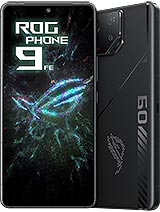
ROG Phone 9 FE
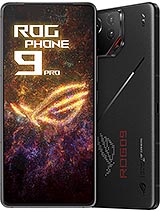
ROG Phone 8 Pro
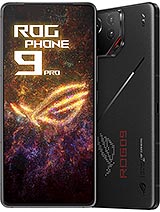
ROG Phone 9 Pro

ROG Phone 8

iPhone 16 Pro Max