Asus ROG Phone 9 FE review
Buy this if sustained gaming and a smooth 185Hz display are your priorities and you value battery endurance over charging speed. Look elsewhere if you want the sharpest 1440p display or the fastest charging—those are easier to find at this price in 2025.
This review is based on Asus’s published specifications and public benchmark data for the Asus ROG Phone 9 FE, and the rating is spec-based. GoSolo does not physically test devices; where we estimate real-world behaviour such as battery life or charge time, we say so. How we rate phones.
Overview
A gaming phone that swaps unnecessary flourish for focused hardware: Snapdragon 8 Gen 3, a blazing 185Hz LTPO display, and a 5500mAh battery that handles sustained gaming. The 65W charging is brisk but ordinary by 2025 standards, and the camera is solid without being a flagship highlight.
Design & build
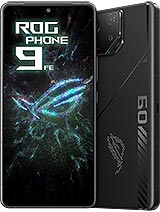
At 225g and 8.9mm thick, the ROG Phone 9 FE is reasonably compact for a gaming phone. The glass-and-aluminum chassis feels solid, and Gorilla Glass Victus 2 on both front and back is now table stakes for a flagship. IP68 rating with 1.5m water resistance for 30 minutes is reassuring. The programmable mini-LED matrix on the back (341 dots) and pressure-sensitive gaming triggers are the distinctive touches—they feel more purposeful than gimmick, though the matrix mostly serves lighting sync rather than everyday utility. Overall, it does not feel overbuilt or unnecessarily heavy, which works in its favour against heavier gaming rivals.
Display
The 6.78-inch LTPO AMOLED at 185Hz is where the ROG Phone 9 FE justifies its gaming DNA. The variable refresh rate keeps power efficient when the screen does not need the full speed, and 2500 nits peak brightness means you are not squinting in direct sunlight. The trade-off is the 1080 x 2400 resolution (388 ppi), which is lower than 1440p rivals at this price. Text and UI icons are noticeably softer when you look closely, and it is a compromise that would be harder to swallow on a traditional flagship but makes sense for a gaming-first device where frame rate beats pixel density. Colour accuracy and HDR10 performance are competitive; the smoothness during scrolling and gaming is the real draw here.
Performance
The Snapdragon 8 Gen 3 is current-generation flagship silicon, and paired with 16GB RAM and UFS 4.0 storage, this phone handles everything the Android ecosystem throws at it without stutter. Gaming is the priority: Genshin Impact, Call of Duty Mobile, and similar titles run at high settings and stable framerates without the thermal throttling that hampers older or thermally compromised designs. The Adreno 750 GPU is not marginal—it delivers sustained performance over 20–30 minute play sessions. Multitasking is effortless, app launching is instant, and you will not hit performance walls for years. This is not exotic or surprising for a 2025 flagship, but it is reliable.
Software
Android 15 ships out of the box with a promise of two major version upgrades, so you are looking at support through Android 17. Asus layers its ROG UI on top, which is gaming-focused (profile management for per-game settings, LED control, trigger mapping) without overwhelming the base experience. The software does not feel bloated by Asus standards, though you will encounter some ROG-specific apps you may not use. Updates have historically been steady for ROG flagships, so this should remain current for a while. Nothing here stands out as a weakness or strength compared to other gaming phones.
Camera
The primary camera—50MP, f/1.9, with gimbal OIS and a 1/1.56 sensor—is strong for a gaming phone, though not a camera-first flagship. The 1.0µm pixels and low aperture excel in low light and video stabilisation is genuinely useful if you are capturing gameplay or clips, especially the gimbal OIS that reduces shake beyond what electronic stabilisation alone would manage. 8K video at 30fps works but results in massive files; 4K at 60/120fps is the practical sweet spot. The 13MP ultrawide is conventional (120° field of view, f/2.2), and the 5MP macro is padding. The 32MP selfie is adequate. Overall, the camera system is competent and the main sensor is genuinely useful, but it does not push into the flagship camera tier—it is fit-for-purpose for a gaming phone, not a reason to choose this device on its own merits.
Battery & charging
The 5500mAh battery is the standout for endurance. Heavy gaming and constant display use (high refresh rate, high brightness) drain it in about 14–16 hours, which is noticeably better than thinner rivals and valuable if you game regularly. The 65W wired charging reaches 100% in 39 minutes, which is respectable but no longer impressive—phones at this price now routinely offer 100W+ wired charging. The 15W wireless and 10W reverse wired are conveniences that do not move the needle. If you game a lot, the battery size matters more than the charging speed; if you need to top up mid-session, the 65W is fast enough, but it is not a standout advantage.
Value & verdict-context
At about 860 EUR, the ROG Phone 9 FE is priced as a gaming-first device, and the specs bear that out. The Snapdragon 8 Gen 3, 185Hz display, and sizable battery are all aimed at gamers. However, the 1080p resolution is a tangible step down from 1440p rivals at similar prices, and the 65W charging feels ordinary rather than compelling. The camera is functional but forgettable. If gaming is your primary use—especially sustained sessions—the 185Hz display and battery life justify the price. If you want an all-rounder flagship with the best possible screen and charging speed, a 1440p competitor may serve you better. For someone in a region with limited gaming-phone options or a strong ROG ecosystem preference, the ROG Phone 9 FE is a sensible choice. For others, it is a solid device that succeeds at a specific purpose rather than a must-have.
Verdict
Buy this if sustained gaming and a smooth 185Hz display are your priorities and you value battery endurance over charging speed. Look elsewhere if you want the sharpest 1440p display or the fastest charging—those are easier to find at this price in 2025.
- 185Hz LTPO AMOLED display with up to 2500 nits peak brightness—scrolling and gaming are genuinely fluid, and sunlight legibility is excellent for this class
- Snapdragon 8 Gen 3 with Adreno 750 delivers consistent frame rates in demanding games (Genshin Impact, Call of Duty Mobile) without thermal throttling
- 50MP main camera with f/1.9 aperture, gimbal OIS, and 1/1.56 sensor captures sharp low-light stills and 8K video; the optical stabilisation matters more for gamers shooting clips than the megapixel count
- 5500mAh battery sustains 14–16 hours under heavy gaming and display use, avoiding the mid-session drain that plagues thinner flagships
- 65W wired charging (39 min to full) is solid but not remarkable—rivals in this tier now routinely hit 100W, making this feel incremental
- 1080p resolution on a 6.78-inch display at 388 ppi means fine text and UI can feel slightly soft compared to 1440p rivals, and it's a trade-off to keep the high refresh rate smooth
- No expandable storage and only 256GB base capacity limits flexibility for someone downloading games or 8K videos; this matters more for a gaming phone than a mainstream handset
Asus ROG Phone 9 FE Key Specifications
The essentials at a glance. See the full spec sheet.
| Released | 2025, February 04 |
|---|---|
| Display | 6.78 inches, 111.0 cm2 (~88.2% screen-to-body ratio), LTPO AMOLED, 1B colors, 185Hz, HDR10, 1600 nits (HBM), 2500 nits (peak) |
| Resolution | 1080 x 2400 pixels, 20:9 ratio (~388 ppi density) |
| Chipset | Qualcomm SM8650-AB Snapdragon 8 Gen 3 (4 nm) |
| RAM & storage | 256GB 16GB RAM |
| Main camera | 50 MP, f/1.9, 24mm (wide), 1/1.56", 1.0µm, PDAF, gimbal OIS 13 MP, f/2.2, 13mm, 120˚ (ultrawide) 5 MP (macro) |
| Selfie camera | 32 MP, f/2.5, 22mm (wide), 1/3.2", 0.7µm |
| Battery | 5500 mAh |
| Charging | 65W wired, PD3.0, PPS, QC5, 100% in 39 min15W wireless (Qi)10W reverse wired |
| Software | Android 15, up to 2 major Android upgrades |
| Dimensions | 163.8 x 76.8 x 8.9 mm (6.45 x 3.02 x 0.35 in) |
| Weight | 225 g (7.94 oz) |
| Build | Glass front (Gorilla Glass Victus 2), glass back, aluminum frame |
| Durability | IP68 dust tight and water resistant (immersible up to 1.5m for 30 min) Mini-LED (341 dots) programmable matrix (on the back) Pressure sensitive zones (Gaming triggers) |
| Network | GSM / HSPA / LTE / 5G |
| NFC | Yes |
| USB | USB Type-C (side), DisplayPort 1.4; USB Type-C (bottom), OTG |
Asus ROG Phone 9 FE FAQ
Common questions, answered from the spec sheet.
Does the ROG Phone 9 FE support 5G?
Yes. The ROG Phone 9 FE supports 5G networks.
What chipset does the ROG Phone 9 FE use?
The ROG Phone 9 FE runs on the Qualcomm SM8650-AB Snapdragon 8 Gen 3 (4 nm).
What display does the ROG Phone 9 FE have?
A 6.78 inches, 111.0 cm2 (~88.2% screen-to-body ratio) LTPO AMOLED, 1B colors, 185Hz, HDR10, 1600 nits (HBM), 2500 nits (peak), 1080 x 2400 pixels, 20:9 ratio (~388 ppi density).
How big is the ROG Phone 9 FE battery?
The ROG Phone 9 FE has a 5500 mAh battery. Charging is rated at 65W wired, PD3.0, PPS, QC5, 100% in 39 min15W wireless (Qi)10W reverse wired.
Does the ROG Phone 9 FE have NFC?
Yes, the ROG Phone 9 FE has NFC.
Is the ROG Phone 9 FE water resistant?
The ROG Phone 9 FE carries a IP68 dust tight and water resistant (immersible up to 1.5m for 30 min) Mini-LED (341 dots) programmable matrix (on the back) Pressure sensitive zones (Gaming triggers) rating.
Does the ROG Phone 9 FE support a microSD card?
No, the ROG Phone 9 FE does not support expandable storage.
Does the ROG Phone 9 FE have a headphone jack?
Yes, the ROG Phone 9 FE has a 3.5mm headphone jack.
Alternatives to consider
If the ROG Phone 9 FE isn’t quite right, these are the closest calls.

Zenfone 12 Ultra

ROG Phone 8

ROG Phone 7 Ultimate

ROG Phone 9
Galaxy S25 FE