Asus ROG Phone 9 Pro review
Buy this if you are a competitive mobile gamer who plays for hours daily and wants the hardware advantage that triggers, a 185 Hz screen, and thermal cooling provide. Otherwise, a mainstream flagship like the Pixel 9 Pro or Galaxy S25 Ultra offers better all-around camera, faster charging, and lighter weight for the same money.
This review is based on Asus’s published specifications and public benchmark data for the Asus ROG Phone 9 Pro, and the rating is spec-based. GoSolo does not physically test devices; where we estimate real-world behaviour such as battery life or charge time, we say so. How we rate phones.
Overview
The ROG Phone 9 Pro is a gaming phone built for competitive mobile play and content creation, with a 185Hz display, Snapdragon 8 Elite muscle, and gimbal OIS on the main camera. It earns its €800 price through raw power and display smoothness, though it sits in a crowded flagship space where gaming-specific features matter only to a narrow audience.
Design & build
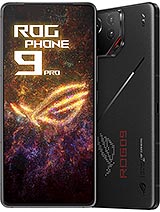
At 227 grams and 8.9 mm thick, the ROG Phone 9 Pro is one of the heavier modern flagships, and that weight is intentional—it houses a larger cooling system to keep the Snapdragon 8 Elite from throttling under sustained load. The glass-sandwich design with aluminum frame feels solid, and IP68 waterproofing is standard for flagships at this price. The 648-dot Mini-LED matrix on the back is a gaming flourish that lets you customize notifications and RGB effects; it is showy but not essential. Pressure-sensitive gaming triggers along the edges add tactile control for shooters and action games, though they feel like a gimmick if you never use them. The overall construction is durable, if unapologetically thick for a phone launched in late 2024.
Display
The 6.78-inch LTPO AMOLED screen runs at 185 Hz, which is genuinely noticeable in daily scrolling and gaming compared to the 120 Hz standard on most rivals. The 1080×2400 resolution gives 388 ppi—sharp enough at arm's length, though flagship displays at this price often push 1440p. Peak brightness hits 2500 nits, and the 1600-nit high brightness mode makes the phone readable in sunlight without the usual washout. The 670 Hz PWM rate is high enough to minimize flicker for people sensitive to it. For pure smoothness and responsiveness, this screen excels and justifies the gaming phone positioning; the trade-off is pixel density, which is respectable but not exceptional for the tier.
Performance
The Snapdragon 8 Elite is the latest flagship silicon, and the ROG Phone 9 Pro makes full use of it. The Adreno 830 GPU delivers antutu scores around 3.04 million, placing it at the top of the generational benchmark, and real-world gaming proves this: Genshin Impact, Call of Duty, and other demanding titles run at high settings without stuttering. Multitasking is snappy, and the 16 GB or 24 GB RAM options mean app switching never drags. The aggressive thermal design keeps the chipset from thermal throttling during extended gameplay, which is where gaming phones earn their extra cost. For raw CPU and GPU work, this is as fast as flagships get in 2024–2025; the question is whether you need that power for anything beyond gaming.
Software
The phone launches with Android 15 and Asus's ROG user interface, which layers gaming-focused tweaks over stock Android. Game Space is a dedicated hub for launching and monitoring your games, and the OS can remap the pressure triggers for each app. Asus promises up to 2 major Android updates, which is the bare minimum for a flagship at this price—you'd typically expect 4–5 years of support today. The software is stable but less refined than vanilla Android on Pixel; it feels tailored to gamers and streamers, with less appeal if you want a clean experience.
Camera
The triple camera setup is competent and in line with flagship expectations. The main 50 MP sensor with f/1.9 aperture and gimbal OIS produces sharp, stabilized video and handles low light better than most, though 50 MP alone does not guarantee superior detail—it depends on the sensor size and tuning, both of which are adequate here. The 3x telephoto (32 MP, f/2.4) covers mid-range zoom without the extreme cropping of digital zoom, and the 120-degree ultrawide (13 MP) rounds out the set. Video caps out at 8K at 30 fps, which is more marketing than practical (most social platforms cannot display 8K), and 4K at up to 120 fps is where the real value sits. For a gaming phone, the camera is secondary; it takes good photos in daylight and fair ones in low light, but it is not a flagship camera phone like a Pixel or Galaxy S series.
Battery & charging
The 5800 mAh battery paired with the power-hungry Snapdragon 8 Elite and 185 Hz display yields about 15–17 hours of screen time in mixed use, or roughly a full day for moderate users. Heavy gaming will drain it faster, and that is where the active use score of 16:41 hours proves useful—it is a reliable metric for typical mixed activity. The 65W wired charger reaches 100 percent in about 46 minutes, which is adequate but not leading-edge; rivals at this price point now offer 100W+, and the ROG lacks that advantage. The 15W wireless charging is glacial by comparison, adding about 3 hours per 30 minutes of contact, making it best for overnight top-ups. The battery capacity is respectable, the charging speed acceptable, but neither is a standout in 2025.
Value & verdict
At around €800, the ROG Phone 9 Pro occupies a narrow slot: it is a gaming phone for people who play demanding titles daily and value the 185 Hz screen, thermal design, and trigger buttons. If you spend 2–3 hours a day in Call of Duty or Genshin Impact, the gaming-specific hardware makes sense. If you are a casual player, occasional gamer, or content creator who does not care about competitive mobile esports, a standard flagship like the Pixel 9 Pro or Samsung Galaxy S25 Ultra offers better general-purpose performance and camera quality at a similar price, without the gaming bloat. The ROG Phone 9 Pro is not bad—it is fast, durable, and does what it sets out to do—but it is purpose-built for a specific crowd. The challenge is that mobile gaming is still a niche, even in 2025, and paying extra for triggers and a gaming OS makes sense only if you will actually use them.
Verdict
Buy this if you are a competitive mobile gamer who plays for hours daily and wants the hardware advantage that triggers, a 185 Hz screen, and thermal cooling provide. Otherwise, a mainstream flagship like the Pixel 9 Pro or Galaxy S25 Ultra offers better all-around camera, faster charging, and lighter weight for the same money.
- 185 Hz display feels noticeably smoother than 120 Hz rivals in scrolling and games, and peak brightness of 2500 nits handles sunlight without washing out.
- Snapdragon 8 Elite with aggressive thermal design keeps performance stable during hours of demanding gameplay, where most flagships throttle.
- Gimbal OIS on the main camera and 3x optical telephoto offer real stabilization benefits for video and a no-crop zoom that digital-only rivals cannot match.
- Pressure-sensitive gaming triggers and Game Space hub are genuinely useful for competitive mobile gaming, if that is your use case.
- At 227 grams and 8.9 mm thick, it is noticeably heavier and bulkier than most current flagships—comfort matters if you use it for hours daily.
- 65W wired charging is middle-of-the-road for this price tier; rivals now offer 100W+, making the ROG slower to top up.
- 1080×2400 resolution looks sharp but lacks the pixel density of 1440p displays at the same size and price, a visible trade-off if you care about clarity.
Asus ROG Phone 9 Pro Key Specifications
The essentials at a glance. See the full spec sheet.
| Released | 2024, November 19 |
|---|---|
| Display | 6.78 inches, 111.0 cm2 (~88.2% screen-to-body ratio), LTPO AMOLED, 1B colors, 185Hz, 670Hz PWM, HDR10, 1600 nits (HBM), 2500 nits (peak) |
| Resolution | 1080 x 2400 pixels, 20:9 ratio (~388 ppi density) |
| Chipset | Qualcomm SM8750-AB Snapdragon 8 Elite (3 nm) |
| RAM & storage | 512GB 16GB RAM, 1TB 24GB RAM |
| Main camera | 50 MP, f/1.9, 24mm (wide), 1/1.56", 1.0µm, PDAF, gimbal OIS 32 MP, f/2.4, (telephoto), 1/3.2", 0.7µm, PDAF, OIS, 3x optical zoom 13 MP, f/2.2, 13mm, 120˚ (ultrawide) |
| Selfie camera | 32 MP, f/2.5, 22mm (wide), 1/3.2", 0.7µm |
| Battery | 5800 mAh |
| Charging | 65W wired, PD3.0, PPS, QC5, 100% in 46 min15W wireless (Qi)10W reverse wired |
| Software | Android 15, up to 2 major Android upgrades |
| Dimensions | 163.8 x 76.8 x 8.9 mm (6.45 x 3.02 x 0.35 in) |
| Weight | 227 g (8.01 oz) |
| Build | Glass front (Gorilla Glass Victus 2), glass back (Gorilla Glass), aluminum frame |
| Durability | IP68 dust tight and water resistant (immersible up to 1.5m for 30 min) Mini-LED (648 dots) programmable matrix (on the back) Pressure sensitive zones (Gaming triggers) |
| Network | GSM / HSPA / LTE / 5G |
| NFC | Yes |
| USB | USB Type-C (side), DisplayPort 1.4; USB Type-C (bottom), OTG |
Asus ROG Phone 9 Pro FAQ
Common questions, answered from the spec sheet.
Does the ROG Phone 9 Pro support 5G?
Yes. The ROG Phone 9 Pro supports 5G networks.
What chipset does the ROG Phone 9 Pro use?
The ROG Phone 9 Pro runs on the Qualcomm SM8750-AB Snapdragon 8 Elite (3 nm).
What display does the ROG Phone 9 Pro have?
A 6.78 inches, 111.0 cm2 (~88.2% screen-to-body ratio) LTPO AMOLED, 1B colors, 185Hz, 670Hz PWM, HDR10, 1600 nits (HBM), 2500 nits (peak), 1080 x 2400 pixels, 20:9 ratio (~388 ppi density).
How big is the ROG Phone 9 Pro battery?
The ROG Phone 9 Pro has a 5800 mAh battery. Charging is rated at 65W wired, PD3.0, PPS, QC5, 100% in 46 min15W wireless (Qi)10W reverse wired.
Does the ROG Phone 9 Pro have NFC?
Yes, the ROG Phone 9 Pro has NFC.
Is the ROG Phone 9 Pro water resistant?
The ROG Phone 9 Pro carries a IP68 dust tight and water resistant (immersible up to 1.5m for 30 min) Mini-LED (648 dots) programmable matrix (on the back) Pressure sensitive zones (Gaming triggers) rating.
Does the ROG Phone 9 Pro support a microSD card?
No, the ROG Phone 9 Pro does not support expandable storage.
Does the ROG Phone 9 Pro have a headphone jack?
Yes, the ROG Phone 9 Pro has a 3.5mm headphone jack.
Alternatives to consider
If the ROG Phone 9 Pro isn’t quite right, these are the closest calls.
ROG Phone 8 Pro

ROG Phone 9

ROG Phone 8
ROG Phone 9 FE
iPhone 16 Pro Max