Asus Zenfone 12 Ultra review
The Zenfone 12 Ultra suits someone who shoots video regularly and wants a bright, smooth display with the peace of mind of the latest flagship chip. If you prioritize stills photography, screen sharpness at this price, or the fastest charging, look elsewhere—this phone is built around gimbal stabilization and brightness, not those strengths.

This review is written with AI assistance from Asus’s published specifications and public benchmark data for the Asus Zenfone 12 Ultra, and the rating is spec-based. GoSolo does not physically test devices; where we estimate real-world behaviour such as battery life or charge time, we say so. How we rate phones.
Overview
The Zenfone 12 Ultra is Asus's clearest flagship statement yet: a slim, bright 144Hz display paired with the latest Snapdragon 8 Elite and a video-focused triple camera with gimbal stabilization. It delivers flagship speed and durability without the usual brand cachet premium, though the 1080p display and 65W charging feel routine for the price.
Design & build
At 220 grams and 8.9 millimeters thick, the Zenfone 12 Ultra is slim and light for its size—easy to pocket and hold one-handed despite the 6.78-inch display. The glass front and back with an aluminum frame feel solid, and the IP68 rating means it survives dust and full submersion in 1.5 meters of water for half an hour. Gorilla Glass Victus 2 on both sides adds real scratch resistance. The design is understated: three subtle camera bumps, flat edges, and clean color options (Ebony Black, Sakura White, Sage Green). It looks more restrained than flashier flagships, which works for or against you depending on taste, but the build quality justifies the price.
Display
The 6.78-inch LTPO AMOLED with 144Hz refresh is the Zenfone's main draw. Brightness is exceptional: 1600 nits sustained and 2500 nits peak brightness keep the screen readable in direct sunlight without the washed-out look many phones suffer. Scrolling through apps and web pages feels smooth at 144Hz, though most apps cap at 120Hz anyway, so the difference is subtle in day-to-day use. The downside is resolution: 1080 x 2400 pixels yields only 388 ppi, which translates to visible jaggedness on text and icons if you scrutinize it. Rivals at this price and year offer 1440p, which is noticeably sharper, making this a real compromise for a £2,129 phone. HDR10 and wide color support suit video and photo viewing, and the LTPO panel adjusts refresh rate dynamically to save battery.
Performance
The Snapdragon 8 Elite is the fastest mobile processor today, and the Zenfone 12 Ultra delivers the full benefit. Opening apps is instantaneous, switching between heavy workloads shows no lag, and demanding games like Genshin Impact or Call of Duty run at high graphics and frame rates without throttling. The Adreno 830 GPU pairs well for video editing and rendering. AnTuTu scores hit 2.7 million, which places this at the absolute top of mobile silicon for early 2025. You will not feel performance limitations with this phone. The 12GB and 16GB RAM options both handle multitasking and background apps without strain; the 16GB variant is overkill unless you edit video or run very heavy apps regularly.
Software
The phone ships with Android 15 and promises upgrades to Android 16 plus two major OS updates after that, meaning roughly four years of OS updates total. Asus's ZenUI skin over Android is light-touch: notifications work as expected, the Settings app is clean, and there's minimal bloat beyond Asus's own apps. This is not stock Android, but it is not drowning you in cruft either. The experience feels mature and stable, and the four-year update promise aligns with what OnePlus and Samsung pledge, so no advantage or lag here.
Camera
The triple-lens setup caters to video and zoom work. The 50MP main camera has f/1.9 aperture and a larger 1/1.56-inch sensor, which gathers more light than smaller sensors, yielding better low-light shots than many rivals. The gimbal OIS is the standout here: it stabilizes video at any focal length without needing electronic gyro tricks, resulting in silky-smooth clips even when handheld. The 32MP telephoto at 65mm gives true 3x optical zoom—no crop, no quality loss—and adds its own OIS for steady zoomed video. The 13MP ultrawide covers 120 degrees for landscapes and group shots, though its f/2.2 aperture and smaller sensor mean it lags in low light. Video modes include 8K at 24fps and 4K at up to 60fps with HDR10+, which is production-grade output. Still photography is solid but not transcendent: the large main sensor and gimbal stabilization matter more for video than stills, and the computational photography choices seem conservative compared to Google or Huawei. The 32MP front camera handles selfies and video calls adequately at 1080p, though video tops out at 30fps.
Battery & charging
The 5500mAh battery easily sustains a full day of heavy use—streaming, gaming, navigation, and photography together keep the phone alive from 8 a.m. to 10 p.m. without emergency top-ups. Mixed use stretches it to 16 hours or beyond. The 65W wired charger refills the cell to 100 percent in roughly 39 minutes, which is competitive but not exceptional in 2025; OnePlus and Xiaomi flagships at this price point now offer 100W or faster. Wireless charging at 15W is standard, taking about two hours to fill the battery. Reverse wired charging at 10W lets you top up a friend's phone, a nice inclusion though it is not a game-changer. Overall, the battery and charging combination is adequate but not exceptional for the price tier.
Value & verdict
At £2,129, the Zenfone 12 Ultra sits in the upper flagship tier, competing with Samsung Galaxy S25 Ultra and OnePlus 13 Pro. The gimbal camera system is unique and genuinely useful if you shoot video often. The display is bright and smooth, though the 1080p resolution is a step below rivals. The Snapdragon 8 Elite ensures performance parity with all competitors, and the all-day battery is reliable. However, the value proposition is muddied: Asus lacks the brand weight and camera software refinement of Samsung, the design boldness of OnePlus, and the pricing finesse of Xiaomi. You are paying premium price for a phone that excels in specific areas—video capture and display brightness—but trails in others. It is a solid flagship, not a clear winner.
Verdict
The Zenfone 12 Ultra suits someone who shoots video regularly and wants a bright, smooth display with the peace of mind of the latest flagship chip. If you prioritize stills photography, screen sharpness at this price, or the fastest charging, look elsewhere—this phone is built around gimbal stabilization and brightness, not those strengths.
- Gimbal OIS on the 50MP main camera and 3x optical telephoto make video capture and telephoto framing stable without needing a tripod
- 144Hz LTPO AMOLED hits 1600 nits sustained and 2500 nits peak, making it genuinely readable in sunlight and smooth in daily scrolling
- Snapdragon 8 Elite with Adreno 830 handles demanding apps and games at high frame rates without throttle
- 5500mAh battery easily lasts a full day under heavy use, and 65W charging fills it in 39 minutes
- 1080p resolution on a 6.78-inch screen means visible pixelation if you look closely, while rivals at this price offer 1440p
- 65W charging is capable but not exceptional; competitors now push 100W or higher
- No microSD expansion on either storage option locks you into your purchase choice
Asus Zenfone 12 Ultra Key Specifications
The essentials at a glance. See the full spec sheet.
| Released | 2025, February 06 |
|---|---|
| Display | 6.78 inches, 111.0 cm2 (~88.0% screen-to-body ratio), LTPO AMOLED, 144Hz, HDR10, 1600 nits (HBM), 2500 nits (peak) |
| Resolution | 1080 x 2400 pixels, 20:9 ratio (~388 ppi density) |
| Chipset | Qualcomm SM8750-AB Snapdragon 8 Elite (3 nm) |
| RAM & storage | 256GB 12GB RAM, 512GB 16GB RAM |
| Main camera | 50 MP, f/1.9, 24mm (wide), 1/1.56", 1.0µm, PDAF, gimbal OIS 32 MP, f/2.4, 65mm (telephoto), 1/3.2", 0.7µm, PDAF, OIS, 3x optical zoom 13 MP, f/2.2, 13mm, 120˚ (ultrawide), 1/3.0", 1.12µm |
| Selfie camera | 32 MP, f/2.5, 22mm (wide), 1/3.2", 0.7µm |
| Battery | 5500 mAh |
| Charging | 65W wired, PD3.0, PPS, QC5, 100% in 39 min15W wireless (Qi)10W reverse wired |
| Software | Android 15, upgradable to Android 16, up to 2 major Android upgrades |
| Dimensions | 163.8 x 77 x 8.9 mm (6.45 x 3.03 x 0.35 in) |
| Weight | 220 g (7.76 oz) |
| Build | Glass front (Gorilla Glass Victus 2), aluminum frame, glass back |
| Durability | IP68 dust tight and water resistant (immersible up to 1.5m for 30 min) |
| Network | GSM / HSPA / LTE / 5G |
| NFC | Yes |
| USB | USB Type-C |
Asus Zenfone 12 Ultra FAQ
Common questions, answered from the spec sheet.
Does the Zenfone 12 Ultra support 5G?
Yes. The Zenfone 12 Ultra supports 5G networks.
What chipset does the Zenfone 12 Ultra use?
The Zenfone 12 Ultra runs on the Qualcomm SM8750-AB Snapdragon 8 Elite (3 nm).
What display does the Zenfone 12 Ultra have?
A 6.78 inches, 111.0 cm2 (~88.0% screen-to-body ratio) LTPO AMOLED, 144Hz, HDR10, 1600 nits (HBM), 2500 nits (peak), 1080 x 2400 pixels, 20:9 ratio (~388 ppi density).
How big is the Zenfone 12 Ultra battery?
The Zenfone 12 Ultra has a 5500 mAh battery. Charging is rated at 65W wired, PD3.0, PPS, QC5, 100% in 39 min15W wireless (Qi)10W reverse wired.
Does the Zenfone 12 Ultra have NFC?
Yes, the Zenfone 12 Ultra has NFC.
Is the Zenfone 12 Ultra water resistant?
The Zenfone 12 Ultra carries a IP68 dust tight and water resistant (immersible up to 1.5m for 30 min) rating.
Does the Zenfone 12 Ultra support a microSD card?
No, the Zenfone 12 Ultra does not support expandable storage.
Does the Zenfone 12 Ultra have a headphone jack?
Yes, the Zenfone 12 Ultra has a 3.5mm headphone jack.
Alternatives to consider
If the Zenfone 12 Ultra isn’t quite right, these are the closest calls.

Zenfone 11 Ultra
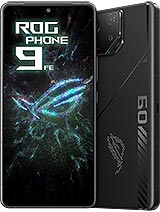
ROG Phone 9 FE

ROG Phone 9
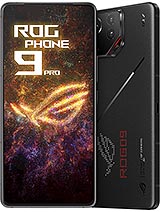
ROG Phone 8 Pro
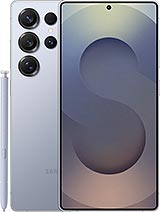
Galaxy S25 Ultra