Blackview BV4800 Pro review
Buy this if jobsite durability, water and dust sealing, or field work in rough conditions is the priority over screen quality and processing speed. Look elsewhere if you want a general-purpose phone with a bright display and responsive gaming performance—the rugged spec has trade-offs built in, and this phone won't surprise you with flashy processing or camera clarity.
This review is based on Blackview’s published specifications and public benchmark data for the Blackview BV4800 Pro, and the rating is spec-based. GoSolo does not physically test devices; where we estimate real-world behaviour such as battery life or charge time, we say so. How we rate phones.
Overview
The BV4800 Pro is a rugged field phone that trades speed and camera clarity for durability, landing firmly in the work-site category. At this price and for its audience, the IP68/IP69K rating and MIL-STD compliance matter more than a sharp screen or fast processor.
Design & Build
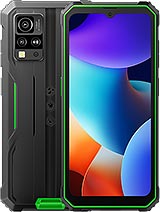
At 285 grams and 13.5 mm thick, the BV4800 Pro sits squarely in the rugged camp and wears it without apology. The spec sheet reads like a durability checklist: IP68/IP69K water and dust sealing, immersion rated to 1.5 meters for half an hour, certified MIL-STD-810H for drops and shocks from the same height, and Gorilla Glass 5 on the front. These are not marketing flourishes. For someone buying a phone to take on a construction site, into a farm or mine, or on expeditions where accidents are routine, this protection genuinely matters. Most flagship phones would be ruined by what this one treats as baseline.
Display
A 6.56-inch screen with only 720 by 1612 resolution leaves the pixel grid visible at normal viewing distance, a compromise rugged phones have always made to keep cost and power draw down. The IPS LCD panel is decent for colors and viewing angles, but brightness is modest—outdoor readability in direct sun will force you to tilt and squint. For field workers consulting maps, checking GPS coordinates, or reading work orders, the size helps, but anyone who spends hours on the display daily will notice the softness. There is no reason to expect flagship clarity here, and there is no reason to spend the time disappointed.
Performance
The Unisoc T606 is entry-level silicon, pairing two faster Cortex-A75 cores with six efficiency cores and a Mali-G57 GPU. It handles messaging, email, calls, maps, and basic utilities smoothly enough that you will not feel friction in day-to-day work. Heavy apps—social media feeds, photo editing, anything graphically intensive—will tax it. Gaming of any real demand will stutter and lag. This phone is not built to entertain you; it is built to work alongside you. Android 14 with DokeOS 4.0 customization keeps things responsive for its intended use, and 4 GB of RAM is sufficient for typical tasks without constant reload churn. Pair it with a proper rugged plan—work apps, maps, calls—and it does the job. Expect it to do anything else.
Camera
The 16 MP main shooter on a 1080p 30fps limit signals where priorities lie. Daylight photos are usable: the f/2.2 aperture pulls in enough light for clear stills in reasonable conditions, and autofocus helps composition. Move into shade or dusk, and noise creeps in noticeably; night shots will be grainy and lack fine detail. The 2 MP macro sensor and 8 MP selfie are bare-minimum additions that round out the spec but do not deliver any real extra capability. Video maxes at 1080p 30fps, which is smooth enough for documentation but not for capturing fast motion or action. For a rugged phone, this is adequate. For anyone treating photography as part of the job—site documentation, inventory photos, safety records—the quality is sufficient. Do not expect beauty; expect clarity.
Battery & Charging
The 5180 mAh battery is solid for the 720p screen and modest processor, stretching to a full workday on typical use and eking into a second day if you keep to calls and messaging only. Expect about 8 to 10 hours of continuous screen-on time before hunting a charger. The real annoyance is the 10W charging rate, which claws back power so slowly that a full charge from empty takes roughly two hours. This is not a phone to top up in fifteen minutes. Plan charging around your schedule—overnight or during a long midday break—rather than expecting a quick boost before you head out. For a field worker, this is a trade-off: lighter weight and simpler internals stay alive longer, but you pay in charging time.
Software & Connectivity
Android 14 with DokeOS 4.0 is Blackview's light customization layer, keeping bloat modest and responsiveness intact for the hardware's capability. LTE connectivity covers the major global bands, and dual-band Wi-Fi 5, Bluetooth 5.0, NFC, and FM radio round out a feature set that rivals have largely abandoned. The inclusion of NFC without upsell feels refreshing in a market where flagship phones treat it as a locked perk. GPS + GLONASS + Galileo + BDS positioning is thorough for maps and site work. The side-mounted fingerprint sensor works and is responsive. Nothing here surprises, but nothing feels shortchanged either for a phone aimed at working outdoors rather than status-checking indoors.
Value & Verdict
The BV4800 Pro is not priced as a general phone; it is priced as a field tool. If you are a construction worker, landscaper, farmer, delivery driver, or expedition-goer who needs a phone that survives impact, dust, submersion, and pressure jets, and who uses it for work apps, maps, and calls rather than streaming and gaming, this phone delivers on its promise and justifies its existence. The durability is real, the battery is honest, and the cost is reasonable for what you are buying. If you are a general consumer wanting a casual smartphone, there are cheaper entry-level phones with brighter screens and faster processors that will suit you better. This phone is a tool for a specific job. It does that job well.
Verdict
Buy this if jobsite durability, water and dust sealing, or field work in rough conditions is the priority over screen quality and processing speed. Look elsewhere if you want a general-purpose phone with a bright display and responsive gaming performance—the rugged spec has trade-offs built in, and this phone won't surprise you with flashy processing or camera clarity.
- IP68/IP69K sealed and survives 1.5m drops—built for jobsites and outdoor use where rivals would not last a week
- Dedicated microSD slot and 128GB base storage, with NFC and FM radio included where many phones have stripped these out
- Honest 5180 mAh battery that lasts a full workday on mixed use, enough for 8–10 hours of screen-on time
- 10W charging is glacially slow, taking roughly two hours to fill—plan charging around your schedule, not before you leave
- 720p display on a 6.56-inch frame means visible pixels at arm's length and poor readability in bright sunlight
- Unisoc T606 is entry-tier; stutters under any real load beyond messaging, calls, and basic apps
Blackview BV4800 Pro Key Specifications
The essentials at a glance. See the full spec sheet.
| Released | 2024, December |
|---|---|
| Display | 6.56 inches, 103.4 cm2 (~72.6% screen-to-body ratio), IPS LCD |
| Resolution | 720 x 1612 pixels, 20:9 ratio (~269 ppi density) |
| Chipset | Unisoc T606 (12 nm) |
| RAM & storage | 128GB 4GB RAM |
| Main camera | 16 MP, f/2.2, (wide), AF 2 MP, f/2.8 |
| Selfie camera | 8 MP, f/2.2, (wide) |
| Battery | 5180 mAh |
| Charging | 10W wired |
| Software | Android 14, DokeOS 4.0 |
| Dimensions | 174.7 x 81.5 x 13.5 mm (6.88 x 3.21 x 0.53 in) |
| Weight | 285 g (10.05 oz) |
| Durability | IP68/IP69K dust tight and water resistant (high pressure water jets; immersible up to 1.5m for 30 min) Drop resistant up to 1.5m MIL-STD-810H compliant |
| Network | GSM / HSPA / LTE |
| NFC | Yes |
| USB | USB Type-C 2.0, OTG |
Blackview BV4800 Pro FAQ
Common questions, answered from the spec sheet.
Does the BV4800 Pro support 5G?
No. The BV4800 Pro tops out at GSM / HSPA / LTE, without 5G.
What chipset does the BV4800 Pro use?
The BV4800 Pro runs on the Unisoc T606 (12 nm).
What display does the BV4800 Pro have?
A 6.56 inches, 103.4 cm2 (~72.6% screen-to-body ratio) IPS LCD, 720 x 1612 pixels, 20:9 ratio (~269 ppi density).
How big is the BV4800 Pro battery?
The BV4800 Pro has a 5180 mAh battery. Charging is rated at 10W wired.
Does the BV4800 Pro have NFC?
Yes, the BV4800 Pro has NFC.
Is the BV4800 Pro water resistant?
The BV4800 Pro carries a IP68/IP69K dust tight and water resistant (high pressure water jets; immersible up to 1.5m for 30 min) Drop resistant up to 1.5m MIL-STD-810H compliant rating.
Does the BV4800 Pro support a microSD card?
Yes, the BV4800 Pro supports expandable storage (microSDXC (dedicated slot)).
Does the BV4800 Pro have a headphone jack?
No, the BV4800 Pro does not have a 3.5mm headphone jack.
Alternatives to consider
If the BV4800 Pro isn’t quite right, these are the closest calls.
Tab90WiFi
Tab9WiFi
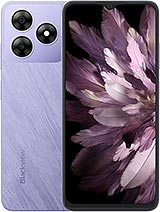
Wave 8
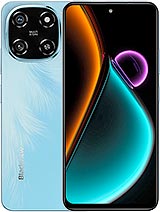
Color 8
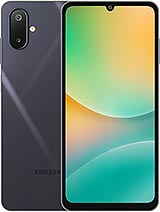
Galaxy M06 5G