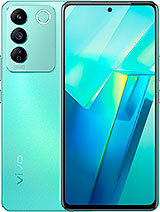
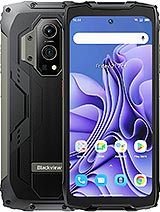
Blackview BV9300 review
The BV9300 is for people who work outdoors or in rough conditions and have already learned that dropping a normal phone is a financial catastrophe. It is not for anyone who prioritizes thinness, gaming, or the latest connectivity; nor is it a casual budget phone, it is a specialized tool at a fair specialist price.
This review is based on Blackview’s published specifications and public benchmark data for the Blackview BV9300, and the rating is spec-based. GoSolo does not physically test devices; where we estimate real-world behaviour such as battery life or charge time, we say so. How we rate phones.
Overview
The BV9300 is a rugged workhorse built for sites, water, and falls—not fashion. Its true strength is the combination of IP68/IP69K durability, genuine MIL-STD-810H certification, a 15,080mAh battery that will push two full days, and 33W charging in under an hour, all wrapped in a chunky but serious 520g frame. For field workers, remote teams, and anyone who actually drops phones in dirt or rain, it delivers on purpose. The mid-range Helio G99 and 1080p LCD do not excite, but they're adequate for the job; expect no gaming glory or pixel-perfect text at this price and ruggedness tier.
Design & build
The BV9300 is intentionally bulky—520 grams, 22.8mm thick—and that is the point. This is not a phone that apologizes for its weight or looks sleek; it is designed to absorb punishment. The IP68/IP69K rating means full dust sealing and 30-minute immersion at 1.5m depth, while the MIL-STD-810H certification and 1.8m drop resistance are not marketing claims but actual compliance tests. The laser rangefinder and 100-lumen LED flashlight feel purposeful on a site, not frivolous add-ons. Compared to consumer flagships that bend under their own beauty, the BV9300 is a truck to their sports car. If you work outdoors, in dusty trades, or in remote places where a dropped phone is a real financial setback, this design is liberating. If you want to slip it into a shirt pocket or use it as a fashion accessory, look elsewhere.
Display
The 6.7-inch IPS LCD hits 1080 × 2388 resolution at 391 ppi density, which works fine from arm's length but begins to show individual pixels in small text if you hold it closer. The 120Hz refresh is smooth and appropriate for the modest mid-range performance; it does not force the battery to work harder. For office work, video calls, or reading, the display is serviceable but uninspiring. For field documentation, job photos, and sketches, it is perfectly adequate and bright enough outdoors. This is not a display that excels, nor one that fails—it is honest and built to tolerate rough handling and glare without breaking.
Performance
The Helio G99 with Mali-G57 graphics and 12GB RAM handles everyday apps, browsing, and casual games without strain. Social media, messaging, email, and light navigation are smooth. Light games—turn-based strategy, puzzle titles, most 2D work—run without hiccup. Demanding 3D games like PUBG or Genshin Impact will stutter at medium settings, and heavy video editing or file compression will show minor lag. For a 2023 mid-range chip, this is expected and unremarkable. The UFS 2.1 storage is fast enough for boot and app launch but trails the newer UFS 3.0 standard. If your day is site inspections, email, and photo capture, the BV9300 keeps pace. If you are a mobile gamer or run resource-heavy professional apps, you will feel the ceiling.
Software
Android 12 with Doke-OS 3.1 overlay from Blackview is a known entity in the rugged market—minimal bloat, decent customization for durability features, and straightforward updates. Doke-OS has not earned a reputation for speed, but it does not notably slow the hardware either. The side-mounted fingerprint sensor is reliable for one-handed unlock in gloves or when hands are damp. No surprises here, and that is acceptable; the software does not get in the way of work.
Camera
The 50MP main sensor (1/2.76-inch, 0.64µm, PDAF) and 8MP 120-degree ultrawide capture adequate daylight shots and wide landscapes. The 0.64µm pixel size is cramped—larger sensors with fewer megapixels often look cleaner—so expect noise in lower light. Video maxes out at 1440p 30fps, fine for work documentation or progress clips but not suitable for broadcast or professional video. The 32MP selfie is adequate for video calls. This camera setup is for capturing evidence and reference photos, not artistic expression. For a rugged phone at this price, the expectations are scaled accordingly.
Battery & charging
The 15,080mAh battery is the BV9300's real ace. With a modest 120Hz LCD and mid-range chip, real-world screen-on time ranges from 16 to 20 hours under daily use, stretching easily to a full 36+ hours with lighter browsing or offline work. If you are out on a site all day, charge at lunch, and use the phone sparingly for calls and photos, you will not hit empty before shift end. The 33W wired charger tops the battery in roughly 40 to 55 minutes, which is respectable and practical. There is no wireless charging, but on a rugged phone designed for dusty sites, that is a reasonable omission. This battery endurance is a selling point and genuine advantage over slimmer rivals that need a midday recharge.
Connectivity
The BV9300 maxes out at LTE with no 5G support—a backward step for a 2023 phone, even at mid-range prices. Peak LTE speeds cap around 150 Mbps in ideal conditions, slow by today's standards. However, if you work in areas with spotty signal or mostly operate offline (site surveys, field notes synced at day's end), the lack of 5G is not a practical drawback. The dual-band Wi-Fi 5 (802.11ac) is adequate for office and site-office connections. The standout is quad-GNSS positioning: GPS, GLONASS, Galileo, and BeiDou together lock a fix faster and more reliably than GPS-only phones, valuable if you are mapping sites or navigating remote terrain. NFC and FM radio round out the connectivity; both are uncommon but useful for certain workflows.
Value & verdict-context
At roughly 390 EUR, the BV9300 is not cheap, but it is priced fairly for what it delivers: a genuinely tough phone with two-day battery life, designed to survive drops, dust, and water without flinching. If you buy a consumer flagship and drop it once, you are out €1,000 and scrambling for insurance. The BV9300 survives that drop and keeps working. The Helio G99 and 1080p display are not thrilling, but they are proportional to the mission—this phone is not asking you to play AAA games, it is asking you to clock in and get the job done. For remote workers, construction crews, farmers, field surveyors, and anyone whose phone is a tool not a status symbol, the value proposition is solid. For someone who wants a slim flagship or casual user looking for a "budget gaming" option, the BV9300's weight and ruggedness feel like wasteful overspec. Buy according to your actual environment.
Verdict
The BV9300 is for people who work outdoors or in rough conditions and have already learned that dropping a normal phone is a financial catastrophe. It is not for anyone who prioritizes thinness, gaming, or the latest connectivity; nor is it a casual budget phone, it is a specialized tool at a fair specialist price.
- Genuine IP68/IP69K + MIL-STD-810H durability with 1.8m drop rating—not marketing, real site-ready toughness
- 15,080mAh battery pushing 2-day real-world battery life with moderate use and a 33W charger that refills in under an hour
- Quad-GNSS positioning (GPS, GLONASS, Galileo, BeiDou) for faster outdoor locks than GPS-only rivals, valuable on job sites
- Laser rangefinder and 100-lumen flashlight are niche but useful, not gimmicks for this phone's actual audience
- No 5G and LTE bands top out around 150 Mbps peak speed—backward for 2023, though irrelevant if you're offline on a site half the day
- Helio G99 and Mali-G57 stumble at demanding games and heavy multitasking; minor stutters in PUBG or video editing are real limits
- 1080p on a 6.7-inch LCD reads soft on text at arm's length; not a complaint if you're squinting at construction schematics, but real for office work
Blackview BV9300 Key Specifications
The essentials at a glance. See the full spec sheet.
| Released | 2023, May 10 |
|---|---|
| Display | 6.7 inches, 108.7 cm2 (~68.8% screen-to-body ratio), IPS LCD, 120Hz |
| Resolution | 1080 x 2388 pixels (~391 ppi density) |
| Chipset | Mediatek Helio G99 (6 nm) |
| RAM & storage | 256GB 12GB RAM |
| Main camera | 50 MP, (wide), 1/2.76", 0.64µm, PDAF 8 MP, 120˚, (ultrawide), AF Auxiliary lens |
| Selfie camera | 32 MP, (wide) |
| Battery | 15080 mAh |
| Charging | 33W wired5W reverse wired |
| Software | Android 12, Doke-OS 3.1 |
| Dimensions | 184.6 x 85.6 x 22.8 mm (7.27 x 3.37 x 0.90 in) |
| Weight | 520 g (1.15 lb) |
| Durability | IP68/IP69K dust tight and water resistant (high pressure water jets; immersible up to 1.5m for 30 min) Drop resistant up to 1.8m MIL-STD-810H compliant Laser rangefinder (up to 40m) Dedicated flashlight (100 lumens) |
| Network | GSM / CDMA / HSPA / LTE |
| NFC | Yes |
| USB | USB Type-C, OTG |
Blackview BV9300 FAQ
Common questions, answered from the spec sheet.
Does the BV9300 support 5G?
No. The BV9300 tops out at GSM / CDMA / HSPA / LTE, without 5G.
What chipset does the BV9300 use?
The BV9300 runs on the Mediatek Helio G99 (6 nm).
What display does the BV9300 have?
A 6.7 inches, 108.7 cm2 (~68.8% screen-to-body ratio) IPS LCD, 120Hz, 1080 x 2388 pixels (~391 ppi density).
How big is the BV9300 battery?
The BV9300 has a 15080 mAh battery. Charging is rated at 33W wired5W reverse wired.
Does the BV9300 have NFC?
Yes, the BV9300 has NFC.
Is the BV9300 water resistant?
The BV9300 carries a IP68/IP69K dust tight and water resistant (high pressure water jets; immersible up to 1.5m for 30 min) Drop resistant up to 1.8m MIL-STD-810H compliant Laser rangefinder (up to 40m) Dedicated flashlight (100 lumens) rating.
Does the BV9300 support a microSD card?
Yes, the BV9300 supports expandable storage (microSDXC (uses shared SIM slot)).
Does the BV9300 have a headphone jack?
No, the BV9300 does not have a 3.5mm headphone jack.
Alternatives to consider
If the BV9300 isn’t quite right, these are the closest calls.
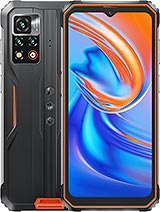
BV9200
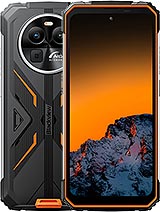
BV8100
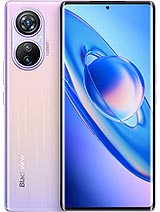
A200 Pro
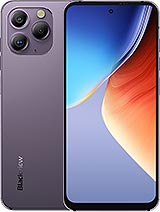
A96
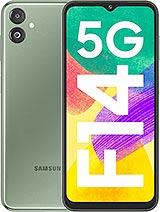
Galaxy F14