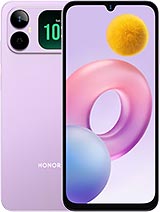
Blackview Color 6 review
The Color 6 suits someone who values battery life and screen space over refinement and is content with basic performance. Skip it if you want a sharp display, fast storage, or speedy charging—those things cost more, and this phone cuts corners precisely there.
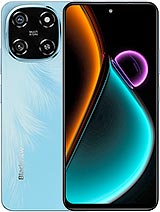
This review is based on Blackview’s published specifications and public benchmark data for the Blackview Color 6, and the rating is spec-based. GoSolo does not physically test devices; where we estimate real-world behaviour such as battery life or charge time, we say so. How we rate phones.
Overview
The Color 6 is a big-screened budget phone that trades speed and charging for a long-lasting battery and a 50MP camera. At 90 EUR, it is solid for someone who needs a phone that lasts all day and keeps things simple, but the chunky bezels, slow storage, and lack of 5G mean it will feel dated within a year.
Design & build
At 199g and 8.7mm thick, the Color 6 is manageable but not slim—it sits between a phone and a phablet. The weight is honest for a 5000 mAh battery at this price. Panda Glass (Mohs 7) is fine for everyday bumps; not Gorilla Glass, but it will resist fingernail scratches and casual drops better than bare plastic. The body feels like a budget device, and the bezels are noticeably thick by modern standards, but nothing here suggests it will fall apart in six months. Dual nano-SIM and a dedicated microSD slot mean flexibility for travelers or those needing two numbers.
Display
The 6.67-inch IPS LCD is a mixed bag. The 90Hz refresh makes scrolling through apps and lists feel smooth, and 650 nits brightness means you can see the screen in bright sunlight without squinting too hard—a real advantage at this price. But the 720p resolution across that large screen means 264 pixels per inch, which is well below the sharpness threshold. Icons, text, and photos look blocky if you hold the phone at normal reading distance. This is the real cost-cutting move: a 1080p panel would have made the experience noticeably crisper, but that would have raised the price. For basic tasks—messaging, calls, social media browsing—it is tolerable. For photo editing or reading fine print, it is frustrating.
Performance
The Mediatek Helio G81 is a mainstream midrange chip that powers everyday tasks competently. Apps open in reasonable time, web browsing is fluid, and messaging apps do not stutter. The 8GB of RAM helps with multitasking. Gaming is where it hits its limits: casual games like Candy Crush and Subway Surfers run fine at default settings, but demanding titles like PUBG or Genshin Impact will either not run or demand graphics cuts to stay playable. This is a phone for someone who does not game seriously or who plays older, simpler titles. For communication, social media, and light productivity, it is fit for purpose.
Software
Android 15 ships with DokeOS 4.1, Blackview's custom skin. DokeOS is lightweight and does not add heavy bloat, which helps performance on a midrange chip. Updates are a question mark—Blackview is not known for long software support, so expect security patches for a year or two at most, not the four or five years flagships offer. The bundled apps are minimal, and the side-mounted fingerprint sensor pairs with it without hassle.
Camera
The 50MP f/1.8 main camera with PDAF is the strongest point of the spec sheet. In daylight, it captures sharp, detailed photos with natural color and quick autofocus. The f/1.8 aperture helps gather light, and the 1/2.76-inch sensor is decent for the price. Video maxes out at 1080p 30fps, which is fine for casual clips but not for anything serious. Low-light performance is the weak spot: the small sensor and lack of optical stabilization mean night photos will be grainy and soft. The 13MP selfie is adequate for video calls and casual selfies, nothing more. For a budget phone, this is one of the better camera setups; it will not rival a flagship, but it punches above its weight for 90 EUR.
Battery & charging
The 5000 mAh battery is the phone's staying power. Expect about a full day to a day and a half with moderate use—texting, social media, some music and video streaming. Heavy use (constant gaming or video) will drain it by evening. That is genuinely useful for someone without daily access to a charger. The problem is charging speed: 18W wired will take roughly 90 to 120 minutes from empty to full, and there is no wireless charging. By 2025 standards, this is slow; rivals at this price tier have moved to 30W or even 45W. If you need a quick top-up before leaving home, you are out of luck. Plan to charge overnight.
Value & verdict
At about 90 EUR, the Color 6 targets the budget tier where every dollar counts. It delivers screen size, battery life, and a competent 50MP camera without the 5G tax, which keeps the price down. The main sacrifices are display clarity (720p hurts), storage speed (eMMC feels slow), and charging pace (18W is dated). If you prioritize battery life and screen real estate over sharpness and speed, and you do not need cutting-edge performance, this makes sense. If you work with photos heavily, play modern games, or want a phone that feels snappy, the slower storage and low-res display will frustrate you. The lack of 5G is only a con if you have 5G coverage you plan to use; in many Global South markets, LTE is still the norm, so this is not a dealbreaker.
Verdict
The Color 6 suits someone who values battery life and screen space over refinement and is content with basic performance. Skip it if you want a sharp display, fast storage, or speedy charging—those things cost more, and this phone cuts corners precisely there.
- Large 6.67-inch display with 90Hz and decent outdoor brightness (650 nits) for the price
- 5000 mAh battery will comfortably last a full day of moderate use
- 50MP main camera with f/1.8 aperture and PDAF handles daylight shots and video well enough for social media
- Headphone jack and FM radio still present, plus dedicated microSD slot for storage expansion
- 18W charging is slow by 2025 standards; rivals at this price now hit 30W or more
- 264 ppi display density is noticeably low, making icons and text appear pixelated up close
- eMMC 5.1 storage is significantly slower than UFS found on competitors, dragging out app launches and file transfers
Blackview Color 6 Key Specifications
The essentials at a glance. See the full spec sheet.
| Released | 2025, September |
|---|---|
| Display | 6.67 inches, 107.2 cm2 (~84.6% screen-to-body ratio), IPS LCD, 90Hz, 650 nits |
| Resolution | 720 x 1604 pixels, 20:9 ratio (~264 ppi density) |
| Chipset | Mediatek Helio G81 (12 nm) |
| RAM & storage | 128GB 8GB RAM, 256GB 8GB RAM |
| Main camera | 50 MP, f/1.8, (wide), 1/2.76", PDAF |
| Selfie camera | 13 MP, f/2.0, (wide), 1/4.0" |
| Battery | 5000 mAh |
| Charging | 18W wired |
| Software | Android 15, DokeOS 4.1 |
| Dimensions | 165.7 x 76.5 x 8.7 mm (6.52 x 3.01 x 0.34 in) |
| Weight | 199.4 g (7.05 oz) |
| Network | GSM / HSPA / LTE |
| NFC | No |
| USB | USB Type-C |
Blackview Color 6 FAQ
Common questions, answered from the spec sheet.
Does the Color 6 support 5G?
No. The Color 6 tops out at GSM / HSPA / LTE, without 5G.
What chipset does the Color 6 use?
The Color 6 runs on the Mediatek Helio G81 (12 nm).
What display does the Color 6 have?
A 6.67 inches, 107.2 cm2 (~84.6% screen-to-body ratio) IPS LCD, 90Hz, 650 nits, 720 x 1604 pixels, 20:9 ratio (~264 ppi density).
How big is the Color 6 battery?
The Color 6 has a 5000 mAh battery. Charging is rated at 18W wired.
Does the Color 6 have NFC?
No, the Color 6 does not list NFC support.
Does the Color 6 support a microSD card?
Yes, the Color 6 supports expandable storage (microSDXC (dedicated slot)).
Does the Color 6 have a headphone jack?
Yes, the Color 6 has a 3.5mm headphone jack.
Alternatives to consider
If the Color 6 isn’t quite right, these are the closest calls.
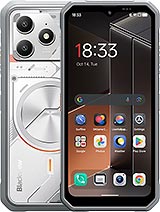
Fort 100
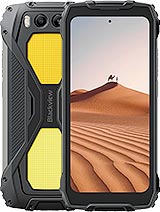
BV7300
Zeno 1
Shark 6
Galaxy M17e