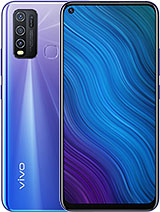
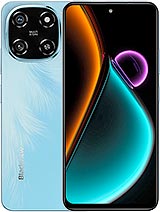
Blackview Color 8 review
The Color 8 suits users who want a big screen and all-day battery on a shoestring budget and can live with slow charging, entry-level performance, and coarse 720p text. Anyone who values speed, camera quality, or fast top-ups should look to a competing €100–120 midrange phone from a mainstream brand.
This review is based on Blackview’s published specifications and public benchmark data for the Blackview Color 8, and the rating is spec-based. GoSolo does not physically test devices; where we estimate real-world behaviour such as battery life or charge time, we say so. How we rate phones.
Overview
The Blackview Color 8 is a budget phone built around a massive 6.67-inch screen and 5000 mAh battery at roughly €90—practical for media and messaging, but the weak Helio G81 chip, 720p resolution, and slow 18W charging hold it back from being a genuine value standout.
Design & build
At 199.4g and 8.7mm thick, the Color 8 is relatively slim and light for its size, though the weight is worth noting if you carry it in a pocket for hours. The dual nano-SIM setup is aging but still useful in regions where it matters. Panda Glass protection (Mohs 7) is standard scratch-resistance. There is nothing flashy here—just a straightforward slab that feels ordinary in hand, which is fine for this price, though the lack of detail on materials (plastic back, metal frame?) leaves you guessing about real durability.
Display
The 6.67-inch 90Hz IPS LCD is where this phone makes its pitch. The 90Hz refresh is genuinely smooth for scrolling through feeds and web pages, and 650 nits is bright enough for indoor use and adequately bright—though not excellent—in daylight. The real weakness is resolution: 720 x 1604 pixels yields just 264 ppi, which is noticeably coarser than the 300+ ppi you will get on almost any 2025 budget phone with a similar screen. Text looks softer, icons less crisp. If you read a lot or spend hours squinting at email, this will annoy you. For video playback and casual browsing, it is acceptable; for sustained text work, it sits below the modern minimum.
Performance
The Helio G81 is a familiar workman: fine for messaging, social media, and streaming, but it will hiccup under load. Gaming is limited to older titles and lightweight games like Candy Crush; any attempt at a modern 3D game at high settings will trigger stuttering and frame drops. Apps open without drama, but multitasking with many browser tabs or resource-heavy apps feels sluggish. By 2025 standards, this is entry-level performance, and at €90 it is what you pay for. The 8GB RAM is adequate but does not elevate the experience beyond what the chipset can deliver.
Software
Android 15 with DokeOS 4.1 should offer a relatively clean interface, though DokeOS adds Blackview's own layer on top. Stock Android would be preferable for a phone at this price point to avoid bloat, but the core experience—notifications, settings, app management—remains standard Android. Long-term update support for a budget Blackview is a wildcard; assume security patches for a couple of years and new Android versions only as a bonus. The 3.5mm jack and FM radio are retained, which appeals to users who still need them, but they are also a sign of how budget-focused this device is.
Camera
The 50MP main sensor with f/1.8 aperture and PDAF looks ambitious, but the devil is in the pixel size: at 0.64µm per pixel, each sensor site is tiny and collects little light. In daylight, this translates to detail that looks sharp at first glance but softens if you zoom or print. In low light—dim rooms, evening outdoor shots—expect visible noise and a soft look, especially because there is no optical stabilization to help hold steady. The 13MP selfie camera is unremarkable. Video maxes out at 1080p@30fps with no mention of stabilization, so handheld video will look shaky. For a €90 phone, the camera is functional and occasionally impressive in good light, but do not expect the quality of phones 2–3 tiers up.
Battery & charging
The 5000 mAh capacity is genuine here, and with the 90Hz LCD and moderate Helio G81, you will comfortably get a full day of light to moderate use—messaging, social media, video streaming—and stretch toward 36–40 hours if you dial down screen time. Heavy gaming or continuous video recording will halve that, which is normal. The problem is charging: 18W wired means 2.5 to 3 hours from empty to 100%, which is slow. Budget rivals now charge at 33W or faster, cutting that time in half. If you can live with a slower refill, the battery size is a genuine strength; if you need to charge in a hurry, this is a real friction point.
Value & verdict
At €90, the Color 8 positions itself as an ultra-budget phone for people who want a big screen and all-day battery without caring much for speed or camera polish. The Helio G81, 720p display, and glacial 18W charging are honest compromises that reflect the price. For messaging, social media, video playback, and casual browsing, it delivers. The microSD slot is a practical bonus. But compared to budget phones from larger OEMs at similar or only slightly higher price points, the Color 8 feels a step behind: rivals offer 720p resolution stretched to 90Hz as a baseline, faster charging, and more capable midrange chips. This is a phone for buyers who prioritize screen size and battery life over everything else, or for second-hand/resale buyers in emerging markets where €90 is a hard ceiling and storage options matter.
Verdict
The Color 8 suits users who want a big screen and all-day battery on a shoestring budget and can live with slow charging, entry-level performance, and coarse 720p text. Anyone who values speed, camera quality, or fast top-ups should look to a competing €100–120 midrange phone from a mainstream brand.
- 5000 mAh battery with 90Hz LCD screen makes for all-day endurance and smooth scrolling on a budget
- Dedicated microSDXC slot for storage expansion—a feature many phones at this price now omit
- 50MP main camera with f/1.8 aperture and PDAF is decent on paper; performs well in daylight
- Side-mounted fingerprint sensor and FM radio give it practical touches often stripped from competitors
- 18W charging takes 2.5–3 hours full; rivals at this price now charge at 33W or faster
- Helio G81 chipset and 8GB RAM handle everyday tasks but struggle noticeably with anything graphically demanding
- 720p display at 6.67 inches means 264 ppi—noticeably coarse text and icons compared to modern budget midrange phones
Blackview Color 8 Key Specifications
The essentials at a glance. See the full spec sheet.
| Released | 2025, September |
|---|---|
| Display | 6.67 inches, 107.2 cm2 (~84.6% screen-to-body ratio), IPS LCD, 90Hz, 650 nits |
| Resolution | 720 x 1604 pixels, 20:9 ratio (~264 ppi density) |
| Chipset | Mediatek Helio G81 (12 nm) |
| RAM & storage | 128GB 8GB RAM, 256GB 8GB RAM |
| Main camera | 50 MP, f/1.8, (wide), 1/2.76", PDAF |
| Selfie camera | 13 MP, f/2.0, (wide), 1/4.0" |
| Battery | 5000 mAh |
| Charging | 18W wired |
| Software | Android 15, DokeOS 4.1 |
| Dimensions | 165.7 x 76.5 x 8.7 mm (6.52 x 3.01 x 0.34 in) |
| Weight | 199.4 g (7.05 oz) |
| Network | GSM / HSPA / LTE |
| NFC | No |
| USB | USB Type-C |
Blackview Color 8 FAQ
Common questions, answered from the spec sheet.
Does the Color 8 support 5G?
No. The Color 8 tops out at GSM / HSPA / LTE, without 5G.
What chipset does the Color 8 use?
The Color 8 runs on the Mediatek Helio G81 (12 nm).
What display does the Color 8 have?
A 6.67 inches, 107.2 cm2 (~84.6% screen-to-body ratio) IPS LCD, 90Hz, 650 nits, 720 x 1604 pixels, 20:9 ratio (~264 ppi density).
How big is the Color 8 battery?
The Color 8 has a 5000 mAh battery. Charging is rated at 18W wired.
Does the Color 8 have NFC?
No, the Color 8 does not list NFC support.
Does the Color 8 support a microSD card?
Yes, the Color 8 supports expandable storage (microSDXC (dedicated slot)).
Does the Color 8 have a headphone jack?
Yes, the Color 8 has a 3.5mm headphone jack.
Alternatives to consider
If the Color 8 isn’t quite right, these are the closest calls.
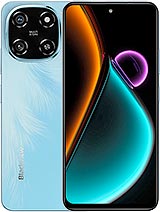
Color 6
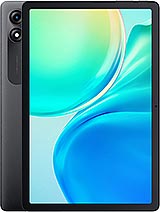
Tab90WiFi
Tab9WiFi
Wave 8
Galaxy M06 5G