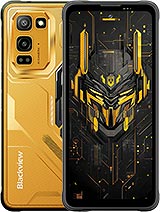
Blackview Fort 1 review
This is a phone for field crews, outdoor professionals, and users in harsh environments where ruggedness and all-day battery trump speed and thin profile. Anyone shopping for everyday smartphone performance and conveniences should look elsewhere.
This review is based on Blackview’s published specifications and public benchmark data for the Blackview Fort 1, and the rating is spec-based. GoSolo does not physically test devices; where we estimate real-world behaviour such as battery life or charge time, we say so. How we rate phones.
Overview
The Fort 1 is a rugged 6.78-inch workhorse built for field crews and outdoor conditions, not smartphone power—IP68/IP69K waterproofing and MIL-STD-810H compliance are genuine strengths that justify the heft and slow charging, but the Helio G100 chip and 18W wired charging are decidedly ordinary for 2026, and most people shopping the broader market will find better everyday phones at this price.
Design & build
At 248g and 10.7mm thick, the Fort 1 is one of the few phones you'll feel in your pocket—that weight comes from rugged engineering, not poor design choices. IP68/IP69K waterproofing (immersible to 2m for 30 minutes and rated for high-pressure jets) and MIL-STD-810H compliance with 6m drop resistance are real protective standards, not marketing theater. This is rare in the mainstream market; most rivals at this price treat durability as an afterthought. The Panda Glass (Mohs level 5) is genuinely a step up from basic Gorilla Glass for scratch resistance. Nano-SIM dual slot plus microSD means you can run a work and personal line without sacrificing storage—smart for field crews. For a phone designed to survive site conditions, the engineering is honest.
Display
The 6.78-inch IPS LCD at 1080 x 2460 resolution (396 ppi) is legible and sharp enough for work—spreadsheets, site photos, and emails render cleanly without strain. 120Hz refresh and 700 nits brightness are standout specs for a rugged phone; rivals often cheap out on brightness to save battery, leaving you squinting in daylight. In practice, 700 nits performs well outdoors on moderately sunny days, though direct overhead sun will still wash the display somewhat. The screen-to-body ratio of 73.7% is ordinary for 2026, but on a phone this thick, the bezel footprint does not feel excessive. This is not a display for media consumption, but for work tasks and durability-focused users, the brightness and refresh rate are an honest step above budget rugged phones.
Performance
The Mediatek Helio G100 is a capable upper-midrange chip for 2026, built on 6nm and pairing two 2.2 GHz Cortex-A76 cores with six efficiency cores. For messaging, email, web browsing, and office apps, it runs smoothly; you will not notice lag on standard work tasks. Gaming and video editing will stall noticeably—if your job involves on-site content creation or heavy multitasking, the Helio G100 will frustrate. The Mali-G57 MC2 GPU is sufficient for light graphical work but nothing more. Six or 12GB of RAM (depending on the configuration) keeps apps resident in memory, helping everyday fluidity. The eMMC 5.1 storage is slower than UFS, so file transfers and app launches will feel sluggish compared to current flagships, but not catastrophically so for work apps. For a phone aimed at field crews doing straightforward work, this is adequate; it is not an everyday power phone.
Software
Android 16 with DokeOS 5.0 running on top is a contemporary foundation. DokeOS is a Blackview overlay designed for durability workflows—resource management and custom power modes are tuned for long battery life on sparse networks. In practice, this means the software prioritizes longevity over flashiness, which aligns with the target user. Android 16 is current, so you have access to modern APIs and Play Store apps without worry. Expect three to four years of OS updates and five or more years of security patches on a rugged Blackview device, which is reasonable for a work phone. Custom overlays on Android often add bloat; DokeOS is lighter than most, staying out of the way on practical tasks.
Camera
The 108MP main camera with 13MP night vision module and LED flash is better on paper than in practice. At 1440p@30fps video, you can record site footage, but the codec is lossy and the bitrate modest—expect serviceable documentation, not broadcast quality. The 50MP selfie at f/2.5 is overkill for a work phone but does produce usable video calls on site. Daylight photos are competent with strong colors and natural exposure; in low light, the LED flash helps, though its range is limited to about 3m. For a field phone used to photograph tools, site conditions, and progress, the camera is fit for purpose. It is not a camera-first device, and expecting DSLR-like results will disappoint.
Battery & charging
The 5000 mAh battery is large by absolute terms but modest for a 6.78-inch display and a chip running light workloads. Real-world all-day stamina depends heavily on connectivity—on Wi-Fi or good LTE, expect a full day of moderate work use, possibly into the evening if you are not constantly on calls or video. On weak networks, the radio works harder to maintain signal, draining battery faster. The 18W wired charging, however, is genuinely slow for 2026; rivals at similar prices offer 33W or 65W, meaning a full zero-to-100 charge takes roughly 90 minutes here versus 45 minutes elsewhere. For field crews at a job site overnight, this matters—you may need to charge mid-shift or overnight rather than grabbing a quick 30-minute top-up. The 5W reverse wireless charging is novelty, not practical for anyone in the field without access to another device. Battery life is adequate; charging speed is a real compromise.
Value & verdict
At its 2026 release price, the Fort 1 is positioned as a rugged workhorse, not a mainstream daily driver. If you work outdoors, on construction sites, in wet environments, or in extreme temperatures, the IP68/IP69K rating and MIL-STD-810H compliance justify the bulk and weight—these are genuine differentiators. The dual-SIM and microSD combination also suits field workers who need separation of work and personal numbers plus local storage for offline maps and data. If you are shopping for a general-purpose smartphone for everyday use, there are lighter, faster, and better-charging alternatives at this price from mainstream makers. The Fort 1 is honestly engineered for abuse, not compromise, but only buyers who will actually subject it to that abuse will see the value. For everyone else, the heaviness, slow charging, and modest performance are genuine drawbacks. Buy it if your job demands toughness; otherwise, look at a lighter mainstream phone.
Verdict
This is a phone for field crews, outdoor professionals, and users in harsh environments where ruggedness and all-day battery trump speed and thin profile. Anyone shopping for everyday smartphone performance and conveniences should look elsewhere.
- IP68/IP69K waterproofing and MIL-STD-810H drop rating up to 6m—rare durability tier that matters for field work, not just desk drops
- 5000 mAh battery with reasonable all-day stamina for outdoor use without running to a charger between jobs
- 120Hz IPS LCD at 700 nits is bright enough in sunlight for a work phone, rare at this durability class
- Dual SIM + microSD slot lets you keep a work and personal number without sacrificing storage expansion
- 18W charging is slow by 2026 standards—rivals at this price hit 33W or faster, meaning a full charge takes roughly 90 minutes instead of 45–60
- Helio G100 struggles with everyday apps after a few months of updates; not suitable for gaming or demanding tasks
- 248g and 10.7mm thick is genuinely heavy and bulky compared to mainstream phones, a real pocket burden on daily carry
Blackview Fort 1 Key Specifications
The essentials at a glance. See the full spec sheet.
| Released | 2026, March |
|---|---|
| Display | 6.78 inches, 109.2 cm2 (~73.7% screen-to-body ratio), IPS LCD, 120Hz, 700 nits |
| Resolution | 1080 x 2460 pixels (~396 ppi density) |
| Chipset | Mediatek Helio G100 (6 nm) |
| RAM & storage | 256GB 6GB RAM, 256GB 12GB RAM |
| Main camera | 108 MP, AF 13 MP, night vision |
| Selfie camera | 50 MP, f/2.5 |
| Battery | 5000 mAh |
| Charging | 18W wired5W reverse wired |
| Software | Android 16, DokeOS 5.0 |
| Dimensions | 178.4 x 83 x 10.7 mm (7.02 x 3.27 x 0.42 in) |
| Weight | 248 g (8.75 oz) |
| Durability | IP68/IP69K dust tight and water resistant (high pressure water jets; immersible up to 2m for 30 min) MIL-STD-810H compliant Drop resistant up to 6m |
| Network | GSM / HSPA / LTE |
| NFC | Yes |
| USB | USB Type-C, OTG |
Blackview Fort 1 FAQ
Common questions, answered from the spec sheet.
Does the Fort 1 support 5G?
No. The Fort 1 tops out at GSM / HSPA / LTE, without 5G.
What chipset does the Fort 1 use?
The Fort 1 runs on the Mediatek Helio G100 (6 nm).
What display does the Fort 1 have?
A 6.78 inches, 109.2 cm2 (~73.7% screen-to-body ratio) IPS LCD, 120Hz, 700 nits, 1080 x 2460 pixels (~396 ppi density).
How big is the Fort 1 battery?
The Fort 1 has a 5000 mAh battery. Charging is rated at 18W wired5W reverse wired.
Does the Fort 1 have NFC?
Yes, the Fort 1 has NFC.
Is the Fort 1 water resistant?
The Fort 1 carries a IP68/IP69K dust tight and water resistant (high pressure water jets; immersible up to 2m for 30 min) MIL-STD-810H compliant Drop resistant up to 6m rating.
Does the Fort 1 support a microSD card?
Yes, the Fort 1 supports expandable storage (microSDXC (uses shared SIM slot)).
Does the Fort 1 have a headphone jack?
No, the Fort 1 does not have a 3.5mm headphone jack.
Alternatives to consider
If the Fort 1 isn’t quite right, these are the closest calls.
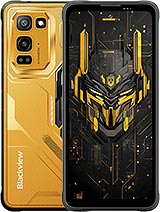
Fort 2
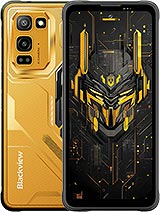
Fort 5
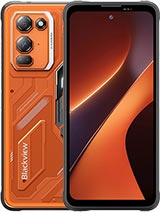
Fort 200
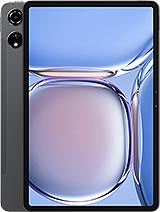
Mega 2
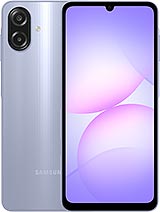
Galaxy A07 4G