Blackview Fort 100 review
The Fort 100 is for people who actually work in conditions that wreck normal phones. If you are outdoors, on a site, or in wet or dusty environments, the durability and battery life are worth the soft screen and slow charging. If you are shopping for a general-purpose midrange phone, you will get sharper pictures and faster performance elsewhere for the same money.
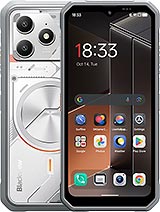
This review is written with AI assistance from Blackview’s published specifications and public benchmark data for the Blackview Fort 100, and the rating is spec-based. GoSolo does not physically test devices; where we estimate real-world behaviour such as battery life or charge time, we say so. How we rate phones.
Overview
The Blackview Fort 100 is a rugged workhorse built to survive dust, mud, and water where most phones would fail, with a 5000mAh battery and IP68/IP69K rating that justify its industrial DNA. It trades sharpness and speed for durability and longevity, making it genuinely useful for outdoor and manual work—but only if you can live with a 720p screen and glacial charging.
Design & durability
The Fort 100 is built like a tool, not a toy. At 244g and 10.7mm thick, it sits between nimble and robust, with a flatish profile that fits a work shirt pocket without excessive bulk. The standout is the certification: IP68 (full submersion to 1.5m for 30 minutes) and IP69K (high-pressure jets) together with MIL-STD-810H compliance means it genuinely shrugs off what would destroy most phones. Dust, mud, saltwater splashes, and accidental drops onto concrete are all within its design envelope. This is not marketing theater; it is the core reason to buy this phone. If you work outdoors, on a site, or in a wet environment, or if you habitually carry a phone into conditions where others use rugged cases and cross their fingers, the Fort 100 removes that anxiety. The Mohs level 5 screen is softer than modern glass, but replacements are cheap and the trade-off for durability is honest.
Display
The 6.56-inch IPS LCD at 720 by 1612 pixels is the phone's weakest point by a margin. At 269 ppi density, text and fine detail are noticeably pixelated. Scroll through a web page or read an email and you will see the grain; compare it side-by-side with any 1080p phone in the same price band and the gap is impossible to ignore. The 90Hz refresh rate helps scrolling feel less jittery and lifts the experience a notch above a flat 60Hz, but it does not compensate for the low resolution. 450 nits peak brightness is adequate for daylight legibility, though not exceptional. For a phone positioned as rugged and ready, the screen feels like corner-cutting rather than deliberate design choice.
Performance
The MediaTek Helio G81 is a mainstream midrange chip; it powers entry-level phones and low-cost options globally. It handles WhatsApp, email, casual browsing, and light games (Candy Crush, PUBG Mobile on low settings) without strain. Open a dozen Chrome tabs, load a heavy video editor, or try sustained gaming and you will feel it slow down. The 4GB or 8GB RAM variant matters here; the 8GB option is the smarter pick if multitasking is part of your day. For a construction worker checking photos and messages between jobs, this is fine. For anyone doing creative work, content creation, or heavy app-switching, the chip will feel leisurely. It is not slow by budget standards, but it is not peppy either.
Software
Android 16 with DokeOS 5.0 is Blackview's custom layer on top of stock Android. The company has a track record of keeping rugged phones current with security updates, and that matters for a device that might be your lifeline on a job site. DokeOS tends to be light and practical rather than feature-heavy; it avoids the bloat of some Chinese manufacturers. There is nothing here to rave about, but the software does not get in the way, and that is the right call for a work phone. Long-term support for a rugged device is more valuable than flashy UI tweaks.
Camera
The 16MP main and 13MP selfie are functional but uninspired. The main camera offers basic auto-focus, LED flash, and HDR, all standard tools that work adequately for job site documentation or casual snaps. Video tops out at 1080p at 30fps, which is sufficient for clips and slow-motion is absent. Night mode is not mentioned, so expect poor low-light output. The sensor itself is not impressive for this generation; the image processing will be competent but flat. If you need your phone to be a camera, this is not it. If you need it to capture proof of work, site conditions, or simple memories, it will do that job.
Battery & charging
The 5000mAh cell is genuinely large and delivers real battery life. On moderate use—messaging, social media, email, map navigation—expect about one full day. Light use (mostly calls and texts) stretches to 1.5 to 2 days. That is useful, especially on a job site where finding a power outlet is not guaranteed. The caveat is charging: 18W is slow by 2025 standards. A full recharge takes about 2 to 2.5 hours. Rivals in this price band now offer 65W or faster, cutting that to 30 to 45 minutes. If you use a phone for a full day without midday top-ups, the Fort 100 works well. If you rely on quick charging to squeeze an hour of use before a meeting, you will be frustrated.
Value & verdict context
The Fort 100 sits in an interesting niche: a rugged phone for people who work outdoors or in harsh conditions, not a tech enthusiast product. Its value proposition is durability and endurance, not performance or aesthetics. The 720p display and slow charging are real drawbacks, but they are trade-offs, not oversights. At its price, a mainstream midrange phone offers sharper screens and faster charging; an investment in rugged construction costs something. The question is whether that durability matters to you. For a builder, farmer, warehouse worker, or anyone whose phone lives in a risky environment, the IP68/IP69K rating and solid battery life justify the compromises. For an office worker or casual user, a standard phone at the same price will feel snappier and look crisper. There is no hidden flaw here; just an honest piece of hardware that serves its actual customers.
Verdict
The Fort 100 is for people who actually work in conditions that wreck normal phones. If you are outdoors, on a site, or in wet or dusty environments, the durability and battery life are worth the soft screen and slow charging. If you are shopping for a general-purpose midrange phone, you will get sharper pictures and faster performance elsewhere for the same money.
- IP68/IP69K rating plus MIL-STD-810H compliance means genuine durability in mud, dust, and high-pressure water; not a design afterthought
- 5000mAh battery delivers 1.5 to 2 days of real use without constant charging, a real advantage on job sites or remote travel
- 90Hz refresh on the display makes scrolling noticeably smoother than the 60Hz standard, a small but tangible quality-of-life gain
- Side-mounted fingerprint sensor avoids the wet-finger frustration that plagues under-display readers in wet environments
- 18W charging takes 2 to 2.5 hours and feels archaic; rivals at this price now hit 65W and can recharge in under an hour
- 720p resolution on a 6.56-inch screen (269 ppi) means text is visibly pixelated and images lack sharpness, noticeably worse than the 1080p standard in this market segment
- MediaTek Helio G81 handles daily apps and light games but stumbles under heavy load; no headroom for video editing or demanding multitasking
Blackview Fort 100 Key Specifications
The essentials at a glance. See the full spec sheet.
| Released | 2025, November |
|---|---|
| Display | 6.56 inches, 103.4 cm2 (~71.3% screen-to-body ratio), IPS LCD, 90Hz, 450 nits |
| Resolution | 720 x 1612 pixels, 20:9 ratio (~269 ppi density) |
| Chipset | Mediatek Helio G81 (12 nm) |
| RAM & storage | 64GB 4GB RAM, 128GB 8GB RAM |
| Main camera | 16 MP, AF Auxiliary lens |
| Selfie camera | 13 MP |
| Battery | 5000 mAh |
| Charging | USB Power Delivery up to 18 W |
| Software | Android 16, DokeOS 5.0 |
| Dimensions | 174.6 x 83 x 10.7 mm (6.87 x 3.27 x 0.42 in) |
| Weight | 244 g (8.61 oz) |
| Durability | IP68/IP69K dust tight and water resistant (high pressure water jets; immersible up to 1.5m for 30 min) MIL-STD-810H compliant |
| Network | GSM / CDMA / HSPA / LTE |
| NFC | Yes |
| USB | USB Type-C, OTG |
Blackview Fort 100 FAQ
Common questions, answered from the spec sheet.
Does the Fort 100 support 5G?
No. The Fort 100 tops out at GSM / CDMA / HSPA / LTE, without 5G.
What chipset does the Fort 100 use?
The Fort 100 runs on the Mediatek Helio G81 (12 nm).
What display does the Fort 100 have?
A 6.56 inches, 103.4 cm2 (~71.3% screen-to-body ratio) IPS LCD, 90Hz, 450 nits, 720 x 1612 pixels, 20:9 ratio (~269 ppi density).
How big is the Fort 100 battery?
The Fort 100 has a 5000 mAh battery. Charging is rated at USB Power Delivery up to 18 W.
Does the Fort 100 have NFC?
Yes, the Fort 100 has NFC.
Is the Fort 100 water resistant?
The Fort 100 carries a IP68/IP69K dust tight and water resistant (high pressure water jets; immersible up to 1.5m for 30 min) MIL-STD-810H compliant rating.
Does the Fort 100 support a microSD card?
Yes, the Fort 100 supports expandable storage (microSDXC (uses shared SIM slot)).
Alternatives to consider
If the Fort 100 isn’t quite right, these are the closest calls.
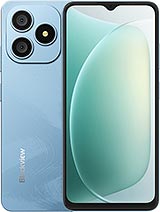
Wave 9C
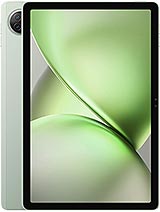
Zeno 10
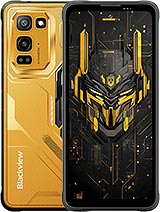
Fort 2
Mega 2
Galaxy M17e