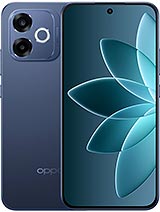
Blackview Fort 5 review
The Fort 5 suits outdoor workers, field teams, and adventurers who value a multi-day battery, shatterproof durability, and reliable LTE over flagship performance and 5G speeds. Anyone prioritizing gaming, computational power, or mobile photography should look elsewhere.
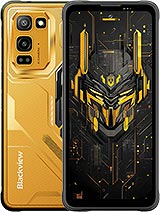
This review is written with AI assistance from Blackview’s published specifications and public benchmark data for the Blackview Fort 5, and the rating is spec-based. GoSolo does not physically test devices; where we estimate real-world behaviour such as battery life or charge time, we say so. How we rate phones.
Overview
The Blackview Fort 5 is built first and foremost for durability: IP68/IP69K, MIL-STD-810H, drop-proof to 6m, with a 5000mAh battery that stretches past a day. The Helio G100 and 1080p display are modest, but the rugged spec and all-day stamina make it compelling for outdoor work and field use where survival matters more than performance.
Design & build
At 248 grams and 10.7mm thick, the Fort 5 is noticeably heavier and bulkier than mainstream flagships, but that mass buys genuine durability. The IP68/IP69K rating means full dust sealing and submersion to 2 metres for half an hour, while MIL-STD-810H compliance and a 6-metre drop resistance claim signal this is not a phone for timid handling. The frame and chassis feel purposeful rather than polished. Nano-SIM dual slots and a microSDXC slot (using shared SIM space) round out the package. For outdoor workers, field teams, and travellers in remote areas, this ruggedness is the entire point; for office users, it is overkill and dead weight.
Display
The 6.78-inch IPS LCD at 1080 x 2460 pixels (396 ppi) is modest by flagship standards but adequate. The 120Hz refresh rate keeps scrolling and menu animations smooth, while 700-nit peak brightness is strong enough for outdoor readability even in direct sun. Panda Glass (Mohs level 5) resists everyday scratches but lacks the toughness of Gorilla Glass; it is a pragmatic choice for a rugged phone where impact protection matters more than scratch hardness. Text density at 396 ppi is middle-of-the-road—fine for most users but not crisp for those who read a lot of small print. This is a working phone, not a media showcase.
Performance
The Mediatek Helio G100 with Mali-G57 GPU sits in the capable upper-midrange tier. It handles daily tasks—calls, messaging, email, Maps, light web use—without stumbling. Streaming video and casual apps run smoothly. Where it falters is sustained gaming: Genshin Impact runs on low settings with frame drops, and PUBG needs reduced graphical quality to stay playable. Multitasking under load (many background apps, heavy file operations) can cause lag. This chip is not designed for mobile gaming enthusiasts or power users; it is built for reliability and battery efficiency in tough environments. By 2026 standards, it is behind the pack for gaming, but that is not this phone's purpose.
Camera
The main sensor is a 108MP unit with autofocus and a 13MP night-vision module, supported by LED flash and HDR. On paper, 108MP sounds impressive, but real-world results are mixed: in bright daylight the detail is acceptable, but the large sensor size dilutes individual pixel quality, making low-light shots noisier than smaller, more refined sensors. Video maxes out at 1440p@30fps, which is standard but not leading-edge. The 50MP selfie camera with f/2.5 aperture handles video calls and portraits adequately. For a rugged phone designed for tough conditions, the camera is a secondary concern; it captures moments without pretence but does not compete with dedicated camera phones. The night-vision module is a gimmick that shoots green-tinted, low-res stills—useful in near-total darkness but not a game-changer.
Battery & charging
The 5000mAh cell is the Fort 5's strongest everyday asset. With moderate use (calls, messages, light browsing), expect about 1.5 to 2 days between charges; heavy use or outdoor work under screen-on conditions can eat that down to a single day. In the field where charging infrastructure is sparse—remote sites, camping, long workdays—that endurance is tangible relief. However, charging is slow: 15W wireless charging takes about 2 to 2.5 hours to refill, and the spec sheet does not list wired charging power (a major omission). In a world where flagships now hit 100W+ and even mid-range phones offer 30–50W, the lack of fast wired charging is a real weakness for anyone who needs a quick top-up.
Software
The Fort 5 runs Android 16 with Blackview's custom DokeOS 5.0 overlay. Android 16 is current and should receive security patches and updates, though Blackview's update track record is historically slower than Samsung or Google. DokeOS adds ruggedness-focused features (likely emergency SOS, customizable shortcuts, durability monitoring) but also bloat and UI inconsistencies compared to stock Android. The custom skin is pragmatic for the target user but will feel unfamiliar to anyone accustomed to mainstream Android dialects. Software support longevity is uncertain; Blackview phones typically receive 2–3 major OS updates, not the 5+ offered by premium brands.
Value & verdict
The Fort 5 is unapologetically niche. It is not trying to be a flagship killer or a value mainstream phone. It exists for people who work outdoors, travel to harsh environments, or simply refuse to baby a handset. The durability certifications, battery endurance, and rugged design justify its existence and price in that context. The Helio G100 is not powerful, the camera is serviceable but uninspired, 5G is absent, and wireless charging is slow—but none of these are surprises or failures when the entire premise is survival. If you are a builder, field worker, outdoor enthusiast, or someone who regularly spends days away from mains power, the Fort 5 is a sensible choice. If you care about gaming, mobile photography, raw performance, or the latest connectivity, you need a different phone.
Verdict
The Fort 5 suits outdoor workers, field teams, and adventurers who value a multi-day battery, shatterproof durability, and reliable LTE over flagship performance and 5G speeds. Anyone prioritizing gaming, computational power, or mobile photography should look elsewhere.
- IP68/IP69K + MIL-STD-810H certification and 6m drop resistance—genuinely built to survive construction sites and remote deployments
- 5000mAh battery delivers about 1.5 to 2 days of moderate use, a real advantage in jobs where charging is infrequent
- 120Hz IPS display at 700 nits is readable in bright sun and smooth for everyday scrolling
- 256GB storage and microSDXC expansion handle field photos and documents without cloud dependency
- No 5G and capped at LTE speeds (roughly 100–150 Mbps); slower than modern rivals in connected work
- Helio G100 struggles with sustained gaming and heavy multitasking—only adequate for light apps and older games
- 15W wireless charging is slow (about 2–2.5 hours full charge) and wired charging power is unspecified, making off-grid use slow to recover
Blackview Fort 5 Key Specifications
The essentials at a glance. See the full spec sheet.
| Released | 2026, March |
|---|---|
| Display | 6.78 inches, 109.2 cm2 (~73.7% screen-to-body ratio), IPS LCD, 120Hz, 700 nits |
| Resolution | 1080 x 2460 pixels (~396 ppi density) |
| Chipset | Mediatek Helio G100 (6 nm) |
| RAM & storage | 256GB 6GB RAM, 256GB 12GB RAM |
| Main camera | 108 MP, AF 13 MP, night vision |
| Selfie camera | 50 MP, f/2.5 |
| Battery | 5000 mAh |
| Charging | Wireless: Charger power 15 W |
| Software | Android 16, DokeOS 5.0 |
| Dimensions | 178.4 x 83 x 10.7 mm (7.02 x 3.27 x 0.42 in) |
| Weight | 248 g (8.75 oz) |
| Durability | IP68/IP69K dust tight and water resistant (high pressure water jets; immersible up to 2m for 30 min) MIL-STD-810H compliant Drop resistant up to 6m |
| Network | GSM / HSPA / LTE |
| NFC | Yes |
| USB | USB Type-C, OTG |
Blackview Fort 5 FAQ
Common questions, answered from the spec sheet.
Does the Fort 5 support 5G?
No. The Fort 5 tops out at GSM / HSPA / LTE, without 5G.
What chipset does the Fort 5 use?
The Fort 5 runs on the Mediatek Helio G100 (6 nm).
What display does the Fort 5 have?
A 6.78 inches, 109.2 cm2 (~73.7% screen-to-body ratio) IPS LCD, 120Hz, 700 nits, 1080 x 2460 pixels (~396 ppi density).
How big is the Fort 5 battery?
The Fort 5 has a 5000 mAh battery. Charging is rated at Wireless: Charger power 15 W.
Does the Fort 5 have NFC?
Yes, the Fort 5 has NFC.
Is the Fort 5 water resistant?
The Fort 5 carries a IP68/IP69K dust tight and water resistant (high pressure water jets; immersible up to 2m for 30 min) MIL-STD-810H compliant Drop resistant up to 6m rating.
Does the Fort 5 support a microSD card?
Yes, the Fort 5 supports expandable storage (microSDXC (uses shared SIM slot)).
Alternatives to consider
If the Fort 5 isn’t quite right, these are the closest calls.
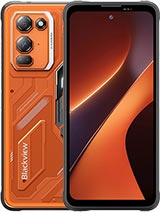
Fort 200
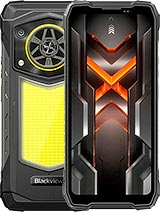
Rock 5
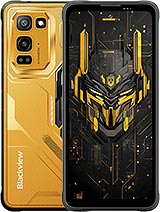
Fort 2
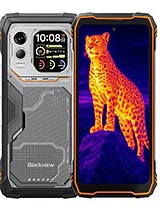
Xplore X1 Pro
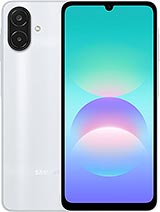
Galaxy A08 4G