Blackview Hero 10 review
This foldable appeals to someone enchanted by the form factor and willing to tolerate mid-tier performance, limited battery life, and no 5G as the trade-off. If you want the biggest, brightest screen in your pocket and don't game heavily or edit video, it's worth the novelty. Anyone else at €600 should look at conventional flagships with faster chips and bigger batteries.
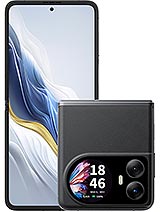
This review is based on Blackview’s published specifications and public benchmark data for the Blackview Hero 10, and the rating is spec-based. GoSolo does not physically test devices; where we estimate real-world behaviour such as battery life or charge time, we say so. How we rate phones.
Overview
The Blackview Hero 10 is a foldable Android phone that trades depth for form-factor novelty: the 6.9-inch display when unfolded and 1300 nits peak brightness are genuinely useful, but the Helio G99 chip and 4000 mAh battery mean you're managing power and gaming performance rather than enjoying them. For €600 it's overcooked on the folding gimmick and undercooked on the fundamentals.
Design & Build
At 198 grams and 16.3 mm folded, the Hero 10 is reasonably portable, and the foldable hinge mechanism is the main story here. What's not mentioned is durability: the Mohs level 6 display protection is mid-tier (not sapphire, not Gorilla Glass Armor), and folding phones are mechanically complex. The real design question is whether you actually want a 1.19-inch cover display for daily work. Blackview's answer is yes; most people use their phones one-handed and open it only when they need the extra screen. The phone feels thoughtful at unfolding but doesn't solve a problem most buyers had.
Display
The 6.9-inch AMOLED unfolded screen with 1300 nits peak brightness is the genuine win here. That brightness level means readable outdoor viewing even in midday sun, a rarity outside flagships. The 1080 x 2560 resolution at 403 ppi is sharp enough to not notice pixels in daily use. The cover display at 1.19 inches is too small to do real work on, so you're folding open for anything beyond quick glances. Foldables always have a crease; Blackview doesn't specify, but assume it's visible and a daily annoyance if you're fastidious about screens.
Performance
The Helio G99 is a solid upper-midrange chip from 2023, not a workhorse. It runs PUBG Mobile on low-to-medium settings smoothly, handles everyday apps and messaging without stutter, and manages multitasking with 12GB of RAM. It will not run demanding 3D games at high refresh rates, and raw CPU speed is noticeably behind what you'd get from last year's flagship Snapdragon or MediaTek Dimensity chips. For €600 you'd expect something closer to parity with competing foldables in this price band, but Blackview has bet on the screen novelty instead of raw horsepower. If you're gaming seriously or doing video editing on the phone, this will feel slow.
Software
Android 13 with Blackview's DokeOS 4 overlay is light and reasonably clean. DokeOS doesn't add bloat the way some Chinese OEM skins do, so your 256GB of storage won't feel strangled by pre-installed garbage. Updates are the real question mark: Blackview is not known for long or timely OS patches, so you may get Android 14 once, if at all. The foldable form factor isn't fully exploited here—no split-screen optimizations beyond Android's own, no gesture-based hinge features. Software just feels like Android on a wider screen.
Camera
The 108MP main sensor with f/1.9 and PDAF is genuinely capable in daylight and low light, and you get the kind of detail that makes crops and printing viable. The 8MP 120-degree ultrawide is adequate for group photos and landscapes but noticeably softer than the main. Video tops out at 1440p 30 fps, which is smooth for social media but limiting if you want to edit 4K clips or future-proof your footage. The 32MP selfie cam is fine for video calls. For a €600 foldable this camera setup is respectable; for a €600 phone outright, you could get a better all-around camera on a conventional device.
Battery & Charging
The 4000 mAh battery is tight for a 6.9-inch display. Expect about 5–6 hours of screen-on time if you're streaming or gaming, less if it's light use with moderate brightness. A full work day on a single charge is unlikely unless you're very modest with the screen. The 45W charging is competent, delivering about 48 percent in 20 minutes, so a quick top-up before leaving the house is feasible. Full charge takes roughly 50–65 minutes. For a foldable in 2024 this is acceptable but not generous; larger, heavier foldables often fit bigger batteries.
Value & Verdict
At €600 the Hero 10 is positioned as a foldable for people who want the novelty without flagship pricing. It delivers on that promise: the 1300 nits and unfolded screen size are real, the camera is solid, and the weight is manageable. The catch is that everything else—performance, battery life, charging speed, software support—lags what you'd get from a conventional €600 flagship. The foldable gimmick is genuine, but it's also consuming the budget that should have gone to a faster chip or bigger battery. You're buying the form factor, not getting a better phone.
Verdict
This foldable appeals to someone enchanted by the form factor and willing to tolerate mid-tier performance, limited battery life, and no 5G as the trade-off. If you want the biggest, brightest screen in your pocket and don't game heavily or edit video, it's worth the novelty. Anyone else at €600 should look at conventional flagships with faster chips and bigger batteries.
- 1300 nits peak brightness on the main AMOLED display, readable in bright sunlight
- 108MP main camera with f/1.9 and PDAF delivers genuine detail in daylight and low light
- Foldable form factor actually works: compact when folded (87 x 75.5 mm), genuinely useful unfolded at 6.9 inches
- 4000 mAh battery struggles with the large unfolded display; expect 5–6 hours of screen time under load
- Helio G99 is mid-tier performance; demanding games and heavy tasks run noticeably slower than competing flagships
- No 5G, limited to LTE, and no microSD slot means you're stuck with 256GB and older network speeds
Blackview Hero 10 Key Specifications
The essentials at a glance. See the full spec sheet.
| Released | 2024, May |
|---|---|
| Display | 6.9 inches, 110.0 cm2 (~86.2% screen-to-body ratio), Foldable AMOLED, 1B colors, 1300 nits (peak) |
| Resolution | 1080 x 2560 pixels (~403 ppi density) |
| Chipset | Mediatek Helio G99 (6 nm) |
| RAM & storage | 256GB 12GB RAM |
| Main camera | 108 MP, f/1.9, (wide), 1/1.67" , PDAF 8 MP, 120˚ (ultrawide) |
| Selfie camera | 32 MP, f/2.5, (wide) |
| Battery | 4000 mAh |
| Charging | 45W wired, 48% in 20 min |
| Software | Android 13, DokeOS 4 |
| Dimensions | Unfolded: 169 x 75.5 x 8.1 mmFolded: 87 x 75.5 x 16.3 mm |
| Weight | 198 g (6.98 oz) |
| Network | GSM / CDMA / HSPA / LTE |
| NFC | Yes |
| USB | USB Type-C |
Blackview Hero 10 FAQ
Common questions, answered from the spec sheet.
Does the Hero 10 support 5G?
No. The Hero 10 tops out at GSM / CDMA / HSPA / LTE, without 5G.
What chipset does the Hero 10 use?
The Hero 10 runs on the Mediatek Helio G99 (6 nm).
What display does the Hero 10 have?
A 6.9 inches, 110.0 cm2 (~86.2% screen-to-body ratio) Foldable AMOLED, 1B colors, 1300 nits (peak), 1080 x 2560 pixels (~403 ppi density).
How big is the Hero 10 battery?
The Hero 10 has a 4000 mAh battery. Charging is rated at 45W wired, 48% in 20 min.
Does the Hero 10 have NFC?
Yes, the Hero 10 has NFC.
Does the Hero 10 support a microSD card?
No, the Hero 10 does not support expandable storage.
Does the Hero 10 have a headphone jack?
No, the Hero 10 does not have a 3.5mm headphone jack.
Alternatives to consider
If the Hero 10 isn’t quite right, these are the closest calls.
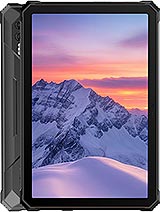
Active 10 Pro
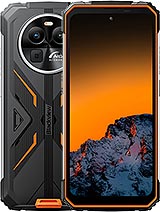
BV8100
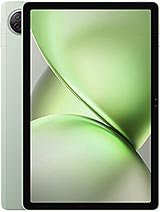
Zeno 10
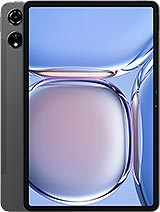
Mega 1
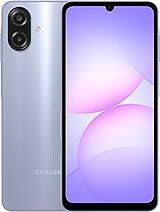
Galaxy A07 4G