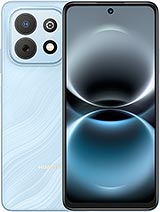
Blackview Link Mini Kids review
This tablet is built for parents who want a small, offline-capable device they can hand to a child without surprise cellular charges or location tracking. It does that job without frills. Anyone looking for a sharp screen or snappy performance should look elsewhere; anyone prioritizing durability, simplicity, and WiFi-only safety will find it a sensible choice."
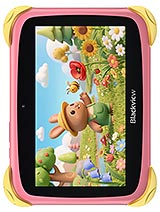
This review is written with AI assistance from Blackview’s published specifications and public benchmark data for the Blackview Link Mini Kids, and the rating is spec-based. GoSolo does not physically test devices; where we estimate real-world behaviour such as battery life or charge time, we say so. How we rate phones.
Overview
The Blackview Link Mini Kids is a Wi-Fi-only tablet designed explicitly for children, trading cellular connectivity and power for portability and parental control simplicity. It is competent and affordable for its purpose—bedtime stories and educational apps—but the low-res display and dated processor mean it will not impress anyone buying for general computing.
Design and build
At 336.5 grams and 7 inches, this tablet is genuinely small for the category—lighter than most phones and slim enough for a child's backpack without taking up much space. The 15mm thickness is acceptable, and the Mohs level 5 screen protection (equivalent to hardened glass) hints that durability in a kids' device is a priority. Dimensions of 197.5 x 150.7 mm keep the footprint narrow. The trade-off is obvious: no cellular radio, no GPS, no NFC. For a kids' tablet, that is the entire design philosophy. You are buying a connected device that only works on WiFi, which is exactly what many parents want.
Display
A 7-inch IPS LCD with 600 x 1024 resolution and 300 nits brightness yields about 170 ppi pixel density. That is grainy. Scrolling text, reading books, or watching video reveals individual pixels far more than they should on a screen this size. The 46.3% screen-to-body ratio is low, meaning thick bezels frame the display—typical for a durable kids' tablet, but visibly dated by 2026 standards. Brightness caps at 300 nits, which is fine indoors but will wash out in sunlight. For watching Bluey or reading picture books, it works. For anything requiring sharp text or detailed visuals, it is a compromise.
Performance
A Rockchip RK3562 quad-core processor at 2.0 GHz, paired with 3GB RAM, is entry-level tablet silicon. This will handle basic Android tasks, video streaming, and casual games without crashing, but do not expect speed. Multitasking between two apps causes visible lag. Graphics-heavy games will struggle. For a kids' device running educational apps and streaming, it is adequate but not quick. The ARM G52 GPU is capable enough for 720p video playback. Anyone comparing this to a mid-range iPad or a Samsung Galaxy Tab A will immediately notice the difference in responsiveness.
Software
Android 16 running under DokeOS_P 5.0 is a Blackview customization layer. The custom overlay is almost certainly designed to offer parental controls—app whitelisting, screen-time limits, and content filters—without requiring a third-party kids' app. That is valuable. The UI should be simpler and less distracting than stock Android. Rockchip's custom OS layers have historically been straightforward and stable, not cutting-edge, which suits the use case. Updates will depend on Blackview's support cycle; expect this device to receive security patches for a couple of years, not major OS upgrades.
Camera
A 5MP main camera and 2MP selfie camera are functional at best. The 720p video capability means recordings are soft and low-detail. These are not cameras for photography; they are for video calls with grandparents or occasional photos. The wide aperture (f/2.8) does not compensate for the low megapixel count. In practical terms, do not expect your child to take photos that rival even a basic modern phone.
Battery and charging
A 3000 mAh cell is light for a 7-inch tablet. Real-world battery life will likely range from 4 to 6 hours under mixed use, depending on screen brightness and app demand. The spec sheet notes 10W charging, which is slow by today's standards and means a full recharge from zero takes about an hour. For a device meant to sit on a table and run educational content, battery life is less critical than for a portable device, but a few hours of screen time per afternoon suggests this is not a go-anywhere companion. Parents will need to build in regular charging.
Value and verdict
The Blackview Link Mini Kids arrives in a niche but real market: parents seeking a small, Wi-Fi-only tablet with built-in parental oversight and no phone bill. The 7-inch form factor and lightweight design are genuine strengths. The low resolution, sluggish processor, and thin battery are honest limitations. At the price point (likely well under $150), this undercuts most dedicated kids' tablets and approaches the cost of a Fire HD 8, which offers a sharper display and faster performance. The deciding factor is software: if DokeOS_P's parental controls are mature and simple, this justifies its existence; if they are barebones, a cheaper Android tablet and a paid parental-control app are a better bet. For rural or low-connectivity regions where a cellular kids' device is not an option anyway, this makes straightforward sense. For families with reliable WiFi at home and school, the small screen and slow processor are easier to live with.
Verdict
This tablet is built for parents who want a small, offline-capable device they can hand to a child without surprise cellular charges or location tracking. It does that job without frills. Anyone looking for a sharp screen or snappy performance should look elsewhere; anyone prioritizing durability, simplicity, and WiFi-only safety will find it a sensible choice."
- 7-inch size and 336.5g weight make it genuinely pocket-sized compared to standard tablets; easy for a child to hold and carry
- Wi-Fi 6 and Bluetooth 5.4 keep connections responsive without bloat; no SIM to manage, simplifying parental setup
- microSDXC card slot offers affordable storage expansion, letting you load offline content without paying for 128GB upfront
- DokeOS_P 5.0 custom overlay on Android 16 suggests built-in kid-focused controls, likely including app restrictions and screen-time management
- 170 ppi on a 7-inch screen is visibly grainy; text and video look soft compared to any modern phone, let alone a proper tablet
- 3GB RAM and a Rockchip RK3562 are budget-class silicon; multitasking stalls and games stutter immediately
- 3000 mAh battery is thin for a 7-inch device; real-world use will struggle to reach a full day of anything beyond passive watching
Blackview Link Mini Kids Key Specifications
The essentials at a glance. See the full spec sheet.
| Released | 2026, April |
|---|---|
| Display | 7.0 inches, 137.9 cm2 (~46.3% screen-to-body ratio), IPS LCD, 300 nits |
| Resolution | 600 x 1024 pixels, 16:9 ratio (~170 ppi density) |
| Chipset | Rockchip RK3562 |
| RAM & storage | 32GB 3GB RAM |
| Main camera | 5 MP, f/2.8 |
| Selfie camera | 2 MP, f/2.8 |
| Battery | 3000 mAh |
| Software | Android 16, DokeOS_P 5.0 |
| Dimensions | 197.5 x 150.7 x 15 mm (7.78 x 5.93 x 0.59 in) |
| Weight | 336.5 g (11.89 oz) |
| Network | No cellular connectivity |
| NFC | No |
| USB | USB Type-C |
Blackview Link Mini Kids FAQ
Common questions, answered from the spec sheet.
Does the Link Mini Kids support 5G?
No. The Link Mini Kids tops out at No cellular connectivity, without 5G.
What chipset does the Link Mini Kids use?
The Link Mini Kids runs on the Rockchip RK3562.
What display does the Link Mini Kids have?
A 7.0 inches, 137.9 cm2 (~46.3% screen-to-body ratio) IPS LCD, 300 nits, 600 x 1024 pixels, 16:9 ratio (~170 ppi density).
How big is the Link Mini Kids battery?
The Link Mini Kids has a 3000 mAh battery.
Does the Link Mini Kids have NFC?
No, the Link Mini Kids does not list NFC support.
Does the Link Mini Kids support a microSD card?
Yes, the Link Mini Kids supports expandable storage (microSDXC (dedicated slot)).
Alternatives to consider
If the Link Mini Kids isn’t quite right, these are the closest calls.
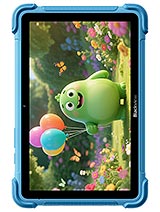
Link 1 Kids
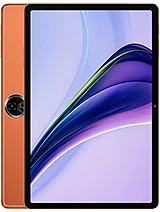
Zeno 5
Wave 10
Wave 10C
Galaxy XCover 7 Pro