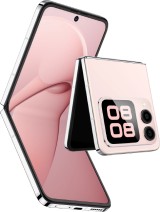
Blackview Mega 2 review
This tablet suits people who prioritize screen size and battery life over speed and charging convenience—students, travelers, and daily readers who work offline. Anyone expecting gaming performance, fast charging, or frequent content creation should bump up to a mid-range tablet with a faster chip and 30W+ charging.
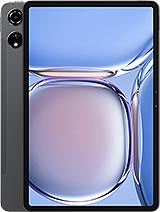
This review is written with AI assistance from Blackview’s published specifications and public benchmark data for the Blackview Mega 2, and the rating is spec-based. GoSolo does not physically test devices; where we estimate real-world behaviour such as battery life or charge time, we say so. How we rate phones.
Overview
The Blackview Mega 2 is a 12-inch budget tablet that trades raw power for sheer screen real estate, making it well-suited for reading, email, and light work on a tight budget. The weak charging speed and soft screen protection are the main friction points for daily use.
Design and build
At 555 grams and 7.4 mm thick, this tablet is thin and light enough to hold for 20 minutes without fatigue, but not light enough to truly call it pocket-friendly. The 12.1-inch footprint is unavoidable at that screen size, and the weight sits just at the threshold where bed reading becomes a two-handed chore. Build materials are not specified in the sheet, so durability in drops or scratches remains a guess. The dual Nano-SIM slots allow two phone numbers or carriers on one device, which is useful if you travel or juggle work and personal lines.
Display
A 12.1-inch IPS LCD running at 1600 by 2560 pixels (249 ppi) is the Mega 2's defining feature. At that size, 249 ppi is lower than a phone's pixel density, so text reads crisp only at arm's length; sidelong viewing or very close inspection reveals the pixel grid. The 90Hz refresh rate is a nice touch for scrolling smoothness, and the 84.5 percent screen-to-body ratio is sensible. The screen is bright enough indoors and outdoors, typical for budget LCDs. For spreadsheets, PDFs, and long-form reading, the extra horizontal space matters far more than pixel-perfect sharpness, and that is where this tablet earns its place.
Performance
The Helio G100 is an entry-level chip paired with Mali-G57 graphics and 12 GB of RAM. Day-to-day tasks—email, web, social media, light document editing—run without hitches. Streaming video, ebooks, and basic web browsing will not break a sweat. However, heavy multitasking (five+ apps in memory), older 3D games, or video export will show slowdowns and stuttering. By 2025 standards, this is adequate only if you treat the tablet as a reading and communication device, not a workhorse for content creation or gaming. It is a tier below iPad base models and Android competitors that use last year's flagship chips, but that gap is honest rather than shocking.
Software
Android 15 with DokeOS_P 4.1 overlay is a recent baseline. DokeOS is Blackview's own skin, designed for affordability and simplicity. It avoids the bloat of many Chinese Android skins, but also offers fewer customization layers than stock Android. Security updates are a question mark for Blackview; the company does not have a strong track record of long-term patch schedules. Expect OS updates for a year or two, then slower security fixes. This matters less for a tablet used offline for reading, but a buyer who plans four years of updates should look elsewhere.
Camera
The 50 MP main sensor is respectable on paper, but the f/1.8 aperture and 1/2.6-inch sensor size mean low-light performance will be mushy. Daylight photos of documents or casual snapshots are serviceable. The 13 MP front camera is fine for video calls. There is no ultrawide, zoom, or macro lens, so if you plan to capture anything beyond basic daylight stills, this tablet will frustrate you. For a device used mainly indoors for reading and email, the camera is an afterthought rather than a weakness.
Battery and charging
The 8800 mAh battery is substantial and pairs well with a low-power chipset; expect about 8 to 10 hours of actual screen-on time for reading, email, and light web use. Heavy video streaming will drop that by 2 to 3 hours. The 18W charger is the Mega 2's biggest pain point. Refilling from empty to full takes roughly 60 to 90 minutes, sometimes longer, compared to 30W chargers on competitors that do the same in 40 minutes. For a tablet tethered to your desk or bedside, the slower charging is annoying but not a dealbreaker. For travelers who recharge on the go, it is a frustration.
Value and verdict
At a budget price, the Mega 2 offers a genuine service: a large screen for reading without eye strain, a battery that survives a full day of casual use, and extras like stereo speakers and FM radio. The absence of 5G and the weak charging are trade-offs you accept for the lower cost. Rival tablets in this range either force you to smaller screens or bloated specs you do not need. The real question is whether a 12-inch tablet fits your workflow. If you spend most of your time reading ebooks, managing email, or browsing the web, this tablet is a solid choice. If you want to edit video, play demanding games, or work with large media files, a higher-spec device (even at a small price bump) will save you frustration. The Mega 2 is honest about what it is: a big, slow, long-lasting screen for lean use.
Verdict
This tablet suits people who prioritize screen size and battery life over speed and charging convenience—students, travelers, and daily readers who work offline. Anyone expecting gaming performance, fast charging, or frequent content creation should bump up to a mid-range tablet with a faster chip and 30W+ charging.
- 12.1-inch screen at 249 ppi is large enough for spreadsheets and documents without needing to zoom in constantly, a genuine productivity advantage over smaller tablets
- 8800 mAh battery should push through a full day of reading, email, and browsing on one charge, and the low-power Helio G100 means standby time is genuinely long
- Stereo speakers and FM radio add practical value that many modern tablets skip entirely
- 256GB storage with microSD expansion means no painful storage decisions for a budget device
- 18W charging is glacially slow by 2025 standards; rivals at this price hit 30W or more, so refilling the 8800 mAh battery takes well over an hour from empty
- Mohs 7 screen protection (sapphire hardness claim) contradicts the sheet's own Mohs level 7 notation, but either way, this is not tempered glass—real-world durability will depend on whether scratching is ceramic or marketing
- Helio G100 is entry-level for tablets; any heavy multitasking, older 3D games, or video editing will show stuttering
Blackview Mega 2 Key Specifications
The essentials at a glance. See the full spec sheet.
| Released | 2025, June |
|---|---|
| Display | 12.1 inches, 424.5 cm2 (~84.5% screen-to-body ratio), IPS LCD, 90Hz |
| Resolution | 1600 x 2560 pixels, 16:10 ratio (~249 ppi density) |
| Chipset | Mediatek Helio G100 (6 nm) |
| RAM & storage | 256GB 12GB RAM |
| Main camera | 50 MP, f/1.8, (wide), 1/2.6", AF |
| Selfie camera | 13 MP, (wide), 1/4" |
| Battery | 8800 mAh |
| Charging | 18W wired |
| Software | Android 15, DokeOS_P 4.1 |
| Dimensions | 278.5 x 180.5 x 7.4 mm (10.96 x 7.11 x 0.29 in) |
| Weight | 555 g (1.22 lb) |
| Network | GSM / HSPA / LTE |
| NFC | No |
| USB | USB Type-C |
Blackview Mega 2 FAQ
Common questions, answered from the spec sheet.
Does the Mega 2 support 5G?
No. The Mega 2 tops out at GSM / HSPA / LTE, without 5G.
What chipset does the Mega 2 use?
The Mega 2 runs on the Mediatek Helio G100 (6 nm).
What display does the Mega 2 have?
A 12.1 inches, 424.5 cm2 (~84.5% screen-to-body ratio) IPS LCD, 90Hz, 1600 x 2560 pixels, 16:10 ratio (~249 ppi density).
How big is the Mega 2 battery?
The Mega 2 has a 8800 mAh battery. Charging is rated at 18W wired.
Does the Mega 2 have NFC?
No, the Mega 2 does not list NFC support.
Does the Mega 2 support a microSD card?
Yes, the Mega 2 supports expandable storage (microSDXC (uses shared SIM slot)).
Does the Mega 2 have a headphone jack?
No, the Mega 2 does not have a 3.5mm headphone jack.
Alternatives to consider
If the Mega 2 isn’t quite right, these are the closest calls.
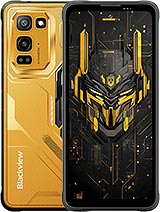
Fort 2
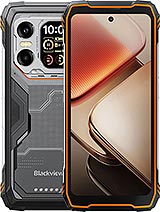
Xplore X1
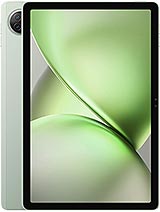
Zeno 10
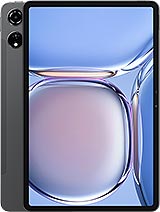
Mega 8
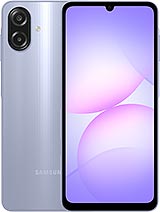
Galaxy A07 4G