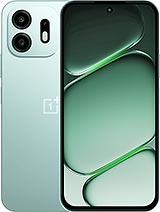
Blackview Rock 2 Pro review
The Rock 2 Pro suits workers, explorers, and developers who need multi-day battery life and genuine ruggedness and do not care about raw speed or display sharpness. Everyone else should choose a lighter, faster phone that is still water-resistant enough for daily life.
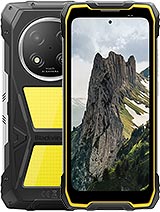
This review is written with AI assistance from Blackview’s published specifications and public benchmark data for the Blackview Rock 2 Pro, and the rating is spec-based. GoSolo does not physically test devices; where we estimate real-world behaviour such as battery life or charge time, we say so. How we rate phones.
Overview
The Blackview Rock 2 Pro is a rugged phone built for rough sites and long days, with a massive 15,000 mAh battery, IP68/IP69K durability, and a 120Hz display. It's a workhorse for workers and explorers willing to live with low-end performance and a chunky, heavy build.
Design & build
The Rock 2 Pro is built like a tool: 558.6g and 26mm thick, it sits closer to a compact radio than a phone. The heft and bulk are intentional. IP68/IP69K certification means it will handle dust, submersion to 1.5m for 30 minutes, and high-pressure water jets. MIL-STD-810H durability compliance adds military-grade drop and impact resistance. The dedicated 400-lumen flood flashlight is a thoughtful add for workers in dark sites—useful when your hands are full. This is a phone for construction sites, farms, and expeditions, not for someone who wants to slip it into a jean pocket.
Display
The 6.67-inch, 120Hz IPS LCD is bright at 650 nits, which helps in sunlight, but the 720p resolution at 264 ppi is its weak point. Panda Glass offers Mohs level 5 protection, adequate for scrapes but not scratch-proof. Text edges show visible pixelation if you look closely, and photos lack the clarity of a 1080p panel at the same size. For a work phone used mostly in apps and messaging, it is acceptable. For anyone who consumes media on their phone, the soft image quality will feel dated.
Performance
The Unisoc T8100 is an entry-level 6nm chipset with four Cortex-A76 and four Cortex-A55 cores. It handles messaging, calls, GPS navigation, and basic social media, but do not expect smooth gaming or rapid multitasking. Apps will launch noticeably slower than mid-range phones from the same era. The Mali-G57 GPU is capable enough for 2D tasks but will choke on 3D workloads. For a device aimed at workers and explorers who need reliable connectivity and battery life over performance, this is the right choice of compromise. For anyone planning to use this as their daily driver in a typical urban market, the slowness will wear thin.
Software
Android 16 with DokeOS 5.0 is Blackview's skin. DokeOS is lightweight and stays out of the way, which suits a phone that prioritizes durability and battery life over flashy features. Android 16 is current, and the UFS 3.1 storage is adequately fast. There is no indication of long-term update support, which is a concern for a 2026 release. The side-mounted fingerprint sensor is practical on a device this large.
Camera
A 16MP f/2.0 main camera with LED flash and 1080p video is functional but unremarkable. In daylight, it captures usable shots for documentation and social sharing. Low light is weak, and the auxiliary lens detail is sparse. The 13MP selfie is similarly basic. This is not a camera phone; it is a phone with a camera. For on-site photo logging or a quick snapshot, it works. If you care about image quality, look elsewhere.
Battery & charging
The 15,000 mAh battery is the standout. With moderate use, expect 2-3 days between charges; heavy use might stretch to 1.5-2 days. The slow processor helps—it draws little power idle. Charging at 33W is measured; rivals in the mid-range have moved to 65W and beyond. From zero to full will take roughly 3-4 hours, which is slow but acceptable when the battery itself is so large. For a phone meant to work remote sites, the battery life is the whole point.
Value & verdict-context
At an estimated $200–300 USD equivalent, the Rock 2 Pro occupies a rare niche: a genuine rugged phone with serious durability credentials and multi-day battery life. Rivals either cut back on IP rating to save weight or sacrifice battery for thinness. The trade-off is performance, display quality, and weight. If you work outdoors, manage remote sites, or spend weeks off-grid, this makes sense. If you are a typical smartphone user in an urban setting, the slowness, bulk, and soft display will frustrate you within a month. It does not pretend to be everything to everyone, and that honesty is its strength.
Verdict
The Rock 2 Pro suits workers, explorers, and developers who need multi-day battery life and genuine ruggedness and do not care about raw speed or display sharpness. Everyone else should choose a lighter, faster phone that is still water-resistant enough for daily life.
- 15,000 mAh battery with 33W charging will keep it running for days of heavy use
- IP68/IP69K rating plus MIL-STD-810H compliance and a dedicated flood flashlight make it genuinely rugged, not just splash-resistant
- 120Hz IPS LCD is a practical upgrade for a device aimed at outdoor and on-site work
- Dual SIM and 5G support cover connectivity needs across most markets
- Unisoc T8100 chipset is entry-level and will struggle with anything beyond basic apps and low-frame-rate gaming
- At 558.6g and 26mm thick, it is noticeably heavier and bulkier than most phones, even rugged ones; pocket carry is a real commitment
- 720p display at 6.67 inches leaves text and images soft; 264 ppi is below the threshold where most users stop noticing pixelation
Blackview Rock 2 Pro Key Specifications
The essentials at a glance. See the full spec sheet.
| Released | 2026, January |
|---|---|
| Display | 6.67 inches, 107.2 cm2 (~66.6% screen-to-body ratio), IPS LCD, 120Hz, 650 nits |
| Resolution | 720 x 1604 pixels, 20:9 ratio (~264 ppi density) |
| Chipset | Unisoc T8100 (6 nm) |
| RAM & storage | 256GB 8GB RAM |
| Main camera | 16 MP, f/2.0, AF Auxiliary lens |
| Selfie camera | 13 MP, f/2.0 |
| Battery | 15000 mAh |
| Software | Android 16, DokeOS 5.0 |
| Dimensions | 187.6 x 85.8 x 26 mm (7.39 x 3.38 x 1.02 in) |
| Weight | 558.6 g (1.23 lb) |
| Durability | IP68/IP69K dust tight and water resistant (high pressure water jets; immersible up to 1.5m for 30 min) MIL-STD-810H compliant Dedicated flood flashlight (400 lm) |
| Network | GSM / HSPA / LTE / 5G |
| NFC | Yes |
| USB | USB Type-C, OTG |
Blackview Rock 2 Pro FAQ
Common questions, answered from the spec sheet.
Does the Rock 2 Pro support 5G?
Yes. The Rock 2 Pro supports 5G networks.
What chipset does the Rock 2 Pro use?
The Rock 2 Pro runs on the Unisoc T8100 (6 nm).
What display does the Rock 2 Pro have?
A 6.67 inches, 107.2 cm2 (~66.6% screen-to-body ratio) IPS LCD, 120Hz, 650 nits, 720 x 1604 pixels, 20:9 ratio (~264 ppi density).
How big is the Rock 2 Pro battery?
The Rock 2 Pro has a 15000 mAh battery.
Does the Rock 2 Pro have NFC?
Yes, the Rock 2 Pro has NFC.
Is the Rock 2 Pro water resistant?
The Rock 2 Pro carries a IP68/IP69K dust tight and water resistant (high pressure water jets; immersible up to 1.5m for 30 min) MIL-STD-810H compliant Dedicated flood flashlight (400 lm) rating.
Does the Rock 2 Pro support a microSD card?
Yes, the Rock 2 Pro supports expandable storage (microSDXC (uses shared SIM slot)).
Alternatives to consider
If the Rock 2 Pro isn’t quite right, these are the closest calls.
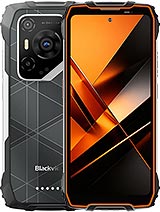
BL7000 Pro
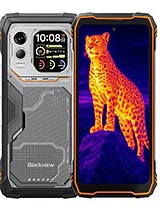
Xplore X1 Pro
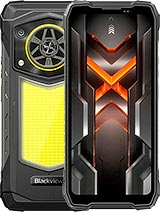
Rock 5
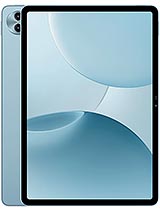
Mega 5
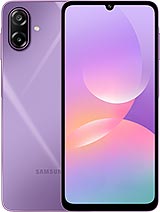
Galaxy M17e