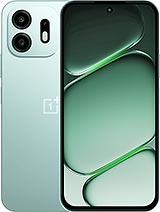
Blackview Shark 6 review
The Shark 6 suits someone commuting or working in regions with sparse charging access, or anyone who still values a headphone jack and expandable storage. Skip it if you demand sharp text, fast performance, or nimble gaming—this phone asks you to accept softness in exchange for practicality and longevity.
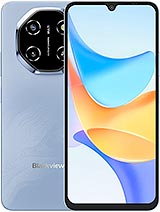
This review is based on Blackview’s published specifications and public benchmark data for the Blackview Shark 6, and the rating is spec-based. GoSolo does not physically test devices; where we estimate real-world behaviour such as battery life or charge time, we say so. How we rate phones.
Overview
The Shark 6 is a budget 5G phone built around battery life and practicality over raw power or image quality. At 110 EUR, it trades capable cameras and snappy performance for a 5000mAh cell, microSD slot, headphone jack, and a big 6.88-inch screen—a straightforward choice for someone who values endurance and everyday connectivity over polish.
Design & build
At 210.5 grams and 8.5mm thick, the Shark 6 is neither slim nor light, but it sits comfortably in the hand and feels solid enough for a budget device. The weight distribution is unremarkable and the frame is plain. Dual nano-SIM slots leave no room for hybrid configurations, but the dedicated microSDXC slot is a rarity at this price and makes expanding storage painless without sacrificing connectivity.
Display
The 6.88-inch IPS LCD with 120Hz refresh is spacious and smooth, but the 720 × 1640 pixel resolution yields just 260 ppi—enough to see the grain in text and icons if you look closely. The 450-nit peak brightness is adequate indoors but falters in direct sunlight, making reading difficult on a bright day without ducking into shade. That said, the large screen is kind to aging eyes and the 120Hz smoothness works well for scrolling and general use, even if the pixel density feels like a step back for a 2025 phone.
Performance
The Unisoc T8100 and Mali-G57 GPU handle everyday tasks—messages, email, web browsing, light video playback—without stuttering, and app switching is snappy enough for casual work. Where it falters is gaming: anything demanding like PUBG or Genshin Impact will see visible frame drops unless you run on minimal settings. Heavy multitasking also exposes the limits; open too many apps and you feel the pinch. UFS 2.2 storage is slower than the UFS 3.1 found in mid-range rivals, so copying files or installing large apps is a noticeably sluggish affair. For someone checking email and scrolling social media, this chipset is fine. For anything heavier, patience is required.
Software
The phone ships with Android 15 under Blackview's DokeOS 4.2 skin. The customization layer is light and does not burden the already modest hardware, though it adds little of value beyond the stock experience. Updates are not guaranteed for a budget brand like Blackview, so longevity depends on your tolerance for security lag. For a 110 EUR device, expecting regular patches and years of support is unrealistic.
Camera
The 16MP main camera is single, so there is no optical zoom—all magnification is digital and degrades detail fast. The sensor handles well-lit outdoor shots with decent colour, and the 4K recording at 30fps works, but shadow areas soften quickly and low-light shots are grainy. The 8MP selfie camera is adequate for video calls and casual snaps but nothing more. The auxiliary lens listed in the spec sheet appears to be a depth helper rather than a second optical sensor, adding little practical value. For everyday snapshots this suffices; for anything requiring precision or dim light, expect compromise.
Battery & charging
The 5000mAh battery is the Shark 6's strongest asset. On moderate use—messaging, web browsing, a hour or two of video—expect 6 to 8 hours of screen time and a full day without charging. Heavy users will need an evening top-up, but this is respectable for a device at this price and power level. Charging at 18W takes roughly 60 to 90 minutes to full, which is slow by current standards. Rivals in this price bracket are shipping 30W or 33W chargers, so you will feel the difference when you need a quick boost on short notice.
Value & verdict-context
At 110 EUR, the Shark 6 competes in a crowded tier where every manufacturer is chasing 5G coverage and big batteries. It delivers on both fronts, plus it brings back useful features—microSD, headphone jack, FM radio—that many rivals have stripped. The trade-off is visual softness (the display) and processing lag (the chipset and storage speed) that become obvious only when you actively use the phone. This is not a flagship or a mid-range champion; it is a straightforward, unpretentious daily driver for someone who prioritizes battery endurance and practical connectivity over polish. If you spend hours gaming or editing photos, look elsewhere. If you need a phone that lasts all day, handles calls and messages without drama, and does not empty your pocket, the Shark 6 earns its place.
Verdict
The Shark 6 suits someone commuting or working in regions with sparse charging access, or anyone who still values a headphone jack and expandable storage. Skip it if you demand sharp text, fast performance, or nimble gaming—this phone asks you to accept softness in exchange for practicality and longevity.
- 5000mAh battery delivers 6–8 hours of real screen time and lasts a full day on moderate use, well above the category norm
- Dedicated microSDXC slot and 3.5mm jack in 2025—practical features most rivals have ditched
- Broad 5G band support covers most regions; dual-band Wi-Fi and NFC are included
- Large 6.88-inch screen with 120Hz refresh is easy on the eyes despite soft pixel density
- 720p resolution on a 6.88-inch display means text and icons are noticeably pixelated; 450 nits brightness struggles outdoors in direct sun
- 18W charging takes about 60–90 minutes; rivals at this price now ship 30W or faster
- Unisoc T8100 handles light apps smoothly but drops frames in demanding games; app launches and file transfers feel sluggish on UFS 2.2 storage
Blackview Shark 6 Key Specifications
The essentials at a glance. See the full spec sheet.
| Released | 2025, September |
|---|---|
| Display | 6.88 inches, 112.4 cm2 (~84.6% screen-to-body ratio), IPS LCD, 120Hz, 450 nits |
| Resolution | 720 x 1640 pixels (~260 ppi density) |
| Chipset | Unisoc T8100 (6 nm) |
| RAM & storage | 128GB 4GB RAM, 128GB 8GB RAM |
| Main camera | 16 MP, (wide), AF Auxiliary lens |
| Selfie camera | 8 MP, (wide) |
| Battery | 5000 mAh |
| Charging | 18W wired |
| Software | Android 15, DokeOS 4.2 |
| Dimensions | 171.1 x 77.7 x 8.5 mm (6.74 x 3.06 x 0.33 in) |
| Weight | 210.5 g (7.44 oz) |
| Network | GSM / HSPA / LTE / 5G |
| NFC | Yes |
| USB | USB Type-C |
Blackview Shark 6 FAQ
Common questions, answered from the spec sheet.
Does the Shark 6 support 5G?
Yes. The Shark 6 supports 5G networks.
What chipset does the Shark 6 use?
The Shark 6 runs on the Unisoc T8100 (6 nm).
What display does the Shark 6 have?
A 6.88 inches, 112.4 cm2 (~84.6% screen-to-body ratio) IPS LCD, 120Hz, 450 nits, 720 x 1640 pixels (~260 ppi density).
How big is the Shark 6 battery?
The Shark 6 has a 5000 mAh battery. Charging is rated at 18W wired.
Does the Shark 6 have NFC?
Yes, the Shark 6 has NFC.
Does the Shark 6 support a microSD card?
Yes, the Shark 6 supports expandable storage (microSDXC (dedicated slot)).
Does the Shark 6 have a headphone jack?
Yes, the Shark 6 has a 3.5mm headphone jack.
Alternatives to consider
If the Shark 6 isn’t quite right, these are the closest calls.
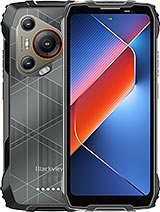
BL7000
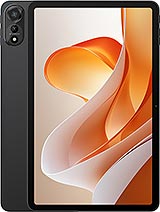
Mega 2 WiFi
Fort 100
BV7300
Galaxy M17e