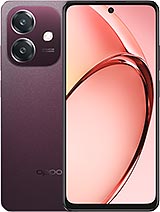
Blackview Shark 8 review
The Shark 8 suits buyers in emerging markets where the choice is between a low-budget phone without 5G and this one—the larger screen, longer battery, and faster charging justify the price. Skip it if you are in a mature market with plentiful options at the same price from established brands, or if you do serious gaming or creative work on your phone.
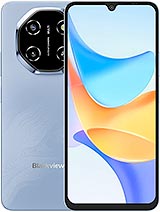
This review is based on Blackview’s published specifications and public benchmark data for the Blackview Shark 8, and the rating is spec-based. GoSolo does not physically test devices; where we estimate real-world behaviour such as battery life or charge time, we say so. How we rate phones.
Overview
The Blackview Shark 8 is a large-screen budget phone with a 5000 mAh battery, 5G support, and 33W charging—a sensible workhorse for emerging markets where the price justifies the trade-offs. The Unisoc T8100 is entry-level, the display is 720p LCD, and the cameras are simple, but none of that feels out of place at around $110.
Design & build
The Shark 8 is a chunky rectangle: 171 mm tall, 210.5 grams, and 8.5 mm thick. By 2025 standards, it is notably heavy and thick—a midrange phone from even two or three years ago would feel slimmer—but the trade-off is an enormous 6.88-inch screen and a 5000 mAh battery that justifies the bulk. The body materials are not specified, but the weight suggests polymer chassis. At this price, that is expected, and the design does not pretend to be anything else. The side-mounted fingerprint sensor is practical, and dual SIM support suits the global-south market where this phone is aimed.
Display
A 6.88-inch 720p LCD is not cutting-edge, but it is honest about its limits. At 260 ppi, individual pixels are faintly visible at close range, though not distracting in normal use. The 120Hz refresh rate lifts scrolling and gaming above the typical 60Hz midrange baseline, which is a genuine usability gain. The IPS panel handles viewing angles well, and 450 nits brightness is adequate for indoor and shade; outdoor visibility in direct sunlight will require tilting. This display does its job for the money without pretending to match AMOLED or higher-resolution rivals.
Performance
The Unisoc T8100 is a 6nm entry-level chip that handles everyday tasks—messaging, social apps, YouTube, light browsing—without stuttering. It has an octa-core CPU (four 2.2 GHz A76 cores and four 2.0 GHz A55 cores) and Mali-G57 GPU, which is capable enough for casual gaming at reduced settings or titles not demanding cutting-edge graphics. Demanding games like Genshin Impact at high settings will struggle; lighter titles like PUBG at medium settings run acceptably. The 4GB or 8GB RAM options set the ceiling on multitasking; 8GB is safer if you habitually keep 10+ apps open. This chipset delivers what a $110 phone should: competent daily performance without flagship pretension.
Software
Android 15 with DokeOS 4.2 overlay. DokeOS is Blackview's custom skin, and on budget hardware it typically adds bloat rather than useful features, though that depends on your market variant. Android 15 itself is current and stable. With only 128GB of base storage and that OS taking a cut, you will feel pressure to use the microSDXC slot if you download photos, videos, or large games. No surprises here—this is standard for the tier.
Camera
A 16MP main camera with autofocus and LED flash. That is simpler than rivals' dual or triple setups, but it removes guesswork and poor-quality ultra-wide performance that plague budget multi-camera phones. 4K video at 30fps is functional, though low bitrate and limited stabilization mean handheld footage is shakier than flagship phones. The 8MP selfie camera is enough for video calls and casual selfies. In good light, the main camera delivers decent detail; in dim interiors or night, noise becomes obvious due to the smaller sensor. This is not a phone for photography ambition, but it covers essentials.
Battery & charging
A 5000 mAh battery is the highlight. With moderate use on a large 120Hz display, you can expect a full day comfortably; heavier users (video streaming, gaming, constant messaging) will push into the evening. 33W wired charging tops the battery in about 40 to 50 minutes, which is respectable but slower than rivals offering 65W or 100W at similar prices. There is no wireless charging, which is standard to omit at this price. The sheer capacity is the story—this phone favours endurance over speed.
Value & verdict-context
At roughly $110 USD or EUR equivalent, the Shark 8 is pitched at buyers in developing markets where 5G infrastructure exists but affordability is paramount. 5G connectivity is listed in the spec sheet and present in the bands, though practical 5G coverage in those regions is still patchy, so this is a future-ready rather than immediate advantage. The real proposition is a large screen, a full-day battery, 33W charging that does not require hours at a wall outlet, and 5G capable hardware for a price that does not demand compromise on other essentials. It is not innovative or exciting—it is a straightforward, mass-market device that accepts entry-level chipset and display limits as the price to keep the total cost low.
Verdict
The Shark 8 suits buyers in emerging markets where the choice is between a low-budget phone without 5G and this one—the larger screen, longer battery, and faster charging justify the price. Skip it if you are in a mature market with plentiful options at the same price from established brands, or if you do serious gaming or creative work on your phone.
- 5000 mAh battery delivers a full day of mixed use without strain
- 5G connectivity and decent LTE band coverage suit emerging-market infrastructure
- 33W charging refills the phone in under an hour, faster than typical budget rivals
- Large 6.88-inch 120Hz display is a practical upgrade over standard 60Hz midrange phones
- 720p display resolution is noticeably soft at this screen size; rivals in the same price now offer 1080p
- 33W charging lags competitors offering 65W to 100W at similar prices
- Unisoc T8100 is entry-level and will struggle with demanding games and heavy multitasking
Blackview Shark 8 Key Specifications
The essentials at a glance. See the full spec sheet.
| Released | 2025, September |
|---|---|
| Display | 6.88 inches, 112.4 cm2 (~84.6% screen-to-body ratio), IPS LCD, 120Hz, 450 nits |
| Resolution | 720 x 1640 pixels (~260 ppi density) |
| Chipset | Unisoc T8100 (6 nm) |
| RAM & storage | 128GB 4GB RAM, 128GB 8GB RAM |
| Main camera | 16 MP, (wide), AF Auxiliary lens |
| Selfie camera | 8 MP, (wide) |
| Battery | 5000 mAh |
| Charging | 33W wired |
| Software | Android 15, DokeOS 4.2 |
| Dimensions | 171.1 x 77.7 x 8.5 mm (6.74 x 3.06 x 0.33 in) |
| Weight | 210.5 g (7.44 oz) |
| Network | GSM / HSPA / LTE / 5G |
| NFC | Yes |
| USB | USB Type-C |
Blackview Shark 8 FAQ
Common questions, answered from the spec sheet.
Does the Shark 8 support 5G?
Yes. The Shark 8 supports 5G networks.
What chipset does the Shark 8 use?
The Shark 8 runs on the Unisoc T8100 (6 nm).
What display does the Shark 8 have?
A 6.88 inches, 112.4 cm2 (~84.6% screen-to-body ratio) IPS LCD, 120Hz, 450 nits, 720 x 1640 pixels (~260 ppi density).
How big is the Shark 8 battery?
The Shark 8 has a 5000 mAh battery. Charging is rated at 33W wired.
Does the Shark 8 have NFC?
Yes, the Shark 8 has NFC.
Does the Shark 8 support a microSD card?
Yes, the Shark 8 supports expandable storage (microSDXC (dedicated slot)).
Does the Shark 8 have a headphone jack?
Yes, the Shark 8 has a 3.5mm headphone jack.
Alternatives to consider
If the Shark 8 isn’t quite right, these are the closest calls.
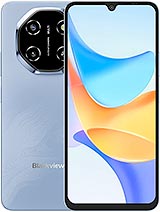
Shark 9
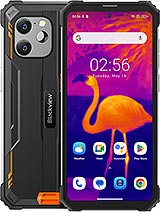
BV8900
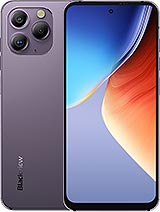
A96
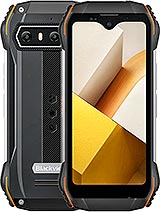
N6000
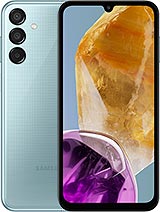
Galaxy M15 5G