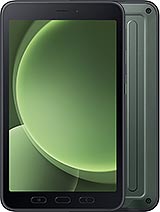
Blackview Tab 18 review
The Tab 18 makes sense for students, casual readers, and media consumers who prioritize battery life and screen real estate over display brightness and connectivity speed. Those who rely on fast networks, need a sharp outdoor display, or use a tablet for creative work should look at an iPad or Galaxy Tab instead.
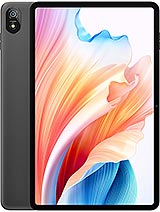
This review is based on Blackview’s published specifications and public benchmark data for the Blackview Tab 18, and the rating is spec-based. GoSolo does not physically test devices; where we estimate real-world behaviour such as battery life or charge time, we say so. How we rate phones.
Overview
The Tab 18 is a large-screen workhorse for students and media watchers, built around an 8800mAh battery and Helio G99 chip that together deliver all-day endurance on a 12-inch canvas. The low 350-nit display and 1080p cameras are real limits for outdoor use and creative work, but the price-to-screen ratio is hard to beat in this space.
Design & build
At 632 grams and 7.9mm thin, the Tab 18 sits in that sweet spot where a 12-inch tablet is still portable without feeling fragile. The dimensions are measured and straightforward; this is an object built to be held with two hands and carried in a bag. The stylus support is listed but no pen is bundled or deeply integrated, so it reads more as a checkbox than a driving feature. Dual Nano-SIM slots and a shared microSDXC expansion slot mean you must choose between dual carrier coverage and extra storage, a trade-off that rarely favors keeping two active SIM cards on a tablet.
Display
The 12-inch IPS LCD runs at 1200 × 2000 pixels (5:3 ratio), which works out to 194 ppi—a density that keeps text and photos crisp at arm's length without pretending to match phone-class sharpness. At 350 nits peak brightness, the panel is fine for indoor reading, browsing, and streaming video in normal light. Step outside into direct sun and you will quickly find the limits; the washout is noticeable and will frustrate anyone relying on this tablet outdoors or by a window for extended sessions. For the price tier and 2023 era, 350 nits is acceptable but not generous; rivals in the same range are starting to push 400–500 nits.
Performance
The Mediatek Helio G99 is a solid mid-range chip with two fast cores and six efficiency cores. It handles everyday Android apps, Netflix, YouTube, document editing, and light gaming (think puzzle games and turn-based titles) without visibly stuttering. Heavy 3D gaming will show its limits, and aggressive multitasking or large file operations feel slower than an iPad or premium Android tablet would manage. The 12GB RAM helps keep apps in memory, so jumping between documents, browser tabs, and email is reasonably smooth. For students reading PDFs, annotating slides, and writing notes, this setup is more than adequate; anyone expecting flagship-class responsiveness will find it pedestrian.
Software
Android 13 with Doke OS_P 4.0 is Blackview's custom overlay, a layer most users will not deeply explore. The core Android experience is there—app drawer, notifications, Settings—but Doke adds its own skin and bundled apps that may feel redundant or clutter the home screen. For a 2023 device, Android 13 is current and stable, though the update path for Blackview tablets is historically unclear; do not expect years of OS bumps.
Camera
The 16MP rear sensor with LED flash shoots respectable daytime photos on a 12-inch screen and records video at 1080p@30fps, which is functional but no longer impressive even for mid-range tablets. Low-light shots will be grainy, and the LED flash is weak for far subjects. The 8MP front camera is fine for video calls and selfies in good light. For this tablet's likely users (students reading and watching, not content creators), the cameras are an afterthought. If you plan to take photos or shoot video regularly, look elsewhere; this tablet is not built for that.
Battery & charging
The 8800mAh battery is the genuine headline here. In mixed use—browsing, video playback, some games—expect 10 to 12 hours of screen-on time, which is excellent and stands out against most rivals at this price. The 33W wired charger tops it up in roughly 45 to 60 minutes, standard for a tablet of this size. No wireless charging, but USB Type-C with OTG support keeps things practical. The takeaway is straightforward: this tablet will outlast a full work or study day, and you will not obsess over battery anxiety.
Value & verdict
The Tab 18 is a 12-inch screen and 8800mAh battery masquerading as a budget tablet. It costs significantly less than flagship iPads or Samsung Galaxy Tab alternatives, yet delivers a larger canvas and longer endurance than you would expect at the price. The trade-offs are real: the display is dim in sunlight, the chip is entry-level for heavy tasks, the cameras are throwaway, and there is no 5G. For a student who reads, watches videos, and takes notes, or for anyone who wants a large-screen companion device that will not need charging mid-day, the value proposition holds. If you work outdoors, shoot content, or demand snappy app performance and fast connectivity, this tablet will frustrate you.
Verdict
The Tab 18 makes sense for students, casual readers, and media consumers who prioritize battery life and screen real estate over display brightness and connectivity speed. Those who rely on fast networks, need a sharp outdoor display, or use a tablet for creative work should look at an iPad or Galaxy Tab instead.
- 8800mAh battery with 33W charging delivers 10–12 hours of screen-on time, rare stamina for a large tablet
- 12-inch 194ppi IPS display is roomy for reading, video, and split-screen work without feeling dated for its 2023 launch
- Four stereo speakers tuned by Harman Kardon give this tablet actual audio presence, not the tinny output of rivals at this price
- Helio G99 and 12GB RAM handle daily apps, light games, and document work without hiccups, with room to expand storage via microSDXC
- 350 nits brightness makes the screen hard to read in direct sunlight or bright outdoor settings, a real handicap for a device meant to travel
- 16MP rear and 8MP front cameras shoot only 1080p video and struggle in low light, limiting the tablet for content creation or video calls
- No 5G and LTE-only connectivity feels dated for a 2023 launch, leaving this tablet behind on network speed versus newer rivals
Blackview Tab 18 Key Specifications
The essentials at a glance. See the full spec sheet.
| Released | 2023, November |
|---|---|
| Display | 12.0 inches, 409.9 cm2 (~85.2% screen-to-body ratio), IPS LCD, 350 nits |
| Resolution | 1200 x 2000 pixels, 5:3 ratio (~194 ppi density) |
| Chipset | Mediatek Helio G99 (6 nm) |
| RAM & storage | 256GB 12GB RAM |
| Main camera | 16 MP |
| Selfie camera | 8 MP |
| Battery | 8800 mAh |
| Charging | 33W wired |
| Software | Android 13, Doke OS_P 4.0 |
| Dimensions | 277.6 x 173.2 x 7.9 mm (10.93 x 6.82 x 0.31 in) |
| Weight | 632 g (1.39 lb) |
| Durability | Stylus support |
| Network | GSM / HSPA / LTE |
| NFC | No |
| USB | USB Type-C, OTG |
Blackview Tab 18 FAQ
Common questions, answered from the spec sheet.
Does the Tab 18 support 5G?
No. The Tab 18 tops out at GSM / HSPA / LTE, without 5G.
What chipset does the Tab 18 use?
The Tab 18 runs on the Mediatek Helio G99 (6 nm).
What display does the Tab 18 have?
A 12.0 inches, 409.9 cm2 (~85.2% screen-to-body ratio) IPS LCD, 350 nits, 1200 x 2000 pixels, 5:3 ratio (~194 ppi density).
How big is the Tab 18 battery?
The Tab 18 has a 8800 mAh battery. Charging is rated at 33W wired.
Does the Tab 18 have NFC?
No, the Tab 18 does not list NFC support.
Is the Tab 18 water resistant?
The Tab 18 carries a Stylus support rating.
Does the Tab 18 support a microSD card?
Yes, the Tab 18 supports expandable storage (microSDXC (uses shared SIM slot)).
Does the Tab 18 have a headphone jack?
No, the Tab 18 does not have a 3.5mm headphone jack.
Alternatives to consider
If the Tab 18 isn’t quite right, these are the closest calls.
Tab 50 WiFi
Tab 5
Tab 70 WiFi
Tab 11 WiFi
Pad Neo