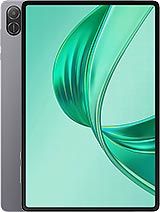
Blackview Tab 80 review
The Tab 80 suits someone who wants a secondary tablet for media and email without spending much, or who values dual SIM for travel and work separation. Anyone who spends time reading, editing, or demanding speed should look at mid-range alternatives with better displays and faster charging.
This review is based on Blackview’s published specifications and public benchmark data for the Blackview Tab 80, and the rating is spec-based. GoSolo does not physically test devices; where we estimate real-world behaviour such as battery life or charge time, we say so. How we rate phones.
Overview
The Tab 80 is a budget 10.1-inch tablet built for email, streaming, and web browsing on a tight budget. It limps along with an entry-level chipset, sluggish storage, and weak charging, so if you need snappy performance or a sharp display, look elsewhere.
Design & build
At 484 grams and 7.5 mm thick, the Tab 80 is slim and reasonably light for a 10-inch tablet, so it won't exhaust your arms during extended reading or video. The build itself is unremarkable—plastic construction is the norm at this price—but it feels sturdy enough for casual handling. Dual nano-SIM slots give it genuine appeal if you juggle work and personal numbers or travel between regions, a rarity among budget tablets that usually sacrifice this for a single SIM or microSD expansion.
Display
The 10.1-inch IPS LCD is a problem area. At 800 by 1280 pixels and 149 ppi, the density is grainy compared to modern tablets; text and icons lack crispness, and fine details in photos look soft unless you back away from the screen. This matters most if you plan to do any reading, light document work, or photo viewing, where you'll notice the pixelation. For video streaming and web browsing at arm's length, the trade-off is livable, and the 78.7 percent screen-to-body ratio means bezel is kept reasonable for a budget device. The IPS panel handles viewing angles without color shift, so sharing the screen with someone sitting beside you works fine.
Performance
The Unisoc T606 is entry-level, and the Tab 80 knows its place. Light tasks—email, social media, YouTube, web browsing—run smoothly enough that you won't feel constant lag, but push it and it stumbles. Gaming at any quality level, video editing, or running multiple heavy apps will expose its limits quickly. The Mali-G57 GPU cannot handle demanding 3D work, and with 4GB or 8GB RAM, you don't have much cushion for multitasking either. For a device aimed at streaming and light office work, that's acceptable; just don't expect speed.
Software
The tablet runs Android 13 under Doke OS_P 3.0, Blackview's custom overlay. Android 13 itself is now aging, and there's no word on upgrade timelines for this budget line. Doke OS adds some customization but doesn't fix the core: a dated OS paired with an entry-level chip means this device will feel slower than newer mid-range tablets running more recent Android versions. Security patches and feature updates are unlikely to come regularly, so this is a device you buy for its current state and accept that it won't evolve much.
Camera
The 13MP rear camera with LED flash shoots 1080p video at 30fps and handles daylight photography acceptably, but it's purely functional. Indoor shots show visible noise, and the absence of optical zoom means you're stuck with whatever the fixed lens captures. The 8MP front camera is fine for video calls but nothing more. For a tablet, the camera is an afterthought anyway; most people use tablets for content consumption, not capture. It's here if you need it, but don't expect it to impress.
Battery & charging
The 7680 mAh battery is the highlight and the limitation at once. Light use—email, social media, light browsing—stretches the charge into 1 to 2 days, while mixed use and streaming bring you back to about 8 to 10 hours of screen time. That's solid for a budget device and means you're not charging it every night if you're selective with your usage. The problem is the charger: 10W is slow, and a full charge from zero takes roughly 2 to 3 hours. If the battery dies at an inconvenient time, you can't top it up quickly. Even the cheapest tablets today hit 18W or faster, so the Tab 80 is falling behind here.
Value & verdict
The Tab 80 sits in the budget tablet space where every trade-off is a price decision. For email, news, streaming, and casual browsing, it does the job, and the dual SIM means it can double as a secondary communication device or travel companion without costing much. The battery life is competitive, and storage is expandable. Where it stumbles is the grainy display, glacial charging, and sluggish eMMC storage that make file transfers and app launches feel slow compared to even mid-range tablets. If your budget is strictly limited and you don't mind low-resolution visuals or waiting for things to load, it's defensible. If you can stretch the budget another 20 to 30 percent, modern mid-range tablets offer sharper displays, faster storage, and quicker charging without much added weight.
Verdict
The Tab 80 suits someone who wants a secondary tablet for media and email without spending much, or who values dual SIM for travel and work separation. Anyone who spends time reading, editing, or demanding speed should look at mid-range alternatives with better displays and faster charging.
- Dual SIM and LTE on a budget tablet mean you can use it as a secondary device for calls or mobile data without overpaying
- 7680 mAh battery delivers about 8 to 10 hours of screen time per charge, enough for a full workday of light use
- Stereo speakers and a headphone jack make it straightforward to watch video or listen to music without buying extra cables
- Expandable storage via microSDXC gives you room to load video and media without paying extra for the highest base storage tier
- The 149 ppi display is noticeably grainy for a 10.1-inch tablet; text looks soft and reading fine print requires you to zoom in or sit closer than is comfortable
- 10W charging takes roughly 2 to 3 hours for a full charge, so the battery bottleneck extends to the charger as well
- eMMC 5.1 storage is slower than UFS found on even mid-range tablets, making file transfers and app launches visibly sluggish
Blackview Tab 80 Key Specifications
The essentials at a glance. See the full spec sheet.
| Released | 2023, September |
|---|---|
| Display | 10.1 inches, 295.8 cm2 (~78.7% screen-to-body ratio), IPS LCD |
| Resolution | 800 x 1280 pixels, 16:10 ratio (~149 ppi density) |
| Chipset | Unisoc T606 (12 nm) |
| RAM & storage | 64GB 4GB RAM, 128GB 4GB RAM, 128GB 8GB RAM |
| Main camera | 13 MP secondary unspecified camera |
| Selfie camera | 8 MP |
| Battery | 7680 mAh |
| Charging | 10W wired |
| Software | Android 13, Doke OS_P 3.0 |
| Dimensions | 241 x 156 x 7.5 mm (9.49 x 6.14 x 0.30 in) |
| Weight | 484 g (1.07 lb) |
| Network | GSM / HSPA / LTE |
| NFC | No |
| USB | USB Type-C, OTG |
Blackview Tab 80 FAQ
Common questions, answered from the spec sheet.
Does the Tab 80 support 5G?
No. The Tab 80 tops out at GSM / HSPA / LTE, without 5G.
What chipset does the Tab 80 use?
The Tab 80 runs on the Unisoc T606 (12 nm).
What display does the Tab 80 have?
A 10.1 inches, 295.8 cm2 (~78.7% screen-to-body ratio) IPS LCD, 800 x 1280 pixels, 16:10 ratio (~149 ppi density).
How big is the Tab 80 battery?
The Tab 80 has a 7680 mAh battery. Charging is rated at 10W wired.
Does the Tab 80 have NFC?
No, the Tab 80 does not list NFC support.
Does the Tab 80 support a microSD card?
Yes, the Tab 80 supports expandable storage (microSDXC (uses shared SIM slot)).
Does the Tab 80 have a headphone jack?
Yes, the Tab 80 has a 3.5mm headphone jack.
Alternatives to consider
If the Tab 80 isn’t quite right, these are the closest calls.
Tab 11 SE
Tab 12 Pro
Tab 50 WiFi
Tab 5
Galaxy Tab Active 5