Blackview Wave 10 review
The Wave 10 suits buyers who value a large screen and multi-day battery over performance and sharpness, and who trust Blackview's service network in their region. Most others shopping this price in 2026 will find faster, crisper alternatives from mainstream brands that cost no more.
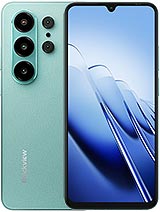
This review is written with AI assistance from Blackview’s published specifications and public benchmark data for the Blackview Wave 10, and the rating is spec-based. GoSolo does not physically test devices; where we estimate real-world behaviour such as battery life or charge time, we say so. How we rate phones.
Overview
The Wave 10 is a budget Android tablet-sized phone with a huge 6.88-inch screen, mid-range chipset, and 5000mAh battery aimed at cost-conscious buyers who value screen real estate over performance. It is competent for its price but carries the weight and slowness that entry-level Unisoc phones still struggle with in 2026.
Design & build
At 171.9 x 78mm and 205g, the Wave 10 is genuinely large and heavy. The thickness sits at 9.1mm, which is normal, but the sheer footprint and mass push it toward single-hand awkwardness. The Mohs level 5 screen protection is below glass standards and suggests a plastic-like mineral coating that will scratch more easily than Gorilla Glass. There is no waterproofing rating listed, so assume none. This is a device built around one thing: shoving as much screen as possible into a budget frame. Build quality is likely durable plastic and metal, functional but not refined.
Display
The 6.88-inch IPS LCD is the headline. 120Hz refresh is now standard at this price and does smooth scrolling noticeably. The problem is the 720p resolution. At 260 ppi, text on smaller elements becomes soft; fine details in photos and web pages feel blurry compared to 1080p displays that have become common even in entry-level rivals. 430 nits is sufficient for indoors and reasonably bright outdoors, but does not match the brightness of newer budget phones. The large screen is genuinely useful for video, reading, and games, but the low pixel density feels like a cost-cut that buyers shopping mid-2026 should not accept when 1080p rivals cost the same.
Performance
The Unisoc UMS9230E is the core issue. It is not new, and by May 2026, competitors in this price band have moved to Snapdragon 4 Gen 2, MediaTek Helio G85, and similar chips that deliver meaningfully faster app launches and smoother gaming. Android 16 and DokeOS 5 will run, but do not expect snappy performance. Multitasking will lag; demanding games will stutter. The octa-core CPU and Mali-G57 GPU handle everyday tasks, but the experience feels behind. 8GB RAM is adequate but cannot fully compensate for a slow chipset. This is the phone's weakest spec for its year and price.
Software
DokeOS 5 on Android 16 represents Blackview's customization layer. Without specific testing, assume it follows the pattern of budget Android skins: some bloatware, occasional slowdowns from optimization shortcuts, and a learning curve for users expecting stock Android. The FM radio presence is a rarity that appeals to users in markets with FM infrastructure; most will ignore it. Updates and support for budget brands like Blackview are typically shorter than mainstream OEMs, so do not expect multi-year OS upgrades.
Camera
A 32MP main sensor at f/2.0 with autofocus sounds decent on paper, but without optical image stabilization or a larger sensor (1/3.0" is small), real-world shots will be softer than the megapixel count suggests, especially in low light. 1080p video at 30fps caps capability at a time when rivals offer 4K or at least 1080p@60fps. The 13MP selfie is adequate for video calls. Lack of an ultrawide or depth sensor means this is a one-trick camera setup; you get a single view and nothing more. For a 2026 budget phone, single rear cameras are becoming rare, and the omission is noticeable against multi-camera rivals.
Battery & charging
The 5000mAh battery is large and should deliver 1.5 to 2 days of moderate use, longer if you favor standby time and messaging. That is genuinely useful. The spec sheet lists 10W charging, which is slow by 2026 standards when 30W and 65W are routine even in entry-level tiers. This means a full charge from zero will take about 4.5 to 5 hours, or roughly an hour longer than faster-charging rivals. For a phone aimed at all-day battery life, the slow charge speed is a practical annoyance, especially if you travel or need a quick top-up.
Value & verdict
The Wave 10 positions itself as a large-screen, long-battery budget phone for price-conscious buyers in global markets where Blackview has distribution. The large display and dedicated microSD slot are real strengths, and the 5000mAh battery is genuinely useful. Against it: the Unisoc chipset is underpowered, the 720p screen resolution disappoints on such a large display, the build feels heavy and unwieldy, and 10W charging is slow. For the same price, rivals from established brands often deliver a faster chip, better display resolution, and lighter weight. This phone makes sense only for buyers who specifically prioritize screen size and battery endurance over performance and display clarity, and who live in regions where Blackview's service and parts availability matter.
Verdict
The Wave 10 suits buyers who value a large screen and multi-day battery over performance and sharpness, and who trust Blackview's service network in their region. Most others shopping this price in 2026 will find faster, crisper alternatives from mainstream brands that cost no more.
- Large 6.88-inch display with 120Hz refresh rate makes video and reading comfortable; 430 nits brightness is adequate for indoor use
- Dedicated microSD slot allows real expandable storage without sacrificing a SIM
- 5000mAh battery paired with modest hardware should deliver genuinely useful battery life
- Side-mounted fingerprint sensor and dual SIM keep it practical for global travel or dual-account users
- Unisoc UMS9230E is dated even for budget tier; rivals at this price now ship Snapdragon 4 Gen 2 or MediaTek Helio G85, making everyday apps and games noticeably slower
- 720p display at 260 ppi on a 6.88-inch screen leaves text soft and detail fuzzy compared to 1080p rivals at the same price
- 205g and 9.1mm thickness makes this phone unwieldy for one-handed use; it sits in an awkward middle ground between pocket phones and tablets
Blackview Wave 10 Key Specifications
The essentials at a glance. See the full spec sheet.
| Released | 2026, May |
|---|---|
| Display | 6.88 inches, 112.4 cm2 (~83.8% screen-to-body ratio), IPS LCD, 120Hz, 430 nits |
| Resolution | 720 x 1640 pixels (~260 ppi density) |
| Chipset | Unisoc UMS9230E |
| RAM & storage | 256GB 8GB RAM |
| Main camera | 32 MP, f/2.0, (wide), 1/3.0", AF |
| Selfie camera | 13 MP, f/2.0, (wide), 1/4.0" |
| Battery | 5000 mAh |
| Software | Android 16, DokeOS 5 |
| Dimensions | 171.9 x 78 x 9.1 mm (6.77 x 3.07 x 0.36 in) |
| Weight | 205 g (7.23 oz) |
| Network | GSM / HSPA / LTE |
| NFC | No |
| USB | USB Type-C, OTG |
Blackview Wave 10 FAQ
Common questions, answered from the spec sheet.
Does the Wave 10 support 5G?
No. The Wave 10 tops out at GSM / HSPA / LTE, without 5G.
What chipset does the Wave 10 use?
The Wave 10 runs on the Unisoc UMS9230E.
What display does the Wave 10 have?
A 6.88 inches, 112.4 cm2 (~83.8% screen-to-body ratio) IPS LCD, 120Hz, 430 nits, 720 x 1640 pixels (~260 ppi density).
How big is the Wave 10 battery?
The Wave 10 has a 5000 mAh battery.
Does the Wave 10 have NFC?
No, the Wave 10 does not list NFC support.
Does the Wave 10 support a microSD card?
Yes, the Wave 10 supports expandable storage (microSDXC (dedicated slot)).
Alternatives to consider
If the Wave 10 isn’t quite right, these are the closest calls.
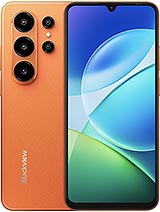
Wave 10C
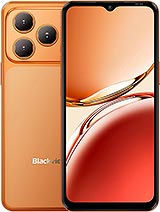
Wave 7C
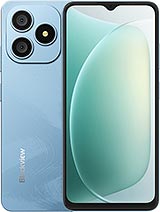
Wave 9C
Rock 2 Pro
Galaxy M17e