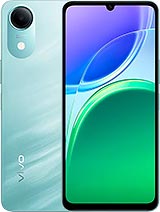
Blackview Wave 2C review
The Wave 2C suits users in emerging markets who prioritize battery life, expandable storage, and dual SIM over camera quality and display sharpness, and whose main uses are calling and messaging with occasional browsing. Anyone who plans to use a smartphone for photography, social media, or app-heavy tasks should look for an entry-level phone with a sharper screen and better processor, even if it costs slightly more.
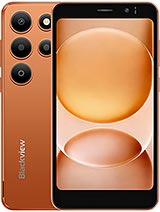
This review is written with AI assistance from Blackview’s published specifications and public benchmark data for the Blackview Wave 2C, and the rating is spec-based. GoSolo does not physically test devices; where we estimate real-world behaviour such as battery life or charge time, we say so. How we rate phones.
Overview
The Blackview Wave 2C is a no-frills entry-level phone aimed squarely at users in emerging markets who need basic calling, messaging, and light browsing without any pretense. It's honest about what it is—a device built to last on a charge and cost very little—but the screen resolution and processor leave it struggling with anything beyond simple tasks.
Design & build
At 135.6 x 70.2 x 11.1 mm and 158.5g, the Wave 2C is genuinely compact and light—rarer and more valuable than ever as most phones have ballooned. The chassis feels plastic, as expected, and Mohs level 5 scratch resistance on the display is bottom-tier protection, but the industrial shape is no-nonsense and built to survive drops and pocket dust. Dual Nano-SIM support and a dedicated microSD slot are practical wins that many budget phones skip to shave costs or space. The phone launches in Shadow Black and Blaze Orange, neither of which will turn heads, but that suits its purpose.
Display
The 5-inch IPS LCD panel is small by modern standards, but at 480 x 854 pixels and ~196 ppi, it falls short even for a budget device in 2026. Text, icons, and UI elements have visible pixelation; web pages and photos look soft. The 400 nits brightness is adequate for indoor use and reasonably legible in sunlight, though not exceptional. The 72.4% screen-to-body ratio reflects the bezels you'd expect from an entry-level handset. This is the kind of display you tolerate because the price is low, not because you enjoy using it.
Performance
The Unisoc SC9863A1 is a low-power 28nm octa-core chipset designed purely for basic messaging, calls, and light social media. Pair it with 3GB RAM and Android 16 Go, and you have a device that will handle one or two apps in the foreground but will stall and reload if you try to multitask. Loading web pages is slow, opening galleries is sluggish, and any app with heavy graphics—gaming, video editing, even modern interface animations—will make the phone feel laggy. This is a processor class from years past, preserved now mainly for ultra-budget markets where cost per unit is the only metric that matters. It will not freeze on basic tasks, but you will notice the slowness daily.
Software
Android 16 Go Edition strips bloat and optimizes for low RAM and storage. Apps like YouTube, Gmail, and Maps run in lighter versions that use less memory and data. The trade-off is reduced features and fewer options—Go Edition is a locked-down, simplified experience designed for markets where data plans are expensive and phones are shared across extended families. Security updates and new versions will be sparse; Blackview's track record on OS updates is poor. This is not a phone you'll keep for four years expecting the latest Android, but that is not the buyer's expectation at this price anyway.
Camera
A 5MP main sensor with LED flash and a 2MP selfie cam are pure survival specs. The main camera will produce usable snapshots in bright daylight—good enough for WhatsApp or quick documentation—but in anything dimmer, you'll see visible noise and lost detail. The 2MP front camera is barely adequate for video calls. There is no secondary sensor for depth, wide angle, or macro, so you get one fixed focal length and that is it. In 2026, this camera set is designed purely to say the phone has a camera, not to make photography fun or useful. Rivals at similar prices now offer 13MP or 16MP mains, which makes this feel especially thin.
Battery & charging
The 3000 mAh battery is small, but the low-power chipset and modest display mean realistic battery life of about 2 to 3 days on light use—calling, texting, basic web browsing. That is a genuine strength for budget buyers who hate charging every night. Charging speed is not listed in the spec sheet, and the omission suggests it is basic; without fast charging, a full recharge will take several hours. There is no wireless charging. For a device aimed at markets with unreliable power grids, the extended runtime is more valuable than speed anyway.
Value & verdict-context
The Blackview Wave 2C is honest about its station: it is not trying to be a mini flagship or a compromise device. It exists to give someone who cannot afford $150 a phone that works for calling, texting, and light internet use, and to last long between charges. At this price, the main competition is other entry-level offerings, and the Wave 2C's compactness, dual SIM, and microSD slot are standout advantages. The display and camera are weak, but so are most rivals at this cost. The real question is whether you can live with the 480p screen and 5MP camera day-to-day. If you are in a market where budget is the primary driver and you value battery life and expandable storage, the Wave 2C is a reasonable pick. If you can stretch the budget even a little, entry-level phones at $120 to $150 now offer significantly sharper displays and better cameras, making them the better long-term buy.
Verdict
The Wave 2C suits users in emerging markets who prioritize battery life, expandable storage, and dual SIM over camera quality and display sharpness, and whose main uses are calling and messaging with occasional browsing. Anyone who plans to use a smartphone for photography, social media, or app-heavy tasks should look for an entry-level phone with a sharper screen and better processor, even if it costs slightly more.
- Dual SIM and a dedicated microSD slot mean real flexibility for budget users who need multiple numbers or more storage
- 3000 mAh battery paired with a low-power processor should deliver 2 to 3 days of light use—realistic battery longevity for this segment
- FM radio and GPS with multiple satellite systems are still here, useful offline features rivals often drop at this price
- Compact 5-inch screen and 158.5g weight make it genuinely pocketable, a rarity as phones trend larger
- 480 x 854 pixel display is soft and dated even for a budget phone; text and UI elements blur noticeably compared to modern entry-level rivals
- 5MP main camera and 2MP selfie are severe by 2026 standards; expect grainy, low-detail shots in anything but bright daylight
- 3GB RAM with Android 16 Go will struggle if you open more than two apps or hit a heavy webpage; stuttering is likely
Blackview Wave 2C Key Specifications
The essentials at a glance. See the full spec sheet.
| Released | 2026, June |
|---|---|
| Display | 5.0 inches, 68.9 cm2 (~72.4% screen-to-body ratio), IPS LCD, 400 nits |
| Resolution | 480 x 854 pixels, 16:9 ratio (~196 ppi density) |
| Chipset | Unisoc SC9863A1 (28 nm) |
| RAM & storage | 32GB 3GB RAM |
| Main camera | 5 MP |
| Selfie camera | 2 MP |
| Battery | 3000 mAh |
| Software | Android 16 (Go edition) |
| Dimensions | 135.6 x 70.2 x 11.1 mm (5.34 x 2.76 x 0.44 in) |
| Weight | 158.5 g (5.61 oz) |
| Network | GSM / HSPA / LTE |
| NFC | No |
| USB | USB Type-C, OTG |
Blackview Wave 2C FAQ
Common questions, answered from the spec sheet.
Does the Wave 2C support 5G?
No. The Wave 2C tops out at GSM / HSPA / LTE, without 5G.
What chipset does the Wave 2C use?
The Wave 2C runs on the Unisoc SC9863A1 (28 nm).
What display does the Wave 2C have?
A 5.0 inches, 68.9 cm2 (~72.4% screen-to-body ratio) IPS LCD, 400 nits, 480 x 854 pixels, 16:9 ratio (~196 ppi density).
How big is the Wave 2C battery?
The Wave 2C has a 3000 mAh battery.
Does the Wave 2C have NFC?
No, the Wave 2C does not list NFC support.
Does the Wave 2C support a microSD card?
Yes, the Wave 2C supports expandable storage (microSD (dedicated slot)).
Alternatives to consider
If the Wave 2C isn’t quite right, these are the closest calls.
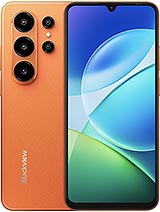
Wave 10C
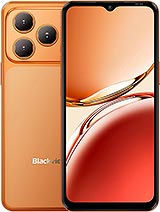
Wave 7C
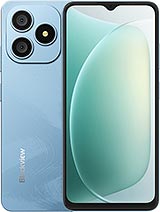
Wave 9C
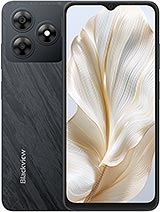
Wave 8C
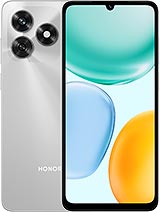
Play 70C