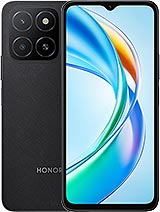
Blackview Wave 6C review
This is a deliberate choice for dual-SIM users in regions where battery life and connectivity trump performance, and where a headphone jack and microSD slot still matter. Anyone expecting speed, image quality, or a bright, sharp display should spend a bit more and pick a mid-range phone from a larger brand.
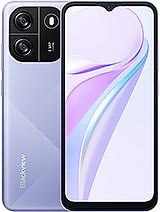
This review is based on Blackview’s published specifications and public benchmark data for the Blackview Wave 6C, and the rating is spec-based. GoSolo does not physically test devices; where we estimate real-world behaviour such as battery life or charge time, we say so. How we rate phones.
Overview
The Wave 6C is a bare-bones dual-SIM phone built for idle battery life and basic calling, not for any serious performance or display work. It will frustrate anyone trying to do more than make calls and send messages, but for feature-phone refugees in parts of the world where two networks matter, the headphone jack and microSD slot make it a pragmatic choice if the price is right.
Design & build
At 191 g and 9.7 mm thick, the Wave 6C feels compact and light for a 6.5-inch phone. That alone gives it a usability edge over bulkier rivals in this price tier. The spec sheet offers no material or finish detail, so assume plastic throughout—nothing wrong with that for a budget device, but it means zero pretence. Dual Nano-SIM with a shared microSD slot is practical for anyone juggling two networks, a genuine quality-of-life feature in regions where carrier switching is common.
Display
The 6.5-inch 720p IPS LCD is a compromise that shows its age in 2024. At 270 ppi, text looks noticeably pixelated when you hold the phone at arm's length, and that grittiness is hard to ignore after handling any modern mid-range device. The 380-nit brightness is adequate indoors and in shade, but direct sunlight washes it out—you will not comfortably read messages or navigate outside on a sunny day. The 20:9 aspect ratio does stretch content vertically, but a sharper, brighter panel matters more here than tall bezels.
Performance
The Unisoc SC9863A is entry-level silicon from 2020, paired with 2GB of RAM. In plain terms: this chip handles calls, messaging, and light web browsing without crashing, but multitasking chokes it. Opening more than a few apps simultaneously causes lag; attempting to game will reveal stutter and dropped frames within seconds. Android 13 Go edition is stripped down to reduce bloat, which helps, but you are not getting snappy performance. If you need responsive daily computing, keep looking.
Software
Android 13 Go is Google's cut-down version designed for low-RAM devices, and it shows restraint—fewer preloaded apps, lighter memory footprint. Doke OS 4.0 is Blackview's custom interface layer, which adds a few home-screen tweaks but does not meaningfully alter the Android experience. Update support is uncertain; Blackview's track record on long-term patches is uneven, so do not expect more than one or two major OS bumps from release.
Camera
The 8MP main camera with LED flash captures acceptable daylight snapshots under good light. Colours are flat and detail is soft—the sensor is simply small and old. Low-light shots, even with the flash, come out grainy and lack definition; night mode is absent. 1080p30 video is functional but lacks stabilization, so handheld footage trembles. The 5MP selfie camera is serviceable for video calls and casual selfies, nothing more. If you are a casual photographer, this will work; if you care about image quality, this camera will disappoint.
Battery & charging
The 5100 mAh battery is one of the Wave 6C's true strengths. On light daily use—calls, messaging, browsing a couple of hours—you will genuinely reach 1.5 days before needing a charge. Active screen time is roughly 8 to 10 hours on moderate use, which is honest longevity for this class. The spec sheet lists no charging speed; without that figure, assume slower charging typical of budget phones. No fast charging or wireless charging, so expect a full charge to take 2–3 hours from a standard adapter.
Value & verdict-context
In late 2023 and into 2024, the Wave 6C occupies an unusual space: cheaper than a modern entry-level Xiaomi or Samsung, but without their performance or display polish. The headphone jack and dual SIM are genuine wins if those features matter to you. The trade-off is clear: you are buying longevity and practicality, not speed or sharpness. At a sufficiently low price in your market—likely under $100 USD equivalent—it makes sense for someone who makes calls, sends text, and wants their phone to last two days between charges. At $150 or more, the performance and display limitations become harder to justify.
Verdict
This is a deliberate choice for dual-SIM users in regions where battery life and connectivity trump performance, and where a headphone jack and microSD slot still matter. Anyone expecting speed, image quality, or a bright, sharp display should spend a bit more and pick a mid-range phone from a larger brand.
- 5100 mAh battery stretches to 1.5 days on light use, with genuine idle longevity rarely seen in modern phones
- Dual Nano-SIM and headphone jack are genuine conveniences in markets where carriers fragment and wired earbuds are still standard
- microSDXC expansion to 1TB means you can archive photos and media without buying cloud services
- Light 191 g weight and 9.7 mm thickness make it genuinely pocketable, not a brick
- 270 ppi 720p display is visibly pixelated at normal reading distance and dims noticeably in bright sunlight despite 380 nits
- Unisoc SC9863A with 2GB RAM stutters under any app multitasking or gaming; not suitable if you run more than a few background tasks
- 8MP camera and 1080p video struggle with low light even with the LED flash and produce soft, undetailed results
Blackview Wave 6C Key Specifications
The essentials at a glance. See the full spec sheet.
| Released | 2023, December |
|---|---|
| Display | 6.5 inches, 102.0 cm2 (~81.0% screen-to-body ratio), IPS LCD, 380 nits |
| Resolution | 720 x 1600 pixels, 20:9 ratio (~270 ppi density) |
| Chipset | Unisoc SC9863A (28 nm) |
| RAM & storage | 32GB 2GB RAM |
| Main camera | 8 MP, (wide) |
| Selfie camera | 5 MP, (wide) |
| Battery | 5100 mAh |
| Software | Android 13 (Go edition), Doke OS 4.0 Go |
| Dimensions | 164.7 x 76.5 x 9.7 mm (6.48 x 3.01 x 0.38 in) |
| Weight | 191 g (6.74 oz) |
| Network | GSM / HSPA / LTE |
| NFC | No |
| USB | USB Type-C 2.0, OTG |
Blackview Wave 6C FAQ
Common questions, answered from the spec sheet.
Does the Wave 6C support 5G?
No. The Wave 6C tops out at GSM / HSPA / LTE, without 5G.
What chipset does the Wave 6C use?
The Wave 6C runs on the Unisoc SC9863A (28 nm).
What display does the Wave 6C have?
A 6.5 inches, 102.0 cm2 (~81.0% screen-to-body ratio) IPS LCD, 380 nits, 720 x 1600 pixels, 20:9 ratio (~270 ppi density).
How big is the Wave 6C battery?
The Wave 6C has a 5100 mAh battery.
Does the Wave 6C have NFC?
No, the Wave 6C does not list NFC support.
Does the Wave 6C support a microSD card?
Yes, the Wave 6C supports expandable storage (microSDXC (uses shared SIM slot)).
Does the Wave 6C have a headphone jack?
Yes, the Wave 6C has a 3.5mm headphone jack.
Alternatives to consider
If the Wave 6C isn’t quite right, these are the closest calls.
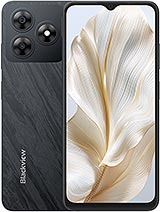
Wave 8C
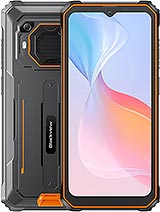
BV6200 Pro
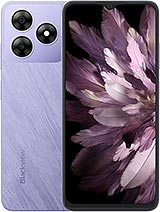
Wave 8
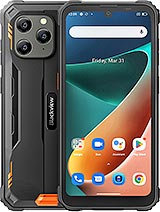
BV5300 Pro
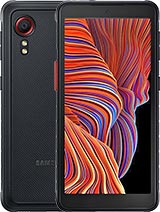
Galaxy XCover 7