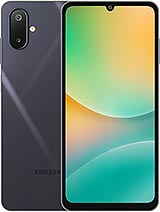
Blackview Wave 8 review
The Wave 8 suits users in emerging markets who need long battery life and dual-SIM flexibility and can live without cutting-edge performance or display sharpness. Skip it if you charge phones multiple times a day or expect snappy apps and crisp displays at this price—there are faster, sharper rivals, though rarely with a battery this large."
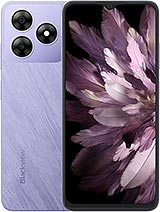
This review is based on Blackview’s published specifications and public benchmark data for the Blackview Wave 8, and the rating is spec-based. GoSolo does not physically test devices; where we estimate real-world behaviour such as battery life or charge time, we say so. How we rate phones.
Overview
The Blackview Wave 8 is a large, long-battery budget phone built for light daily use and dual SIM flexibility in developing markets. It sacrifices charging speed, display sharpness, and performance for a 5000mAh battery and FM radio, making it a straightforward choice for users who prioritize run time and connectivity over polish.
Verdict
The Wave 8 suits users in emerging markets who need long battery life and dual-SIM flexibility and can live without cutting-edge performance or display sharpness. Skip it if you charge phones multiple times a day or expect snappy apps and crisp displays at this price—there are faster, sharper rivals, though rarely with a battery this large."
- 5000mAh battery lasting a full day on light-to-moderate use, rare at this price point
- Dual SIM and microSDXC support via shared slot—real flexibility for users juggling two numbers or limited storage regions
- Headphone jack and FM radio still present, useful in markets with weak data infrastructure
- Large 6.56-inch screen with 84% screen-to-body ratio, comfortable for reading and browsing despite low pixel density
- 10W charging is painfully slow; 2–3 hours to full from empty means you cannot rely on quick top-ups
- 720p display at 269 ppi shows visible pixels in text and UI; not sharp by current standards even for budget phones
- Unisoc T606 with 4GB RAM struggles with multitasking and heavier apps; adequate for messaging and video but not gaming
Blackview Wave 8 Key Specifications
The essentials at a glance. See the full spec sheet.
| Released | 2024, November |
|---|---|
| Display | 6.56 inches, 103.4 cm2 (~84.2% screen-to-body ratio), IPS LCD, 450 nits |
| Resolution | 720 x 1612 pixels, 20:9 ratio (~269 ppi density) |
| Chipset | Unisoc T606 (12 nm) |
| RAM & storage | 256GB 4GB RAM |
| Main camera | 13 MP, (wide) |
| Selfie camera | 8 MP, (wide) |
| Battery | 5000 mAh |
| Charging | 10W wired |
| Software | Android 14, DokeOS 4.0 |
| Dimensions | 163.2 x 75.2 x 8.8 mm (6.43 x 2.96 x 0.35 in) |
| Weight | 192 g (6.77 oz) |
| Network | GSM / HSPA / LTE |
| NFC | No |
| USB | USB Type-C, OTG |
Blackview Wave 8 FAQ
Common questions, answered from the spec sheet.
Does the Wave 8 support 5G?
No. The Wave 8 tops out at GSM / HSPA / LTE, without 5G.
What chipset does the Wave 8 use?
The Wave 8 runs on the Unisoc T606 (12 nm).
What display does the Wave 8 have?
A 6.56 inches, 103.4 cm2 (~84.2% screen-to-body ratio) IPS LCD, 450 nits, 720 x 1612 pixels, 20:9 ratio (~269 ppi density).
How big is the Wave 8 battery?
The Wave 8 has a 5000 mAh battery. Charging is rated at 10W wired.
Does the Wave 8 have NFC?
No, the Wave 8 does not list NFC support.
Does the Wave 8 support a microSD card?
Yes, the Wave 8 supports expandable storage (microSDXC (uses shared SIM slot)).
Does the Wave 8 have a headphone jack?
Yes, the Wave 8 has a 3.5mm headphone jack.
Alternatives to consider
If the Wave 8 isn’t quite right, these are the closest calls.
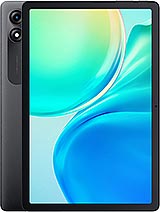
Tab90WiFi
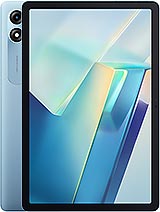
Tab9WiFi
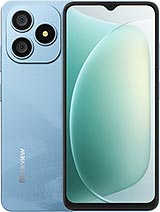
Wave 9C
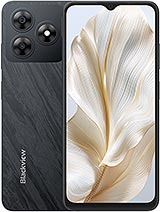
Wave 8C
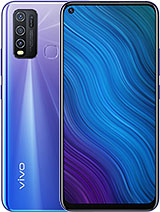
Y50 5G