Blackview Xplore 1 review
The Xplore 1 suits outdoor professionals, expedition teams, and field workers who need a phone that survives abuse and delivers days between charges. Skip it if you want a light, fast daily driver or expect cutting-edge gaming performance—this is a specialist tool, not a general-purpose flagship.
This review is based on Blackview’s published specifications and public benchmark data for the Blackview Xplore 1, and the rating is spec-based. GoSolo does not physically test devices; where we estimate real-world behaviour such as battery life or charge time, we say so. How we rate phones.
Overview
The Blackview Xplore 1 is a rugged outdoor phone built for abuse: IP68/IP69K, drop-resistant to 6m, 20,000 mAh battery, and a dedicated night-vision camera module. It's a genuine workhorse for harsh conditions, though the Dimensity 8300 and 55W charging mean you're trading processing power and speed for durability and battery endurance.
Design & Build
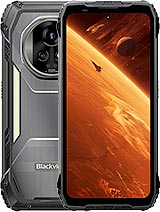
At 670g and 29mm thick, the Xplore 1 has the heft of a brick, and that is not accidental. The rugged chassis—IP68/IP69K sealed, MIL-STD-810H certified, and drop-resistant to 6m—is built to absorb impacts that would cripple a normal phone. It is genuinely tough, and if you work in construction, mining, or wilderness photography, that toughness justifies the weight. The secondary 2.01-inch rear display is a neat survival touch: check time, battery, or incoming calls without waking the main screen. Gorilla Glass 5 scratches less than basic glass, though it is not scratch-proof. For casual users or office workers, this phone is overkill and uncomfortable; for a tool that needs to survive harsh conditions, it makes sense.
Display
The 6.73-inch LTPO AMOLED panel is the standout hardware choice here. 1440×3200 resolution at 521 ppi is sharp, and the 120Hz refresh keeps scrolling smooth. Peak brightness hits 2600 nits, which means it remains legible in direct sunlight where cheaper phones fade. The adaptive refresh rate saves battery, a smart call given the bulk. Corning Gorilla Glass 5 protects it from scratches. HDR10+ support is nice but marginal for a rugged phone. The main catch is the thick bezels and 67% screen-to-body ratio—less efficient than flat-screen flagships, but necessary for the frame strength. For a phone this tough, the display quality is genuinely ambitious.
Performance
The Mediatek Dimensity 8300 is a high-end mid-range chip. It runs Android 15 smoothly, streams video without hiccup, and handles everyday apps with ease. Heavy 3D games like Genshin Impact will throttle at medium settings; demanding software faces thermal throttling under sustained load. It is not a flagship processor, and it will not match the staying power of a Snapdragon 8 Elite or equivalent. For construction, field work, and utility tasks, this is plenty. For mobile gaming enthusiasts or people who keep phones for 4+ years and expect consistent performance headroom, the Dimensity 8300 is a compromise. DokeOS 4.2 runs on top of Android 15 and promises 3 major version upgrades, which is solid for long-term software support.
Software
Android 15 with DokeOS 4.2 is a sensible baseline. The promise of 3 major OS upgrades (so Android 18 as the ceiling) is respectable for a 2025 device and better than some mainstream brands offer. DokeOS itself is a lighter fork, not a heavy skin, so it should not bog down the interface. Updates will matter for this phone, which will see years of hard use in remote areas where cellular support varies. No bloatware is listed, though that is not guaranteed at launch. The overall software story is competent without being exciting.
Camera
The dual camera system leans into outdoor use. The main 50MP f/1.9 sensor with PDAF and OIS is standard for this class and will capture sharp daylight shots. The standout is the dedicated 20MP f/1.8 night-vision module with infrared lights. This is not a gimmick: it lets you photograph dark scenes—underground caves, search and rescue situations, wildlife at night—without visible color noise, a genuine advantage in low-light work that normal phones cannot match. Daylight HDR and panorama are expected. The 50MP front camera is adequate for video calls. 4K recording at 30/60fps with HDR10+ on both cameras is solid. The night-vision module is why you might choose this phone over a tougher mainstream phone; standard night modes will never compete.
Battery & Charging
The 20,000 mAh battery is the heart of this phone. At that capacity, expect about 2–3 days of moderate use (email, messaging, light browsing) or a full day of heavy screen-on time (maps, video, photos). For outdoor work, this means fewer charging sessions and less reliance on power in remote areas. The 5W reverse charging (for emergency topping up a small device) is practical for field kits. However, 55W wired charging takes 50–70 minutes to full, which is slow by 2025 standards—rivals like the CAT S75 now push 100W. For a phone this heavy, users will feel the wait. Fast charging would have been the logical pairing with the massive battery.
Connectivity & Durability
5G, Wi-Fi 6e, and dual Nano-SIM slots cover modern connectivity bases. GPS with L1+L5 plus GLONASS, Galileo, and BDS gives solid outdoor positioning, critical for hiking and field navigation. NFC and FM radio round out the feature set, though neither is essential. The microSDXC slot shares the second SIM tray, a minor compromise. What matters most: IP68/IP69K is genuine military-grade sealing—full dust proofing and submersion to 2m for 30 minutes, plus high-pressure jet resistance. The dual LED flashlight rated at 467lm is bright enough for tactical work. This phone can be dropped 6m onto concrete and survive. For outdoor professionals, these specs are not padding; they are the entire reason to buy.
Value & Verdict
At about 520 EUR, the Xplore 1 sits at the premium end of rugged phones. You are paying for durability, battery endurance, and the dedicated night-vision camera—not for processing power or charging speed. Compared to mainstream flagships at the same price, this is slower and heavier. Compared to budget rugged phones, it is built and equipped to a higher standard. The choice hinges on whether you need a phone that survives genuine abuse and works in the dark. If your job involves harsh environments, field work, or remote areas where a broken phone becomes a real problem, the investment is rational. If you need a phone for casual outdoor hiking or urban commuting, a lighter mainstream phone will serve you better.
Verdict
The Xplore 1 suits outdoor professionals, expedition teams, and field workers who need a phone that survives abuse and delivers days between charges. Skip it if you want a light, fast daily driver or expect cutting-edge gaming performance—this is a specialist tool, not a general-purpose flagship.
- 20,000 mAh battery with about 2–3 days of moderate use, or a full day of heavy screen time
- IP68/IP69K durability plus MIL-STD-810H and 6m drop resistance—built for construction sites, expeditions, and neglect
- Dedicated 20MP infrared night-vision camera with dual LED lights for genuine low-light imaging without color noise
- Bright LTPO AMOLED display (1440×3200, 120Hz) with 2600 nits peak brightness, usable in direct sunlight
- 55W charging takes 50–70 minutes to full; rivals in the rugged-phone segment now hit 100W, so this feels slow by current outdoor-phone standards
- 670g and 29mm thick—heavy and unwieldy compared to mainstream phones, a genuine pocket burden for daily carry
- Dimensity 8300 is capable for everyday tasks but not a match for flagship chips; heavy 3D games throttle, and there's no performance cushion for aging.
Blackview Xplore 1 Key Specifications
The essentials at a glance. See the full spec sheet.
| Released | 2025, September 25 |
|---|---|
| Display | 6.73 inches, 109.4 cm2 (~67.0% screen-to-body ratio), LTPO AMOLED, 68B colors, 120Hz, HDR, 500 nits (typ), 1300 nits (HBM), 2600 nits (peak) |
| Resolution | 1440 x 3200 pixels, 20:9 ratio (~521 ppi density) |
| Chipset | Mediatek Dimensity 8300 (4 nm) |
| RAM & storage | 256GB 12GB RAM, 1TB 16GB RAM |
| Main camera | 50 MP, f/1.9, (wide), 1/1.57", PDAF, OIS 20 MP, f/1.8, (night vision), 1/2.8", 2 infrared night vision lights |
| Selfie camera | 50 MP, f/2.5, (wide), 1/2.76" |
| Battery | 20000 mAh |
| Charging | 55W wired5W reverse wired |
| Software | Android 15, up to 3 major Android upgrades, DokeOS 4.2 |
| Dimensions | 186 x 87.8 x 29 mm (7.32 x 3.46 x 1.14 in) |
| Weight | 670 g (1.48 lb) |
| Durability | IP68/IP69K dust tight and water resistant (high pressure water jets; immersible up to 2m for 30 min) MIL-STD-810H compliant Drop resistant up to 6m 467lm dedicated dual LED flashlight |
| Network | GSM / CDMA / HSPA / LTE / 5G |
| NFC | Yes |
| USB | USB Type-C, OTG |
Blackview Xplore 1 FAQ
Common questions, answered from the spec sheet.
Does the Xplore 1 support 5G?
Yes. The Xplore 1 supports 5G networks.
What chipset does the Xplore 1 use?
The Xplore 1 runs on the Mediatek Dimensity 8300 (4 nm).
What display does the Xplore 1 have?
A 6.73 inches, 109.4 cm2 (~67.0% screen-to-body ratio) LTPO AMOLED, 68B colors, 120Hz, HDR, 500 nits (typ), 1300 nits (HBM), 2600 nits (peak), 1440 x 3200 pixels, 20:9 ratio (~521 ppi density).
How big is the Xplore 1 battery?
The Xplore 1 has a 20000 mAh battery. Charging is rated at 55W wired5W reverse wired.
Does the Xplore 1 have NFC?
Yes, the Xplore 1 has NFC.
Is the Xplore 1 water resistant?
The Xplore 1 carries a IP68/IP69K dust tight and water resistant (high pressure water jets; immersible up to 2m for 30 min) MIL-STD-810H compliant Drop resistant up to 6m 467lm dedicated dual LED flashlight rating.
Does the Xplore 1 support a microSD card?
Yes, the Xplore 1 supports expandable storage (microSDXC (uses shared SIM slot)).
Does the Xplore 1 have a headphone jack?
No, the Xplore 1 does not have a 3.5mm headphone jack.
Alternatives to consider
If the Xplore 1 isn’t quite right, these are the closest calls.
Xplore 2
Xplore 6

Xplore 2 Projector

Xplore 2 Satellite

Reno13 F 5G