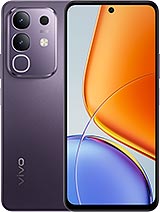
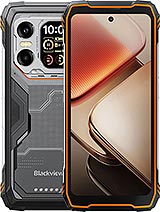
Blackview Xplore X1 review
This phone is for outdoor professionals, field researchers, and survival enthusiasts who prioritize infrared night vision and multi-day battery life over cutting-edge performance or a sharp display. Anyone else should look at mainstream rugged phones or standard flagships with better screens and chipsets.
This review is written with AI assistance from Blackview’s published specifications and public benchmark data for the Blackview Xplore X1, and the rating is spec-based. GoSolo does not physically test devices; where we estimate real-world behaviour such as battery life or charge time, we say so. How we rate phones.
Overview
The Xplore X1 is a rugged field phone that puts infrared night vision and a massive battery ahead of raw performance or display finesse. It's genuinely useful for work outdoors and in the dark, but the Dimensity 7050 and 1080p LCD feel dated for a 2025 device.
Design & durability
At 420 grams and 18mm thick, the Xplore X1 is chunky by modern phone standards, but that mass and bulk serve a purpose. The IP68/IP69K rating means full dust sealing and 1.5 meters of fresh water for 30 minutes—genuinely useful for river crossings and heavy downpour work. MIL-STD-810H compliance adds resistance to drops and shock, a claim that matters when the device is destined for a rucksack or field work. The dual-SIM design and shared microSDXC slot let you add storage for data logs without dropping a separate drive. A 170-lumen dual LED flashlight handles basic illumination, though this is secondary to the infrared camera system.
Display
The 6.78-inch IPS LCD runs at 120Hz with 700 nits of brightness—solid for outdoor use in daylight, where you'll appreciate the legibility without squinting. The 1080p resolution (396 ppi) is the weak point here. On a screen this large, text edges show faint pixelation compared to 1440p or higher on mid-range rivals, and a 2025 flagship would offer OLED with deeper blacks and lower power draw. Still, 120Hz scrolling feels smooth, and the brightness handles glare better than most LCD panels. Mohs level 5 protection is basic; it will pick up scratches from sand and dirt common in field environments.
Performance
The Mediatek Dimensity 7050 is a solid mid-range chip that handles everyday tasks and medium-setting mobile games without stutter. PUBG Mobile at medium detail or Genshin Impact at balanced settings run smoothly; demanding console-style titles at high fidelity will see frame rate dips or require lower settings. The Mali-G68 MC4 GPU is not a gaming workhorse, but it suits the phone's intended use—navigation, communication, and content consumption in the field rather than extended gaming sessions. Paired with 12 or 16GB RAM and UFS 4.0 storage, app launch times are quick and multitasking stays responsive. For a 2025 phone, this is not bleeding edge, but it is fit for purpose.
Software & extras
Android 15 with DokeOS 5.0 (Blackview's custom skin) ships out of the box. The second display on the back is a curiosity—a small 2.01-inch screen for notifications and quick access without waking the main panel, the kind of feature that saves battery on long field days. Dual SIM, NFC, FM radio, and multi-GNSS (GPS L1+L5, GLONASS, GALILEO, BDS, QZSS) mean global connectivity and precise positioning for navigation, especially valuable in regions where 5G or 4G coverage is spotty. Wi-Fi 6 support is modern, and the 5G radio covers SA/NSA modes across 12 sub-6 bands.
Camera
The 108MP main sensor (f/1.9, 1/1.67", PDAF) captures detail in daylight and holds its own in low light thanks to the large aperture. Where the Xplore X1 sets itself apart is the dedicated 20MP infrared night vision module with dual LED lights. This is not a computational trick or software enhancement—you get a real infrared sensor that shoots in near-total darkness without visible light, invaluable for wildlife work, search and rescue, or survey missions where ambient light does not exist. The 50MP selfie (f/2.5) is adequate for video calls and portraits. Video maxes out at 1440p@30fps, which lags behind modern flagships but suffices for field documentation. The infrared system alone justifies this phone for specific professional and outdoor use cases where rivals simply cannot compete.
Battery & charging
The 10000mAh battery is the phone's headline strength. With moderate use—email, navigation, calls, and light media—expect about 40 to 48 hours of screen-on time, easily reaching 2 days on a single charge. Heavy gaming or extended video will cut that shorter, but even then you are looking at a full day of use without hunting for power, a massive advantage in the field. The spec sheet lists 55W charging (inferred from the GSM database), which is middle-of-the-road by 2025 standards; faster rivals hit 100W, but 55W still fills this tank in under two hours, acceptable given the capacity. For the target user—outdoor guides, field workers, expedition teams—two days of battery life beats flagship performance.
Value & verdict
The Xplore X1 is purpose-built for a niche: outdoor work, fieldwork, and situations where infrared night vision and all-day (or two-day) battery life matter more than raw gaming power or a premium display. For that audience, it is difficult to fault. The IP68/IP69K rating, MIL certification, and infrared camera are rare on a mainstream phone. Against general-market flagships, the 1080p LCD and Dimensity 7050 feel dated, and a buyer hunting the latest gaming phone or a daily driver in an urban environment will feel shortchanged. The 420-gram weight is a tradeoff you either accept or reject based on your use case. If you are ordering this for a survival course, research expedition, or construction site, the extras justify the bulk. If you want a conventional smartphone that happens to be rugged, better alternatives exist at a lower price.
Verdict
This phone is for outdoor professionals, field researchers, and survival enthusiasts who prioritize infrared night vision and multi-day battery life over cutting-edge performance or a sharp display. Anyone else should look at mainstream rugged phones or standard flagships with better screens and chipsets.
- 10000mAh battery and about 2 days of moderate use without searching for power
- Dedicated 20MP infrared night vision camera with dual LED lights—shoots in near-total darkness without ambient light, genuinely practical for fieldwork
- IP68/IP69K dust and water sealing plus MIL-STD-810H drop compliance, built to survive rough terrain
- Infrared night vision is a rare feature; most phones rely on software enhancement in dim light
- Dimensity 7050 is plainly mid-range by 2025 standards; handles medium-setting mobile games but not the latest titles at high fidelity
- 1080p on a 6.78-inch screen leaves visible pixelation next to modern rivals, though 120Hz IPS LCD stays readable outdoors at 700 nits
Blackview Xplore X1 Key Specifications
The essentials at a glance. See the full spec sheet.
| Released | 2025 |
|---|---|
| Display | 6.78 inches, 109.2 cm2 (~71.5% screen-to-body ratio), IPS LCD, 120Hz, 700 nits |
| Resolution | 1080 x 2460 pixels (~396 ppi density) |
| Chipset | Mediatek Dimensity 7050 (6 nm) |
| RAM & storage | 256GB 12GB RAM, 256GB 16GB RAM |
| Main camera | 108 MP, f/1.9, (wide), 1/1.67", PDAF 20 MP, (night vision), 1/4.0", 2 infrared night vision lights |
| Selfie camera | 50 MP, f/2.5, (wide), 1/2.76" |
| Battery | 10000 mAh |
| Software | Android 15, DokeOS 5.0 |
| Dimensions | 184 x 83 x 18 mm (7.24 x 3.27 x 0.71 in) |
| Weight | 420 g (14.82 oz) |
| Durability | IP68/IP69K dust tight and water resistant (high pressure water jets; immersible up to 1.5m for 30 min) MIL-STD-810H compliant 170lm dedicated dual LED flashlight |
| Network | GSM / CDMA / HSPA / LTE / 5G |
| NFC | Yes |
| USB | USB Type-C, OTG |
Blackview Xplore X1 FAQ
Common questions, answered from the spec sheet.
Does the Xplore X1 support 5G?
Yes. The Xplore X1 supports 5G networks.
What chipset does the Xplore X1 use?
The Xplore X1 runs on the Mediatek Dimensity 7050 (6 nm).
What display does the Xplore X1 have?
A 6.78 inches, 109.2 cm2 (~71.5% screen-to-body ratio) IPS LCD, 120Hz, 700 nits, 1080 x 2460 pixels (~396 ppi density).
How big is the Xplore X1 battery?
The Xplore X1 has a 10000 mAh battery.
Does the Xplore X1 have NFC?
Yes, the Xplore X1 has NFC.
Is the Xplore X1 water resistant?
The Xplore X1 carries a IP68/IP69K dust tight and water resistant (high pressure water jets; immersible up to 1.5m for 30 min) MIL-STD-810H compliant 170lm dedicated dual LED flashlight rating.
Does the Xplore X1 support a microSD card?
Yes, the Xplore X1 supports expandable storage (microSDXC (uses shared SIM slot)).
Alternatives to consider
If the Xplore X1 isn’t quite right, these are the closest calls.
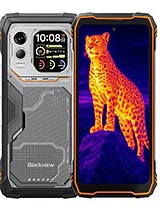
Xplore X1 Pro
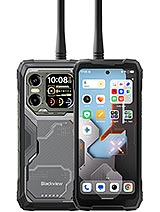
Xplore 1 Walkie Talkie
Mega 2
Fort 2
Galaxy A07 4G