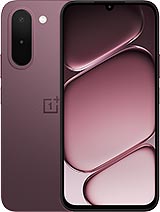
Blackview Zeno 1 review
The Zeno 1 suits someone who reads, takes notes, and browses email on a larger screen than a phone but travels too much to carry a laptop. If you game, edit media, or run heavy apps, the weak processor will frustrate you fast, and the slow charging adds insult to injury.
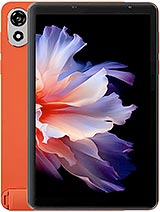
This review is based on Blackview’s published specifications and public benchmark data for the Blackview Zeno 1, and the rating is spec-based. GoSolo does not physically test devices; where we estimate real-world behaviour such as battery life or charge time, we say so. How we rate phones.
Overview
The Blackview Zeno 1 is a slim, portable 8-inch tablet built for reading, browsing, and note-taking on the cheap—not for gaming or video work. The weak processor and cameras hit their limits fast, but the kickstand, stylus support, and 6000mAh battery make it a sensible replacement for a paper notepad or e-reader if you do not mind low-end performance.
Design & build
At 336.5g and 8.2mm thick, the Zeno 1 is one of the slimmest tablets around and genuinely pocket-able for a device with an 8-inch screen. The built-in kickstand and stylus support are pragmatic touches that matter more than flashy materials—you can prop it on a table for hands-free video or jot notes without buying an accessory. The Mohs level 5 display glass scratches easier than the tempered options on flagship tablets, so it will cloud over with time if you toss it loose in a bag. Dual Nano-SIM slots and a shared microSDXC slot give flexibility for dual-carrier setups or expanding storage, though expanding the microSD means losing one SIM.
Display
The 8-inch IPS LCD with 90Hz refresh and 350 nits brightness is the Zeno 1's strongest suit. Scrolling is smooth enough for everyday reading and email, and 350 nits is bright enough to use outdoors in moderate sun without squinting—direct sunlight will still wash out text, but that is typical for any non-AMOLED tablet at this price. The 189ppi pixel density at 800x1280 resolution means text is crisp at arm's length, though up close you'll see the grid. For a light-use tablet meant for news, e-books, and document browsing, this screen is fit for purpose.
Performance
The Unisoc T615 is entry-level silicon from a year or two ago, and it shows. Browsing the web, checking email, and scrolling through light apps work without drama, but multitasking will make the tablet stutter, and any demanding game will lag or drop frames outright. The 4GB or 6GB RAM variant does not change the fact that the chipset is the bottleneck—a 6GB model will launch apps slightly quicker than the 4GB one, but both will hit a ceiling fast if you pile on background processes. If your day is email, documents, and video calls, the Zeno 1 keeps up. If you want to edit photos, run heavy productivity suites, or play anything modern, look elsewhere.
Software
Android 15 with DokeOS 4.2 (Blackview's custom overlay) runs on top. DokeOS is light enough not to bog things down further, and starting with Android 15 means at least one major OS update is on the table before it falls into security-patch-only mode. The tablet experience is functional rather than polished—widgets and split-screen multitasking work, but do not expect the refinement or long-term support of Samsung's One UI or iPad OS.
Camera
Both the 8MP main and 8MP selfie cameras are identical: narrow aperture (f/2.2), small sensor (1/5.0-inch), and limited video at 1080p@30fps. They are good enough to scan documents or take a group video call without embarrassment, and the LED flash on the rear helps in dim rooms, but low light brings out noise and soft focus. Do not expect sharp zooms, vibrant colors, or usable night mode. These are point-and-shoot cameras for essential moments, not creative work.
Battery & charging
The 6000mAh Li-Po cell should deliver about 8 to 10 hours of mixed-use screen time—email, web browsing, some video—which covers a full workday without top-ups. The weak link is the 10W wired charge rate, which means 2 to 3 hours to go from empty to full. If you regularly burn through the battery in a day, you will find yourself hunting a charger often, and that slow refill is frustrating compared to rivals offering 20W or 30W at similar prices. The lack of wireless charging is not a loss at this tier, but the plodding wired speed is a real annoyance.
Value & verdict-context
The Zeno 1 is priced to appeal to buyers who want a tablet bigger than their phone but lighter and cheaper than an iPad, and who do not demand serious power. It succeeds at being a portable note-taker and media consumption device, with the kickstand and stylus support adding real utility for those use cases. The Unisoc T615, however, means you are forever bumping into limits if you stray beyond email and casual browsing. For the same money, you might find a last-year tablet with a faster chip or a larger battery, or pay a bit more for a device with 5G and modern performance. The Zeno 1 makes sense only if you value form factor (slim, light) and specific features (stylus, kickstand) above raw power.
Verdict
The Zeno 1 suits someone who reads, takes notes, and browses email on a larger screen than a phone but travels too much to carry a laptop. If you game, edit media, or run heavy apps, the weak processor will frustrate you fast, and the slow charging adds insult to injury.
- Slim and light enough to carry daily (336.5g, 8.2mm), with a built-in kickstand and stylus support for casual note-taking and media propping
- 6000mAh battery delivers roughly 8 to 10 hours of mixed use, enough for a full day of light email and browsing without topping up
- 90Hz IPS display with 350 nits brightness makes scrolling smooth and text readable in moderate sunlight, a real improvement over 60Hz budget tablets
- Dual SIM and Wi-Fi ac with Bluetooth 5.2 give solid everyday connectivity; the 3.5mm jack and FM radio are surprises at this price
- Unisoc T615 is underpowered for anything beyond light browsing and email; expect stutter in demanding apps and outright lag in games
- 10W charging is glacially slow—count on 2 to 3 hours to fill the 6000mAh cell, which is a pain if you need a quick top-up
- 8MP cameras on both sides are soft and noisy in low light; fine for document scans and video calls, but useless for any real photography
Blackview Zeno 1 Key Specifications
The essentials at a glance. See the full spec sheet.
| Released | 2025, September |
|---|---|
| Display | 8.0 inches, 185.6 cm2 (~74.2% screen-to-body ratio), IPS LCD, 90Hz, 350 nits |
| Resolution | 800 x 1280 pixels, 16:10 ratio (~189 ppi density) |
| Chipset | Unisoc T615 (12 nm) |
| RAM & storage | 64GB 4GB RAM, 256GB 6GB RAM |
| Main camera | 8 MP, f/2.2, (wide), 1/5.0" |
| Selfie camera | 8 MP, f/2.2, (wide), 1/5.0" |
| Battery | 6000 mAh |
| Charging | 10W wired |
| Software | Android 15, DokeOS 4.2 |
| Dimensions | 198.6 x 125.9 x 8.2 mm (7.82 x 4.96 x 0.32 in) |
| Weight | 336.5 g (11.89 oz) |
| Durability | Stylus support Built-in kickstand |
| Network | GSM / HSPA / LTE |
| NFC | No |
| USB | USB Type-C, OTG |
Blackview Zeno 1 FAQ
Common questions, answered from the spec sheet.
Does the Zeno 1 support 5G?
No. The Zeno 1 tops out at GSM / HSPA / LTE, without 5G.
What chipset does the Zeno 1 use?
The Zeno 1 runs on the Unisoc T615 (12 nm).
What display does the Zeno 1 have?
A 8.0 inches, 185.6 cm2 (~74.2% screen-to-body ratio) IPS LCD, 90Hz, 350 nits, 800 x 1280 pixels, 16:10 ratio (~189 ppi density).
How big is the Zeno 1 battery?
The Zeno 1 has a 6000 mAh battery. Charging is rated at 10W wired.
Does the Zeno 1 have NFC?
No, the Zeno 1 does not list NFC support.
Is the Zeno 1 water resistant?
The Zeno 1 carries a Stylus support Built-in kickstand rating.
Does the Zeno 1 support a microSD card?
Yes, the Zeno 1 supports expandable storage (microSDXC (uses shared SIM slot)).
Does the Zeno 1 have a headphone jack?
Yes, the Zeno 1 has a 3.5mm headphone jack.
Alternatives to consider
If the Zeno 1 isn’t quite right, these are the closest calls.
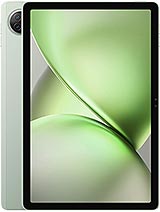
Zeno 10
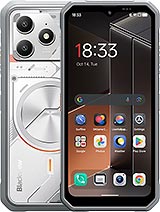
Fort 100
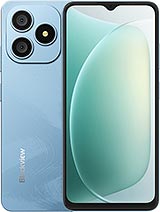
Wave 9C
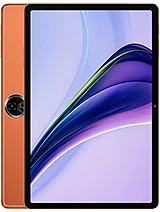
Zeno 5

Play20A