BLU Energy M review
This phone is now only a curiosity for collectors or historians of budget Android. Anyone actually needing a phone should look at any used 4G device from 2018 onwards, which will be faster, more connected, and often cheaper on the used market.
This review is written with AI assistance from BLU’s published specifications and public benchmark data for the BLU Energy M, and the rating is spec-based. GoSolo does not physically test devices; where we estimate real-world behaviour such as battery life or charge time, we say so. How we rate phones.
Overview
The BLU Energy M is a 2016 budget phone with a removable battery and microSD expansion, designed for users who valued battery swaps and long talk time over raw speed. It is fundamentally obsolete for modern use: HSPA-only connectivity, 1GB RAM, and a 480p display make it unsuitable even for basic app use today.
Design & build
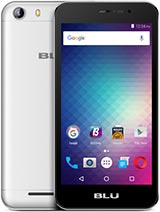
At 136g and 10.5mm thick, the BLU Energy M was trim for its time and genuinely light in hand. The removable battery was a genuine selling point in markets where carrying a spare battery was cheaper and more practical than finding a charger, and BLU delivered that without bloating the phone. Dual SIM support addressed the needs of users juggling work and personal numbers, or those crossing borders. The design does not feel cheap by 2016 standards, though there is little to excite—it is a functional slab. For anyone used to modern phones, it feels insubstantial in a way that signals the device's age more than anything else.
Display
The 5.0-inch LCD is a weak point even for the budget tier of 2016. At 480 × 854 pixels and 196 ppi density, text is visibly pixelated, colour reproduction is flat, and brightness is marginal outdoors. Modern budget phones had moved to 720p or higher by this point, and the Energy M's display undercuts even those competitors. Scrolling and video playback expose the low pixel density immediately. For any sustained use, the screen feels like a step backward from the smartphone experience users expect.
Performance
The Mediatek MT6580 quad-core 1.3 GHz Cortex-A7 with Mali-400MP2 GPU was a modest chipset even in 2016, and it shows. With only 1GB RAM, the phone struggles to keep more than one app in memory; switching between messaging and a web browser causes reload lag. Android 6.0 Marshmallow runs, but not smoothly. Casual games stutter, video playback stutters on anything above standard definition, and app launches take visible seconds. By today's standards, or even by the standards of 2017, this processor and RAM combination is unusable for anything beyond basic calls and texts.
Camera
The 5MP rear camera with autofocus and LED flash was entry-level in 2016 and remains so. Photos are soft, low in detail, and struggle in dim light despite the flash. The 2MP selfie camera is worse than obsolete—it is barely functional. Video maxes out at 720p 30fps, which is low even for that era. If you have any photographic ambition at all, this phone will disappoint immediately. The camera is a means to occasionally document moments, not a tool.
Battery & charging
The 4000 mAh removable battery was the selling point. The spec sheet claims up to 52 hours talk time on 2G and 38 hours on 3G, which is credible for such a low-power chipset and dim display—a full day or more of moderate use was realistic. The removable design meant users could carry a spare, a practice that was still common in regions with unreliable power infrastructure. However, charging speed is not specified, and microUSB 2.0 suggests slow top-ups by modern standards. The battery itself is now a decade old if you find one today; degradation will be severe.
Connectivity
This is the fatal limitation. The phone supports HSPA 3G only—no 4G LTE, no 5G. Download speeds max out at 21.1 Mbps, which was adequate in 2016 but feels glacial now. Websites load slowly, video streams struggle, and many modern apps refuse to function on HSPA or require intolerably long waits. Even in 2017, LTE was becoming standard in budget tiers. Dual-SIM support and Wi-Fi b/g/n help, but Wi-Fi is equally slow by modern standards. GPS, FM radio, and Bluetooth 4.0 are present but basic. The USB is microUSB 2.0, slow for data transfer.
Value & verdict-context
In August 2016, the BLU Energy M cost around $80–$100 and was pitched at buyers in emerging markets who prioritized battery life, expandable storage, and dual SIM. For that use case and time, it was reasonable: long talk time, offline media support, and the ability to carry a spare battery mattered more than raw performance. Today, it is a museum piece. HSPA-only connectivity, 1GB RAM, a 480p display, and a weak processor make it unfit for modern use. Most websites assume 4G; most apps were updated for newer Android versions and minimum RAM beyond 1GB; many services—maps, messaging, video—depend on reasonably fast connectivity. Even as a second phone or an emergency backup, the BLU Energy M would frustrate far more than it would serve. It belongs in a drawer as a relic of mid-2010s budget design, not in a pocket.
Verdict
This phone is now only a curiosity for collectors or historians of budget Android. Anyone actually needing a phone should look at any used 4G device from 2018 onwards, which will be faster, more connected, and often cheaper on the used market.
- Removable 4000 mAh battery—a rarity even then, and practical for users who needed spare batteries in developing markets
- Dual SIM with microSD expansion, giving real flexibility for storage and multiple carriers
- FM radio and 3.5mm jack for offline media in areas with poor data coverage
- Modest weight and thickness (136g, 10.5mm) made it genuinely pocketable
- HSPA-only network support with no 4G—connectivity speeds were obsolete within a year of launch
- 1GB RAM and MT6580 chipset make even basic multitasking and modern apps unusable
- 480 × 854 LCD at 196 ppi is a poor display even for 2016, with low brightness and weak colour accuracy
BLU Energy M Key Specifications
The essentials at a glance. See the full spec sheet.
| Released | 2016, August. Released 2016, August |
|---|---|
| Display | 5.0 inches, 68.9 cm2 (~64.2% screen-to-body ratio), LCD |
| Resolution | 480 x 854 pixels, 16:9 ratio (~196 ppi density) |
| Chipset | Mediatek MT6580 (28 nm) |
| RAM & storage | 8GB 1GB RAM |
| Main camera | 5 MP, AF |
| Selfie camera | 2 MP |
| Battery | 4000 mAh |
| Software | Android 6.0 (Marshmallow) |
| Dimensions | 146.5 x 73.2 x 10.5 mm (5.77 x 2.88 x 0.41 in) |
| Weight | 136 g (4.80 oz) |
| Network | GSM / HSPA |
| NFC | No |
| USB | microUSB 2.0 |
BLU Energy M FAQ
Common questions, answered from the spec sheet.
Does the Energy M support 5G?
No. The Energy M tops out at GSM / HSPA, without 5G.
What chipset does the Energy M use?
The Energy M runs on the Mediatek MT6580 (28 nm).
What display does the Energy M have?
A 5.0 inches, 68.9 cm2 (~64.2% screen-to-body ratio) LCD, 480 x 854 pixels, 16:9 ratio (~196 ppi density).
How big is the Energy M battery?
The Energy M has a 4000 mAh battery.
Does the Energy M have NFC?
No, the Energy M does not list NFC support.
Does the Energy M support a microSD card?
Yes, the Energy M supports expandable storage (microSDXC).
Does the Energy M have a headphone jack?
Yes, the Energy M has a 3.5mm headphone jack.
Alternatives to consider
If the Energy M isn’t quite right, these are the closest calls.
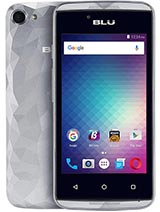
Energy Diamond Mini
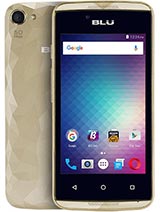
Energy Diamond
R1 HD
Studio G HD LTE
Z4