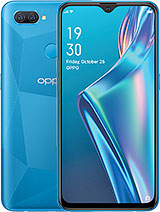
BLU G6 review
The G6 suits only buyers in regions with poor charging infrastructure who need a removable battery and dual SIM badly enough to tolerate sluggish performance and a small screen. Everyone else should look at current budget alternatives, which offer far better value and user experience for comparable money.
This review is written with AI assistance from BLU’s published specifications and public benchmark data for the BLU G6, and the rating is spec-based. GoSolo does not physically test devices; where we estimate real-world behaviour such as battery life or charge time, we say so. How we rate phones.
Overview
The BLU G6 is a 2019 budget phone with a decent-sized screen but aged internals that make everyday use slow and choppy by today's standards. It's not worth considering unless you absolutely need a removable battery or dual SIM on a razor-thin budget.
Design & build
At 9.1mm thick and 160g, the G6 feels light and slim in hand—a real advantage in 2019 when many phones were pushing 10mm. The device is clearly designed to be compact and pocketable, and it succeeds there. Build quality appears plastic throughout, but the flat-edge frame and narrow bezels give it a contemporary look for the time. Dual nano-SIM is handy for anyone juggling two carriers or traveling between regions. The removable battery is a genuine practical benefit in markets where charging infrastructure is unreliable.
Display
The 5.7-inch IPS LCD screen offers good real estate, but the 720p resolution is a weak point. At 282 ppi, text looks noticeably soft and images lack the crispness you'd expect even at the budget tier in 2019. Rivals in this price segment were already shipping 1080p panels or better. The 18:9 aspect ratio is standard, and the 74.7% screen-to-body ratio is respectable, but the low pixel density is a daily annoyance when reading, browsing, or gaming. IPS color reproduction is adequate and viewing angles are fine, but there is no denying the display feels outdated compared to what else was available.
Performance
The Unisoc SC9863A is a budget chipset designed for light tasks and voice calls. Paired with just 3GB of RAM, performance is noticeably sluggish. Apps take time to open, switching between tasks causes visible lag, and gaming is out of the question. Even basic operations like scrolling through social media feeds or loading web pages feel fitful. By 2019 standards, this combination was already behind; today it is painful. Battery-wise, the low-power processor helps, but the small 2800 mAh cell means you will still hit the charger by evening on moderate use. The fingerprint sensor on the rear works reliably when it works, but the overall system feels constrained for any daily workflow beyond calls and basic messaging.
Software
The G6 shipped with Android 9.0 (Pie) in mid-2019, which was current at the time. BLU rarely delivers timely updates, and this model is now discontinued, so security patches and OS upgrades are unlikely. Running Pie in 2024 or later leaves you vulnerable to known exploits and without access to newer app features. The interface is stock Android, which is clean and fast enough in theory, but the weak hardware underneath means the OS struggles to deliver a smooth experience regardless of version.
Camera
The 13MP rear camera with autofocus and LED flash is serviceable for basic snapshots in good light. Video tops out at 1080p@30fps, which is standard for the class. The 8MP front-facing camera is adequate for selfies and video calls. In practice, neither camera impresses; colors are flat, detail is soft, and low-light performance is poor due to the small sensor and modest aperture. Night shots are nearly unusable without ample ambient light. This is not a phone for anyone who cares about photo quality, even by 2019 entry-level standards.
Battery & charging
The 2800 mAh battery is the biggest limitation. On moderate daily use—messaging, social media, some browsing—expect around 14 to 16 hours before needing to recharge. Heavy use kills it faster. The spec sheet lists up to 20 hours of 2G talk time, but that is a lab figure and does not reflect real-world mixed usage. The upside is that the battery is removable, a rare feature now that is genuinely useful if you carry a spare or lack access to power outlets. Charging speed is not specified, but expect a micro-USB connector to be slow by today's standards; figure 2 to 3 hours from empty. The removable battery is the main reason to own this phone if you do, but it does not excuse the undersized capacity.
Value & verdict
In 2019, the G6 was an entry-level option for buyers who prioritized removable batteries and dual SIM over raw performance. It was never fast, but it was cheap and practical for basic tasks. Today, it is obsolete. Used units still exist in markets where they are being sold as ultra-budget alternatives, but even for that narrow use case, there are better options. The small battery, laggy processor, low-resolution screen, and abandoned software support make it a frustrating daily driver. Newer budget phones, even at similar prices, offer faster processors, bigger batteries, and higher resolutions. The removable battery is the only genuine edge, and it is not enough to overcome everything else.
Verdict
The G6 suits only buyers in regions with poor charging infrastructure who need a removable battery and dual SIM badly enough to tolerate sluggish performance and a small screen. Everyone else should look at current budget alternatives, which offer far better value and user experience for comparable money.
- Removable battery, a rarity now that gives you a backup power option without charging infrastructure
- Dual nano-SIM with expandable storage via microSD, useful for regional travel or multiple carriers
- Slim 9.1mm build makes it genuinely pocketable compared to today's brick-like flagships
- Unisoc SC9863A with just 3GB RAM lags noticeably opening apps and multitasking even in 2019; tasks feel sluggish
- 2800 mAh battery is small even for a 5.7-inch phone and barely lasts a full day of moderate use
- 720p display at 282 ppi looks grainy and dull next to even mid-range phones from the same era
BLU G6 Key Specifications
The essentials at a glance. See the full spec sheet.
| Released | 2019, July. Released 2019, July |
|---|---|
| Display | 5.7 inches, 83.8 cm2 (~74.7% screen-to-body ratio), IPS LCD |
| Resolution | 720 x 1440 pixels, 18:9 ratio (~282 ppi density) |
| Chipset | Unisoc SC9863AProcessor clock: 1.60 GHzNumber of cores: 8GPU: IMG8322 @550 MHz |
| RAM & storage | 64GB 3GB RAM |
| Main camera | 13 MP, AF |
| Selfie camera | 8 MP |
| Battery | 2800 mAh |
| Software | Android 9.0 (Pie) |
| Dimensions | 153 x 73.4 x 9.1 mm (6.02 x 2.89 x 0.36 in) |
| Weight | 160 g (5.64 oz) |
| Network | GSM / HSPA / LTE |
| NFC | No |
| USB | microUSB 2.0 |
BLU G6 FAQ
Common questions, answered from the spec sheet.
Does the G6 support 5G?
No. The G6 tops out at GSM / HSPA / LTE, without 5G.
What chipset does the G6 use?
The G6 runs on the Unisoc SC9863AProcessor clock: 1.60 GHzNumber of cores: 8GPU: IMG8322 @550 MHz.
What display does the G6 have?
A 5.7 inches, 83.8 cm2 (~74.7% screen-to-body ratio) IPS LCD, 720 x 1440 pixels, 18:9 ratio (~282 ppi density).
How big is the G6 battery?
The G6 has a 2800 mAh battery.
Does the G6 have NFC?
No, the G6 does not list NFC support.
Does the G6 support a microSD card?
Yes, the G6 supports expandable storage (microSDXC).
Alternatives to consider
If the G6 isn’t quite right, these are the closest calls.
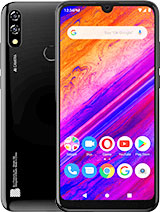
G8
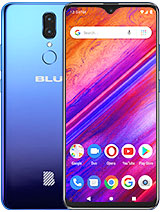
G9
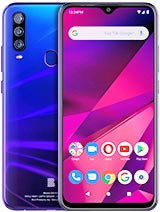
G9 Pro
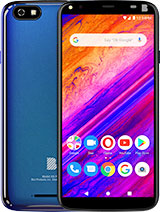
G5 Plus
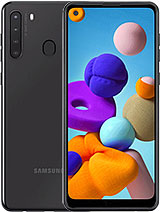
Galaxy A21