BLU Life 8 review
The BLU Life 8 was a budget phone for buyers in markets without LTE infrastructure or those who valued portability and the removable battery above all else. Today, it is a relic: 1GB of RAM and no 4G were already compromises in 2014, and the 2000 mAh battery ensures constant charging duty. It has no role in 2024 and precious little even in retrospect."
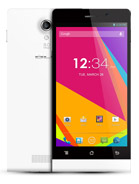
This review is written with AI assistance from BLU’s published specifications and public benchmark data for the BLU Life 8, and the rating is spec-based. GoSolo does not physically test devices; where we estimate real-world behaviour such as battery life or charge time, we say so. How we rate phones.
Overview
The BLU Life 8 is a 2014 budget phone built around a mediacore octa-core chip and 1GB of RAM that struggles to keep up with real-world demands even for its era. At 150 EUR, it offered decent build for the price and a removable battery, but no 4G connectivity and only HSPA speeds make it feel dated within months of launch, and the 2000 mAh battery will disappoint anyone expecting a full day away from power.
Design & Build
The Life 8 is trim and light: 136g and 7.5mm thick, making it genuinely pocketable. The compact 5.0-inch footprint was standard for the era, before phones began ballooning. Dual SIM is a legitimate plus for users juggling two networks or carriers. The removable battery is the real win here—in 2014, sealed batteries were already becoming the norm in budget phones, so the ability to swap in a spare was worth the asking price alone for anyone traveling or working offline. Build quality appears solid enough for the class, though the specs offer no details on materials beyond the obvious plastic chassis.
Display
The 5.0-inch IPS LCD is serviceable: 720x1280 resolution and 294 ppi density deliver a sharp-enough image for everyday use, and IPS color reproduction beats the TN panels BLU was tempted to use at this price. That said, by 2014 standards this is middle-ground resolution; flagship phones had already moved to 1080p. Brightness and contrast are not specified, which hints they were unremarkable. For reading email and browsing light web pages, you will not complain. For video or photo work, the modest resolution will show its limits.
Performance
The octa-core Cortex-A7 at 1.7 GHz on 28nm sounds ambitious but delivers little real benefit. Eight slower cores do not replace four faster ones, and the Mali-450MP4 GPU is entry-level. Pair this with only 1GB of RAM and Android 4.2.2, and the result is a phone that stutters under modest load. Switching between apps, scrolling heavy social feeds, or running multiple tasks will cause noticeable lag and app suspensions. Upgrading to KitKat (4.4.2) helps slightly, but the RAM bottleneck remains: you are constantly fighting the system's memory limits. This was already a compromise in 2014; rivals at the same price were offering 2GB of RAM.
Software
The phone ships with Android 4.2.2 Jelly Bean, with an upgrade path to 4.4.2 KitKat available. Both are dated now but were reasonable at launch. However, 1GB of RAM makes every version feel underfed. The OS will consume 400–500 MB out of the gate, leaving only 500 MB for apps, which means frequent forced closures and reloads. BLU's customizations are not mentioned in the specs, suggesting a near-stock Android experience—a good sign for those who want simplicity, though it offers no particular advantage here.
Camera
The 8 MP main camera can shoot 1080p video, which is decent for 2014, and includes LED flash, HDR, and panorama. In bright daylight, you will get usable snapshots; low light and high-motion scenes will expose the limitations of the modest sensor and optics. The 2 MP selfie camera is bare-bones, suitable only for quick face shots. Overall, the camera is functional but forgettable—average for a budget phone of that year, no standout strength.
Battery & Charging
The 2000 mAh Li-Ion battery is the biggest limitation. Real-world talk time maxes out at 14 hours on 3G, with standby around 750 hours; in practice, you are looking at 12–15 hours of mixed use before hunting for a charger. For a commuter or office worker, that is barely a full day. No fast-charging spec is listed, which means a standard microUSB trickle; expect 2–3 hours to full capacity. The removable battery helps here—you can carry a spare and swap it out—but that is a workaround, not a solution. Any significant travel or outdoor use requires a power bank or constant access to outlets.
Connectivity
The absence of LTE is the fatal flaw. HSPA 21.1 Mbps is 3G, and even in 2014, many carriers had already rolled out LTE networks. In markets where 4G was live, the Life 8 was left behind; in markets where 3G still dominated, it was adequate but fading. Wi-Fi 802.11ac is a bright spot, suggesting some attention to home and office connectivity, though the HSPA ceiling means cellular data for video or large downloads will frustrate. Dual SIM and GPS are useful; no NFC is typical for the budget tier.
Verdict
The BLU Life 8 was a budget phone for buyers in markets without LTE infrastructure or those who valued portability and the removable battery above all else. Today, it is a relic: 1GB of RAM and no 4G were already compromises in 2014, and the 2000 mAh battery ensures constant charging duty. It has no role in 2024 and precious little even in retrospect."
- Lightweight and slim at 136g and 7.5mm, comfortable to hold and pocket
- Dual SIM support for users needing two carrier networks
- IPS LCD display avoids the ghosting of cheap TN panels
- Removable battery—a rarity even then, invaluable for travel and offline work
- No 4G LTE; HSPA speeds top out at 21 Mbps, already slow in 2014 and insufficient for video streaming
- 1GB of RAM paired with Android 4.2.2 means stuttering and app crashes under any real use
- 2000 mAh battery with real-world life closer to 12 hours on 3G, forcing daily charging
BLU Life 8 Key Specifications
The essentials at a glance. See the full spec sheet.
| Released | 2014, May. Released 2014, May |
|---|---|
| Display | 5.0 inches, 68.9 cm2 (~68.1% screen-to-body ratio), IPS LCD |
| Resolution | 720 x 1280 pixels, 16:9 ratio (~294 ppi density) |
| Chipset | Mediatek MT6592 (28 nm) |
| RAM & storage | 8GB 1GB RAM |
| Main camera | 8 MP |
| Selfie camera | 2 MP |
| Battery | 2000 mAh |
| Software | Android 4.2.2 (Jelly Bean), upgradable to 4.4.2 (KitKat) |
| Dimensions | 145 x 69.8 x 7.5 mm (5.71 x 2.75 x 0.30 in) |
| Weight | 136 g (4.80 oz) |
| Network | GSM / HSPA |
| NFC | No |
| USB | microUSB 2.0 |
BLU Life 8 FAQ
Common questions, answered from the spec sheet.
Does the Life 8 support 5G?
No. The Life 8 tops out at GSM / HSPA, without 5G.
What chipset does the Life 8 use?
The Life 8 runs on the Mediatek MT6592 (28 nm).
What display does the Life 8 have?
A 5.0 inches, 68.9 cm2 (~68.1% screen-to-body ratio) IPS LCD, 720 x 1280 pixels, 16:9 ratio (~294 ppi density).
How big is the Life 8 battery?
The Life 8 has a 2000 mAh battery.
Does the Life 8 have NFC?
No, the Life 8 does not list NFC support.
Does the Life 8 support a microSD card?
Yes, the Life 8 supports expandable storage (microSDHC).