BLU Life One X review
The BLU Life One X made sense only for someone on a tight budget who prioritized dual SIM and expandable storage over performance and battery life. Anyone else shopping in 2013 at this price should have looked at alternatives with more RAM and larger batteries; anyone picking up a second-hand unit now is doing so as a historical curiosity, not a functional device.
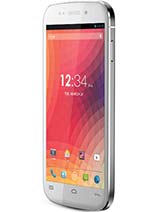
This review is written with AI assistance from BLU’s published specifications and public benchmark data for the BLU Life One X, and the rating is spec-based. GoSolo does not physically test devices; where we estimate real-world behaviour such as battery life or charge time, we say so. How we rate phones.
Overview
The BLU Life One X is a 2013 budget Android phone that was already dated on arrival: 1GB RAM, 2000 mAh battery, and HSPA-only connectivity on a 1.2 GHz quad-core left little room for anything beyond basic tasks. At 230 EUR it was a no-frills dual-SIM alternative to entry-level flagships, but even for that price and era it lacked the staying power for daily use.
Verdict
The BLU Life One X made sense only for someone on a tight budget who prioritized dual SIM and expandable storage over performance and battery life. Anyone else shopping in 2013 at this price should have looked at alternatives with more RAM and larger batteries; anyone picking up a second-hand unit now is doing so as a historical curiosity, not a functional device.
- Dual SIM with dedicated microSD slot—genuinely useful for the target market
- 13MP camera with 1080p video and autofocus, reasonable for 2013 at this price
- Reasonable 294 ppi display for a 5-inch budget phone
- Lightweight at 145g and thin enough (8.9mm) to slip into a pocket
- Only 1GB RAM and 2000 mAh battery make the phone struggle with multitasking and survivability
- Stuck on Android 4.2 with no LTE or 4G—HSPA only was already behind in 2013
- Processor and GPU are entry-level even for the era; expect lag in everyday use
BLU Life One X Key Specifications
The essentials at a glance. See the full spec sheet.
| Released | 2013, March. Released 2013, April |
|---|---|
| Display | 5.0 inches, 68.9 cm2 (~65.6% screen-to-body ratio), LED-backlit IPS LCD |
| Resolution | 720 x 1280 pixels, 16:9 ratio (~294 ppi density) |
| Chipset | Mediatek MT6589 (28 nm) |
| RAM & storage | 16GB 1GB RAM |
| Main camera | 13 MP, AF |
| Selfie camera | 5 MP |
| Battery | 2000 mAh |
| Software | Android 4.2 (Jelly Bean) |
| Dimensions | 144 x 73 x 8.9 mm (5.67 x 2.87 x 0.35 in) |
| Weight | 145 g (5.11 oz) |
| Network | GSM / HSPA |
| NFC | No |
| USB | microUSB 2.0 |
BLU Life One X FAQ
Common questions, answered from the spec sheet.
Does the Life One X support 5G?
No. The Life One X tops out at GSM / HSPA, without 5G.
What chipset does the Life One X use?
The Life One X runs on the Mediatek MT6589 (28 nm).
What display does the Life One X have?
A 5.0 inches, 68.9 cm2 (~65.6% screen-to-body ratio) LED-backlit IPS LCD, 720 x 1280 pixels, 16:9 ratio (~294 ppi density).
How big is the Life One X battery?
The Life One X has a 2000 mAh battery.
Does the Life One X have NFC?
No, the Life One X does not list NFC support.
Does the Life One X support a microSD card?
Yes, the Life One X supports expandable storage (microSDHC (dedicated slot)).