BLU Life One X2 review
This phone is dead weight in a modern context. If you stumble across one at a throwaway price and need a spare dual-SIM handset for travel or temporary use in countries where LTE is optional, it might serve, but buying it as a primary or even secondary phone today is a mistake. Android security and performance have moved on, and so has the rest of the market."
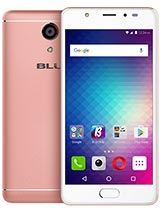
This review is written with AI assistance from BLU’s published specifications and public benchmark data for the BLU Life One X2, and the rating is spec-based. GoSolo does not physically test devices; where we estimate real-world behaviour such as battery life or charge time, we say so. How we rate phones.
Overview
The BLU Life One X2 is a 2016 budget phone with a solid 1080p display and decent rear camera, but the Snapdragon 430 and 3150 mAh battery struggle with real-world longevity and app performance. Android 6.0.1 feels dated now, and there's little reason to consider it unless you need a cheap, simple dual-SIM handset for light use.
Design & Build
At 166g and 9.5mm thick, the Life One X2 is trim and pocket-friendly for its era. The 5.2-inch form factor hits a sweet spot—not a handful, not cramped—and the dual-SIM tray plus microSD slot mean you're not forced into painful trade-offs. Gorilla Glass 3 is standard fare for 2016 budget work, and the rear fingerprint sensor is a nice touch that lifts it above the cheapest competitors. The spec sheet does not detail the build material, so there's no way to comment on durability or grip, but the overall shape is sensible and unpretentious.
Display
The 5.2-inch 1080p IPS LCD delivers 424 ppi—sharp enough that text and icons remain crisp without the power drain of a higher resolution. IPS angles are forgiving, and the 69.6% screen-to-body ratio is respectable, not exceptional, for 2016. You are not getting AMOLED color or infinite blacks, but a 1080p IPS panel at this price is a practical choice. For browsing, messaging, and basic video, it holds up. The bezels are visible by today's standards but were unremarkable then.
Performance
The Snapdragon 430 with octa-core 1.4 GHz Cortex-A53 is entry-level for its time, and the jump between the 2GB and 4GB RAM variants matters. The base 2GB model will stutter under moderate multitasking and app switching; the 4GB variant is more livable but still outpaced by mid-range phones of 2016. Day-to-day tasks feel deliberate rather than fluid. Gaming and any sustained heavy work are not realistic. The Adreno 505 GPU handles casual apps and older titles, but do not expect smooth frame rates in anything demanding. For light duty—messaging, social media, simple browsing—the 4GB version scrapes by. The 2GB one is a compromise too far.
Software
Android 6.0.1 Marshmallow is now nearly a decade old. Security patches almost certainly do not exist anymore, and future app compatibility will narrow as developers move to newer Android versions. The OS itself is clean and responsive for its era, but the lack of upgrade path is a genuine liability. A phone stuck on Marshmallow in 2024 or later is exposed and increasingly isolated from the Android ecosystem.
Camera
The 16 MP rear camera with f/2.0 aperture and phase-detection autofocus is the standout piece of hardware here. For a 2016 budget phone, this is a real strength. PDAF means faster focus, and the f/2.0 lens captures light better than the typical f/2.2 or f/2.4 of cheaper rivals. Stills are usable in daylight with decent detail, and the LED flash helps in low light. Video maxes out at 1080p@30fps, which is standard for the class. The 8 MP front camera is basic but functional for selfies. This camera package would have been a genuine selling point for BLU's market position.
Battery & Charging
A 3150 mAh battery is slender for a 5.2-inch phone. With the modest Snapdragon 430, you might squeeze a full day of light use, but moderate browsing, video, or navigation will drain it faster. The spec sheet does not list charging wattage or speed, so you are reliant on microUSB 2.0, which is slow by default. Real-world standby figures of up to 725 hours on 2G or 625 hours on 3G are theoretical and assume minimal use; active use will halve that or worse. This is a phone you will need to charge daily, and without fast charging data, expect a lengthy tethering session when power runs out.
Value & Verdict
In 2016, the Life One X2 at BLU's typical budget-tier price point was a reasonable pick for buyers in emerging markets who needed dual-SIM flexibility, expandable storage, and a usable camera without spending flagship money. Today, it is obsolete. The Snapdragon 430, 3150 mAh battery, and Android 6.0.1 make it impractical for any real workload, and the security surface exposed by years without updates is a serious concern. Even refurbished, there is almost no case for buying this phone in 2024 or later unless you have a niche need for a simple dual-SIM backup device that never touches sensitive apps or data. BLU itself has moved on to faster, cheaper options, and so should anyone shopping now.
Verdict
This phone is dead weight in a modern context. If you stumble across one at a throwaway price and need a spare dual-SIM handset for travel or temporary use in countries where LTE is optional, it might serve, but buying it as a primary or even secondary phone today is a mistake. Android security and performance have moved on, and so has the rest of the market."
- 1080p IPS LCD display with 424 ppi—crisp enough for its era and screen size
- 16 MP rear camera with PDAF and f/2.0 lens is genuinely capable for the 2016 budget tier
- Dual SIM with microSD expansion offers real flexibility for buyers juggling networks or storage
- Rear fingerprint sensor and headphone jack preserved, practical features many 2016 budget phones skipped
- Snapdragon 430 and 2GB RAM on the base model feel sluggish even for light browsing by 2016 standards
- 3150 mAh battery is thin for a 5.2-inch phone; real-world endurance likely falls short of a full day under moderate use
- Android 6.0.1 with no upgrade path means security patches and OS improvements end quickly
BLU Life One X2 Key Specifications
The essentials at a glance. See the full spec sheet.
| Released | 2016, September. Released 2016, September |
|---|---|
| Display | 5.2 inches, 74.5 cm2 (~69.6% screen-to-body ratio), IPS LCD |
| Resolution | 1080 x 1920 pixels, 16:9 ratio (~424 ppi density) |
| Chipset | Qualcomm MSM8937 Snapdragon 430 (28 nm) |
| RAM & storage | 16GB 2GB RAM, 64GB 4GB RAM |
| Main camera | 16 MP, f/2.0, PDAF |
| Selfie camera | 8 MP |
| Battery | 3150 mAh |
| Software | Android 6.0.1 (Marshmallow) |
| Dimensions | 148 x 72.4 x 9.5 mm (5.83 x 2.85 x 0.37 in) |
| Weight | 166 g (5.86 oz) |
| Network | GSM / HSPA / LTE |
| NFC | No |
| USB | microUSB 2.0, OTG |
BLU Life One X2 FAQ
Common questions, answered from the spec sheet.
Does the Life One X2 support 5G?
No. The Life One X2 tops out at GSM / HSPA / LTE, without 5G.
What chipset does the Life One X2 use?
The Life One X2 runs on the Qualcomm MSM8937 Snapdragon 430 (28 nm).
What display does the Life One X2 have?
A 5.2 inches, 74.5 cm2 (~69.6% screen-to-body ratio) IPS LCD, 1080 x 1920 pixels, 16:9 ratio (~424 ppi density).
How big is the Life One X2 battery?
The Life One X2 has a 3150 mAh battery.
Does the Life One X2 have NFC?
No, the Life One X2 does not list NFC support.
Does the Life One X2 support a microSD card?
Yes, the Life One X2 supports expandable storage (microSDXC).
Does the Life One X2 have a headphone jack?
Yes, the Life One X2 has a 3.5mm headphone jack.
Alternatives to consider
If the Life One X2 isn’t quite right, these are the closest calls.
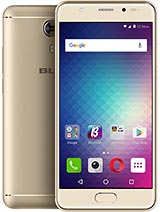
Life One X2 Mini
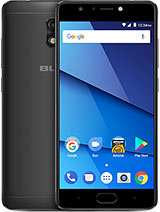
Life One X3
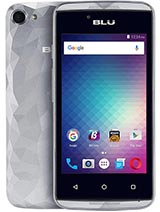
Energy Diamond Mini
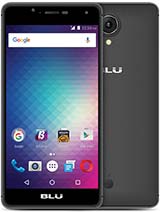
R1 HD
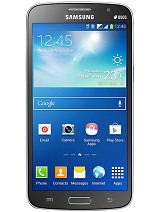
Grand M