BLU Life Play review
This phone belongs in a museum, not in a pocket. If you are reading this out of historical curiosity or because you inherited an old BLU device, it is a harmless relic of early Android. Anyone actually shopping for a phone should look elsewhere—even the cheapest current options will outperform this in every way that matters."
This review is written with AI assistance from BLU’s published specifications and public benchmark data for the BLU Life Play, and the rating is spec-based. GoSolo does not physically test devices; where we estimate real-world behaviour such as battery life or charge time, we say so. How we rate phones.
Overview
The BLU Life Play is a 2013 budget Android phone with a 4.7-inch display and mid-range specs that were acceptable for its time but have aged poorly. For a phone launching over a decade ago at 180 EUR, it offered solid value then, but anyone considering it now should understand it is a relic: HSPA-only connectivity, a 1.2 GHz quad-core chip, and 1GB RAM make it unsuitable for modern apps and networks.
Design & build
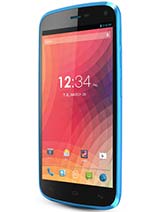
At 125 grams and 7.9mm thick, the Life Play is light and slim by 2013 standards. The physical footprint feels comfortable in hand, and the dual SIM setup (mini-SIM and micro-SIM) with a dedicated microSD slot shows BLU understood the priorities of its target market—users who needed multiple SIM cards and expandable storage. The removable battery was already becoming rare by 2013 and is now a significant relic. For a phone that age, the build quality is inoffensive but unremarkable: there is nothing here that feels sturdy or premium, just functional plastic.
Display
The 4.7-inch LED-backlit IPS LCD hits 720 by 1280 pixels, which sounds fine on paper but works out to 312 ppi—serviceable for the time, but noticeably soft by modern standards. The 65% screen-to-body ratio means chunky bezels all around. IPS colour reproduction was acceptable in 2013, and the brightness is likely adequate for indoor use, but this display will feel dated if you have used anything from the past five years. Colour accuracy and viewing angles are not a concern because the phone is too old to justify pixel-peeping.
Performance
The Mediatek MT6589 is a quad-core 1.2 GHz chip from 2013, paired with just 1GB of RAM. In 2013, this was a reasonable mid-range setup. Today, it is a bottleneck. Apps that assume modern hardware—or even apps from five years ago that have been updated—will stutter, freeze, or refuse to run. The PowerVR SGX544 GPU handles light games from that era but will choke on anything current. The HSPA connectivity maxes out at 42.2 Mbps download, a handicap for any task requiring internet speed. Do not expect this phone to handle modern web browsing, video streaming, or messaging apps smoothly.
Software
It ships with Android 4.2 Jelly Bean, which is from 2012. This is now a security liability. No modern apps will run on it, and the Play Store has phased out support for such old Android versions. Even if you managed to sideload updates or custom ROMs, the 1GB RAM and 4GB storage mean you would have almost no breathing room. The firmware of its era was not known for optimization either. This phone cannot be recommended for any connected use in 2024 or beyond.
Camera
The 8MP main sensor with autofocus, LED flash, and HDR was decent for a budget phone in 2013. It recorded 1080p video at 30fps, which was respectable then. By today's standards, image quality would be soft, with poor low-light performance and limited dynamic range. The 2MP selfie camera was never meant to impress. For a phone this old, the camera is a non-issue because the entire platform is too antiquated to take seriously.
Battery & charging
The 1800 mAh battery was already marginal in 2013 and is tiny by current standards. The specs claim up to 780 hours of standby or 18 hours of talk time on 2G, which are optimistic figures that assume minimal data use. In real use, even light internet activity would drain this battery in under a day. The removable battery was a nice option then—you could swap in a fresh one—but there is no modern charging standard, and the microUSB connector is a decade outdated. For a daily driver today, this battery would be a perpetual annoyance.
Value & verdict
The BLU Life Play sold for about 180 EUR in 2013, which was a fair price for a budget Android phone with those specs. As a historical artifact or for a user with zero connectivity needs and willingness to use it as a basic phone only, it has quaint appeal. For anyone actually considering buying or using it in 2024 and beyond, it is not worth the time. It cannot connect to modern LTE networks, cannot run modern apps, and cannot sustain a full day without a battery swap. The only reason to own one is nostalgia or a specialist interest in vintage smartphones.
Verdict
This phone belongs in a museum, not in a pocket. If you are reading this out of historical curiosity or because you inherited an old BLU device, it is a harmless relic of early Android. Anyone actually shopping for a phone should look elsewhere—even the cheapest current options will outperform this in every way that matters."
- Dual SIM support with dedicated microSD slot, useful for markets where flexibility matters
- Removable 1800 mAh battery and light 125g build make it easy to carry and swap batteries on the go
- 4.7-inch display and 1080p video recording were competitive features for 2013 budget phones
- LED flash and HDR on the 8MP main camera with autofocus provided decent photo capability for the era
- No 4G LTE—stuck on HSPA means slow data speeds (42.2 Mbps) that will feel glacial by today's standards and incompatible with modern network upgrades
- 1GB RAM and a 1.2 GHz quad-core chip struggle with modern apps and even older Android apps bloated by time
- 1800 mAh battery is small even for 2013 and will not sustain a full day of typical use
BLU Life Play Key Specifications
The essentials at a glance. See the full spec sheet.
| Released | 2013, March. Released 2013, April |
|---|---|
| Display | 4.7 inches, 60.9 cm2 (~65.0% screen-to-body ratio), LED-backlit IPS LCD |
| Resolution | 720 x 1280 pixels, 16:9 ratio (~312 ppi density) |
| Chipset | Mediatek MT6589 (28 nm) |
| RAM & storage | 4GB 1GB RAM |
| Main camera | 8 MP, AF |
| Selfie camera | 2 MP |
| Battery | 1800 mAh |
| Software | Android 4.2 (Jelly Bean) |
| Dimensions | 137 x 68.4 x 7.9 mm (5.39 x 2.69 x 0.31 in) |
| Weight | 125 g (4.41 oz) |
| Network | GSM / HSPA |
| NFC | No |
| USB | microUSB 2.0 |
BLU Life Play FAQ
Common questions, answered from the spec sheet.
Does the Life Play support 5G?
No. The Life Play tops out at GSM / HSPA, without 5G.
What chipset does the Life Play use?
The Life Play runs on the Mediatek MT6589 (28 nm).
What display does the Life Play have?
A 4.7 inches, 60.9 cm2 (~65.0% screen-to-body ratio) LED-backlit IPS LCD, 720 x 1280 pixels, 16:9 ratio (~312 ppi density).
How big is the Life Play battery?
The Life Play has a 1800 mAh battery.
Does the Life Play have NFC?
No, the Life Play does not list NFC support.
Does the Life Play support a microSD card?
Yes, the Life Play supports expandable storage (microSDHC (dedicated slot)).