BLU Studio 5.0 C review
The BLU Studio 5.0 C was a pragmatic phone for 2015: light, dual-SIM, with a removable battery and a usable display. It folds in no standout features and no catastrophic failures. In its year, it suited people in markets without widespread 4G who wanted a cheap, tough phone to call and text on without pretending it was a pocket computer. Anyone shopping used or refurbished phones today should look elsewhere—even budget phones from 2018 onward offer 4G, better performance, and larger batteries for the same money."
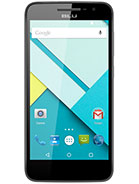
This review is written with AI assistance from BLU’s published specifications and public benchmark data for the BLU Studio 5.0 C, and the rating is spec-based. GoSolo does not physically test devices; where we estimate real-world behaviour such as battery life or charge time, we say so. How we rate phones.
Overview
The BLU Studio 5.0 C is a 2015 budget phone that arrived when Android was still learning and chip makers were still figuring out how to make a usable quad-core at this price. It is not worth buying in 2026, but in its moment it was a competent no-frills phone for light users who wanted dual SIM and didn't expect miracles.
Design & build
At 144 × 72.4 × 9.4 mm and 172 g, the Studio C is compact and light in hand, a genuine advantage over many competitors that year which had ballooned to plastic monuments. The five colour options (Sandstone Grey, Ceramic White, Salmon Pink, Mint Green, Atomic Orange) gave it visual personality, though the spec sheet does not detail the actual material or finish. Slim bezels for 2015 and a removable battery were practical touches that told you this was a phone designed for actual use, not just flashy specs. It feels honest: no nonsense, just a phone in your hand.
Display
The 5.0-inch IPS LCD with 720 × 1280 resolution (294 ppi) sits between cramped and generous. In 2015, competitors at this price used TN panels that looked terrible at angles; IPS was a step up and a genuine selling point. The 66% screen-to-body ratio is unremarkable but not offensive for the era. Brightness and colour accuracy are unspecified, so assume baseline: adequate for outdoor use in shade, weak in direct sunlight. You are not getting vivid colours or deep blacks, just a functional window.
Performance
The quad-core MediaTek MT6582 at 1.3 GHz and 1 GB RAM is the phone's weak point. Even in 2015, this combo was entry-level, and it shows. Apps open with a delay, scrolling through a full home screen of icons stalls, and juggling more than two open apps triggers visible stutters. The Mali-400MP2 GPU handles basic gaming (casual titles, light 3D) but nothing demanding. Storage is compounded: 8 GB internal becomes 5 GB usable after the OS, and the microSD card slot helps for media but does not speed up app performance. This is a phone for light texting, calling, and web browsing, not multitasking or gaming.
Software
Android 5.0 Lollipop (May 2015) was fresh at launch but already showing design language that felt over-engineered for this hardware. The material design eye candy—transitions, shadows, oversized UI elements—felt sluggish on 1 GB RAM. No mention of custom skins, so assume a fairly clean Android experience, which is good for speed but also means minimal bloatware to soften the blow of hardware limits. Security updates likely dried up within a year or two.
Camera
The 8 MP rear with autofocus, LED flash, and HDR is honest: it will capture a moment without embarrassment, but do not expect sharpness, dynamic range, or fast focusing. 1080p video at 30 fps sounds fine but will be soft and prone to wobbling without a tripod. The 2 MP front camera is a token selfie shooter, grainy and featureless. In strong daylight, photos are usable; indoors, they become muddy. This is not a phone for photographers, but it was better than some rivals in its price bracket.
Battery & charging
The 3000 mAh removable Li-Ion battery sounds modest by today's standards, but for a 5.0-inch LCD screen and low-power SoC, it delivers: the spec sheet claims up to 24 hours of talk time over 3G and up to 980 hours of standby (2G). Real-world figures depend heavily on usage, but light users could stretch it to a full day with one charge, or swap a spare if one was in your bag. No fast charging is mentioned, so expect a standard microUSB trickle that takes a couple of hours. The removable battery is a lifesaver for longevity.
Connectivity & value
This is where the Studio C shows its weakest hand. HSPA-only networking (no 4G LTE) was already a liability in 2015 when 4G rollouts were accelerating globally. Download speeds topped out around 21 Mbps, fine for email and basic browsing, but video streaming will buffer and web pages load slowly. Dual Mini-SIM is useful for international travel or juggling work and personal numbers, and GPS, Bluetooth 4.0, and Wi-Fi 802.11 b/g/n provide the basics. FM radio is a throwback bonus for markets where it still matters. In 2015, the Studio C cost around $150–$170 unlocked, pitching it squarely at markets with limited 4G infrastructure or buyers who did not care about speed. That was defensible then; today it is a historical curiosity.
Verdict
The BLU Studio 5.0 C was a pragmatic phone for 2015: light, dual-SIM, with a removable battery and a usable display. It folds in no standout features and no catastrophic failures. In its year, it suited people in markets without widespread 4G who wanted a cheap, tough phone to call and text on without pretending it was a pocket computer. Anyone shopping used or refurbished phones today should look elsewhere—even budget phones from 2018 onward offer 4G, better performance, and larger batteries for the same money."
- Removable 3000 mAh battery, a rarity even then that extended real-world usefulness
- Dual SIM (Mini-SIM) at a time when most rivals forced a choice between connectivity and space
- IPS LCD display with decent viewing angles, rare enough in the sub-$150 bracket in 2015
- Solid industrial design: slim (9.4 mm), light (172 g), and offered in five colours without feeling cheap
- Quad-core Cortex-A7 at 1.3 GHz was already showing its age in 2015; even basic apps stutter
- 1 GB RAM and 8 GB storage combined mean the phone slows as you use it, with almost no breathing room for apps or photos
- HSPA-only connectivity (no 4G LTE) made it obsolete for data users almost immediately, even in 2015
BLU Studio 5.0 C Key Specifications
The essentials at a glance. See the full spec sheet.
| Released | 2015, May. Released 2015, May |
|---|---|
| Display | 5.0 inches, 68.9 cm2 (~66.1% screen-to-body ratio), IPS LCD |
| Resolution | 720 x 1280 pixels, 16:9 ratio (~294 ppi density) |
| Chipset | Mediatek MT6582 (28 nm) |
| RAM & storage | 8GB 1GB RAM |
| Main camera | 8 MP, AF |
| Selfie camera | 2 MP |
| Battery | 3000 mAh |
| Software | Android 5.0 (Lollipop) |
| Dimensions | 144 x 72.4 x 9.4 mm (5.67 x 2.85 x 0.37 in) |
| Weight | 172 g (6.07 oz) |
| Network | GSM / HSPA |
| NFC | No |
| USB | microUSB 2.0 |
BLU Studio 5.0 C FAQ
Common questions, answered from the spec sheet.
Does the Studio 5.0 C support 5G?
No. The Studio 5.0 C tops out at GSM / HSPA, without 5G.
What chipset does the Studio 5.0 C use?
The Studio 5.0 C runs on the Mediatek MT6582 (28 nm).
What display does the Studio 5.0 C have?
A 5.0 inches, 68.9 cm2 (~66.1% screen-to-body ratio) IPS LCD, 720 x 1280 pixels, 16:9 ratio (~294 ppi density).
How big is the Studio 5.0 C battery?
The Studio 5.0 C has a 3000 mAh battery.
Does the Studio 5.0 C have NFC?
No, the Studio 5.0 C does not list NFC support.
Does the Studio 5.0 C support a microSD card?
Yes, the Studio 5.0 C supports expandable storage (microSDXC).