BLU Studio 5.5 review
This phone is a historical artifact, not a working device for anyone in the modern world. Even as a budget backup phone, it is unsafe and non-functional on today's networks.
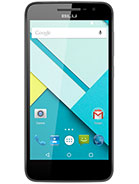
This review is written with AI assistance from BLU’s published specifications and public benchmark data for the BLU Studio 5.5, and the rating is spec-based. GoSolo does not physically test devices; where we estimate real-world behaviour such as battery life or charge time, we say so. How we rate phones.
Overview
The BLU Studio 5.5 is a 2015 budget phone built on HSPA 3G and Android 5.0 with a 1.3 GHz quad-core chip, now years out of support and unsuitable for modern use. It was a solid budget entry in its moment but has no place in today's market.
A relic, not a phone
This phone announced in May 2015 and has been discontinued for nearly a decade. It runs Android 5.0 Lollipop on a 1.3 GHz quad-core Mediatek chip with 1 GB of RAM—specs that were underpowered even then and are archaeological now. No 4G LTE support means any mobile network today will either not carry it at all or serve it at 3G speeds that feel like dial-up to anyone who has used anything after 2013. The 3000 mAh battery and 8GB storage were always tight, and both have only become more inadequate as apps bloat. There is no earthly reason to buy, use, or seek out this phone in 2024 or beyond, unless you collect defunct hardware or need it specifically as a non-networked device.
Display
The 5-inch IPS LCD with 720×1280 resolution and 294 ppi is basic but was routine for budget phones of that era. Brightness and color accuracy were never a strength of such panels, and the 66% screen-to-body ratio shows thick bezels by today's standard—though at the time it was unremarkable. For the price point then, you got what you expected and nothing more.
Performance
A Mediatek MT6582 with four cores at 1.3 GHz and 1 GB RAM was entry-level in 2015 and struggles visibly with anything heavier than messaging and light web browsing even in its day. The Mali-400MP2 GPU is weak, and loading times lag behind. By today, even opening the settings app would feel sluggish, and most modern Android apps either will not install or will hang constantly. This was never a phone for games, multitasking, or smooth social media use.
Camera
An 8 MP rear camera with autofocus and LED flash was respectable in budget form; it shot 1080p video at 30 fps. A 2 MP front camera was typical self-reference gear then. Neither lens will impress by 2024 standards—photos are soft, colors flat, and low light is noisy—but for casual snapshots in daylight back in 2015, this was functional. Do not expect anything resembling modern computational photography or fast focus.
Battery & connectivity
The 3000 mAh battery promised up to 40 hours of talk time on 2G, which was marketing speak even then; real-world endurance on 3G was closer to a day if you barely used it. Removable batteries and dual SIM were selling points in budget phones of that time and represent the only conveniences here that modern flagships have abandoned. Connectivity is the fatal flaw: no 4G LTE, no NFC, no modern bands, only HSPA at speeds of 21 Mbps down—painfully slow even measured against 2015 LTE phones, and completely obsolete now. FM radio and stereo Bluetooth 4.0 were bonus features, not differentiators.
Software
Android 5.0 Lollipop was Google's current release in May 2015, but it has had no updates since launch. Security patches stopped years ago, the Play Store has already begun refusing to install newer apps, and many services (email, banking, social media) will not function or will be dangerously unpatched. Using this phone on an open network today is a security liability.
Verdict
The BLU Studio 5.5 was a forgettable budget phone that has only become worse with age. It lacks 4G, has minimal RAM and storage, runs an ancient OS with no security updates, and cannot reliably connect to modern networks. There is no sensible buyer for this phone in the modern market. If you have inherited one or found it in a drawer, it belongs in recycling or a museum, not in your pocket.
Verdict
This phone is a historical artifact, not a working device for anyone in the modern world. Even as a budget backup phone, it is unsafe and non-functional on today's networks.
- Dual SIM and a removable battery when both were still standard in budget phones
- Lightweight and compact at 172g—still feels reasonable to hold
- Came in five colors that didn't all look identical
- No 4G LTE support at all—stuck on HSPA 3G, making data crawlingly slow by 2015 standards already
- 1 GB RAM and 8 GB storage meant it struggled with apps and multitasking even when new
- Android 5.0 with no update path; security patches stopped years ago and many modern apps will not install
BLU Studio 5.5 Key Specifications
The essentials at a glance. See the full spec sheet.
| Released | 2015, May. Released 2015, May |
|---|---|
| Display | 5.0 inches, 68.9 cm2 (~66.1% screen-to-body ratio), IPS LCD |
| Resolution | 720 x 1280 pixels, 16:9 ratio (~294 ppi density) |
| Chipset | Mediatek MT6582 (28 nm) |
| RAM & storage | 8GB 1GB RAM |
| Main camera | 8 MP, AF |
| Selfie camera | 2 MP |
| Battery | 3000 mAh |
| Software | Android 5.0 (Lollipop) |
| Dimensions | 144 x 72.4 x 9.4 mm (5.67 x 2.85 x 0.37 in) |
| Weight | 172 g (6.07 oz) |
| Network | GSM / HSPA |
| NFC | No |
| USB | microUSB 2.0 |
BLU Studio 5.5 FAQ
Common questions, answered from the spec sheet.
Does the Studio 5.5 support 5G?
No. The Studio 5.5 tops out at GSM / HSPA, without 5G.
What chipset does the Studio 5.5 use?
The Studio 5.5 runs on the Mediatek MT6582 (28 nm).
What display does the Studio 5.5 have?
A 5.0 inches, 68.9 cm2 (~66.1% screen-to-body ratio) IPS LCD, 720 x 1280 pixels, 16:9 ratio (~294 ppi density).
How big is the Studio 5.5 battery?
The Studio 5.5 has a 3000 mAh battery.
Does the Studio 5.5 have NFC?
No, the Studio 5.5 does not list NFC support.
Does the Studio 5.5 support a microSD card?
Yes, the Studio 5.5 supports expandable storage (microSDXC).