BLU Studio C review
This phone makes sense only as a nostalgia piece or for someone in an area with no 4G network and zero other options. Anyone with access to used phones from 2017 or later should skip it; the jump in RAM, storage, and security is worth the extra cost or worn-out screen trade-off.
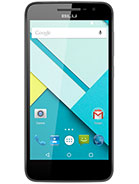
This review is written with AI assistance from BLU’s published specifications and public benchmark data for the BLU Studio C, and the rating is spec-based. GoSolo does not physically test devices; where we estimate real-world behaviour such as battery life or charge time, we say so. How we rate phones.
Overview
The BLU Studio C is a 2015 budget phone that arrived as a competent entry-level Android device but has aged into obsolescence; its 1GB RAM, HSPA-only connectivity, and Lollipop OS make it a relic even by budget standards today.
Design & build
The Studio C feels like a mid-2010s phone should: slim, light, and designed for actual pockets. At 9.4mm and 172g, it does not feel chunky or heavy the way some competitors at the time did. The removable battery is a genuine advantage for the user who travels or works off the grid—pop a spare in your bag and you have endless talktime. The dual-SIM slot is valuable in markets where using two networks saves money or bridges coverage gaps. Build materials are not mentioned in the specs, so they likely are not remarkable; that said, this era of budget BLU phones was not known for durability, and these devices rarely aged well.
Display
The 5-inch IPS LCD at 720p and 294ppi is adequately sharp for 2015; by today's standards it is grainy and dim compared to what budget phones now offer, but it was a sensible choice for the time. IPS was genuinely superior to the TN panels rivals used at this price, so colors and angles held up decently. The 66% screen-to-body ratio feels dated now—modern budgets push toward 80% or more—but in 2015 this was acceptable. For basic web browsing, messaging, and video, the screen does the job; it will not impress anyone who has seen a modern phone.
Performance
The Mediatek MT6582 quad-core running at 1.3 GHz and paired with just 1GB RAM is the core problem. This chipset was entry-level even in 2015, and 1GB of memory is crippling by any era's standard. Switching between apps causes reloads, gaming is out of the question, and running even modest modern apps is a stutter-fest. The Mali-400MP2 GPU compounds the weakness. For basic calls, SMS, and light browsing, the phone limps along; anything heavier and it falters. By 2016 rivals at this price were shipping with 2GB RAM and faster processors; BLU missed the mark here.
Software
Android 5.0 Lollipop was current at launch in May 2015, but the phone was never updated beyond this version. Within a year, this became a liability as Android 6.0, 7.0, and beyond brought security patches, refinements, and feature parity. Today, a 2015 phone stuck on Lollipop is a security risk and an out-of-date experience; the OS lack the polish and efficiency of modern Android. Sideloading apps might work, but you are playing with fire on an unpatched system.
Camera
The 8MP main camera with autofocus, LED flash, and HDR could shoot 1080p video, which sounds adequate on paper. In practice, 2015 budget phone cameras were noisy, soft, and color-shifted; this sensor is no exception. The 2MP selfie camera is purely functional—barely adequate for video calls, useless for serious selfies. By the time budget phones hit 2016, 13MP mains became the floor; 8MP was already behind. Photos lack detail and the dynamic range is narrow; HDR helps but does not save the weak sensor itself.
Battery & charging
The 3000 mAh removable battery will eek out a day of modest use, maybe less if you hit 3G data or run video. Standby times of 980 hours on 2G sound impressive but are not real-world; real talk time is around 24 hours on 3G, which is fine but not generous. The real win is that you can swap the battery yourself—no charger dependency, no waiting for the thing to top up. The spec sheet lists no fast charging (likely standard 5V charging), so even a full charge takes hours. By 2016, 4000 mAh and faster charging were becoming normal at this price.
Connectivity & value
The complete absence of 4G LTE is the phone's most glaring gap. In 2015, LTE was not yet universal in budget ranges, but BLU had already launched LTE-capable models by this time; the Studio C feels like a deliberate step down. HSPA 3G maxes out at 21 Mbps download—comparable to early LTE but much slower than LTE by 2015 standards. Streaming video is painful, downloads crawl, and anything real-time feels sluggish. Wi-Fi direct and Bluetooth 4.0 are present and fine; FM radio is a nice touch for markets without data plans. GPS is basic but workable. As a phone today, the Studio C is a relic. It was budget-conscious in 2015 and is now tech-disposal waiting to happen. The removable battery and dual-SIM are genuine hooks, but the 1GB RAM, lack of LTE, and frozen software stack make it a poor choice even for users with tight budgets who have access to alternatives from 2017 onward.
Verdict
This phone makes sense only as a nostalgia piece or for someone in an area with no 4G network and zero other options. Anyone with access to used phones from 2017 or later should skip it; the jump in RAM, storage, and security is worth the extra cost or worn-out screen trade-off.
- Removable 3000 mAh battery gives real hands-on repairability and a backup power option
- Dual SIM and microSD expansion for flexibility in emerging markets
- Light at 172g and genuinely slim at 9.4mm, making it genuinely pocketable
- Sensible 5-inch screen size avoids the phablet bloat that was already creeping in 2015
- No 4G LTE support—stuck on HSPA 3G speeds that are glacial by modern standards
- Only 1GB RAM and 8GB storage (often 5-6GB usable) makes even basic multitasking choppy and storage a constant constraint
- Android 5.0 in 2015 was current but the phone never received updates, leaving it years behind on security and feature parity
BLU Studio C Key Specifications
The essentials at a glance. See the full spec sheet.
| Released | 2015, May. Released 2015, May |
|---|---|
| Display | 5.0 inches, 68.9 cm2 (~66.1% screen-to-body ratio), IPS LCD |
| Resolution | 720 x 1280 pixels, 16:9 ratio (~294 ppi density) |
| Chipset | Mediatek MT6582 (28 nm) |
| RAM & storage | 8GB 1GB RAM |
| Main camera | 8 MP, AF |
| Selfie camera | 2 MP |
| Battery | 3000 mAh |
| Software | Android 5.0 (Lollipop) |
| Dimensions | 144 x 72.4 x 9.4 mm (5.67 x 2.85 x 0.37 in) |
| Weight | 172 g (6.07 oz) |
| Network | GSM / HSPA |
| NFC | No |
| USB | microUSB 2.0 |
BLU Studio C FAQ
Common questions, answered from the spec sheet.
Does the Studio C support 5G?
No. The Studio C tops out at GSM / HSPA, without 5G.
What chipset does the Studio C use?
The Studio C runs on the Mediatek MT6582 (28 nm).
What display does the Studio C have?
A 5.0 inches, 68.9 cm2 (~66.1% screen-to-body ratio) IPS LCD, 720 x 1280 pixels, 16:9 ratio (~294 ppi density).
How big is the Studio C battery?
The Studio C has a 3000 mAh battery.
Does the Studio C have NFC?
No, the Studio C does not list NFC support.
Does the Studio C support a microSD card?
Yes, the Studio C supports expandable storage (microSDXC).