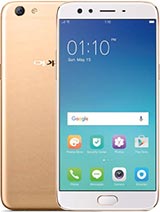
BLU Studio G HD LTE review
This phone is now a historical artifact. If you absolutely must own it—nostalgia, completism, or a collector's interest in budget-tier Android—know that it will frustrate you with every app launch and every photo. Anyone actually needing a working phone should spend a few dollars more on a used mid-range from 2018–2019 or a modern entry-level device, both of which will feel like light-years ahead."
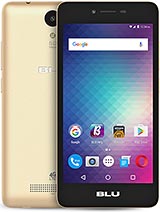
This review is written with AI assistance from BLU’s published specifications and public benchmark data for the BLU Studio G HD LTE, and the rating is spec-based. GoSolo does not physically test devices; where we estimate real-world behaviour such as battery life or charge time, we say so. How we rate phones.
Overview
This is a budget 2016 Android phone that feels its age: a 1.1 GHz quad-core, 1GB of RAM, and a 5MP camera struggle with modern demands, though the 5-inch display and removable battery gave it some appeal at launch. It's now a curiosity or a last resort for someone on an extremely tight budget, but even then, it would frustrate more than it helps.
Design & build
The BLU Studio G HD is pleasantly thin at 9.4 mm and light at 145 grams, which made sense for 2016. The 5-inch IPS LCD display sits in a frame with a 66% screen-to-body ratio—acceptable for the era, though noticeably chunky bezels by today's standards. Dual Micro-SIM slots mean no compromises for multi-network users. The removable battery is the standout feature here: it lets you swap in a fresh cell without waiting hours for a charge, a practicality that flagships abandoned years ago. Build quality is not specified in the sheet, but BLU's budget positioning suggests plastic construction and nothing remarkable in hand feel or durability.
Display
The 5-inch, 720 x 1280 IPS LCD delivers 294 ppi, which is sharp enough for text and web content on a phone of this size. Colors and viewing angles are fine for an LCD of the budget tier. However, the resolution feels dated now—competitors at this price point were already pushing 1080p by 2016. The display is not particularly bright or punchy, and there is no mention of any scratch resistance, so expect it to show wear quickly if used without protection.
Performance
The MediaTek MT6737 quad-core running at 1.1 GHz is the phone's deepest problem. Paired with only 1GB of RAM, this combination was underpowered even in 2016, when rivals at similar prices offered 2GB as standard. Opening apps is slow, switching between them causes reloads, and gaming is not a realistic proposition. Android 6.0 (Marshmallow) is light by modern standards, but even so, there is little headroom for smooth daily use. The Mali-T720 GPU does not help—it is a bottom-tier mobile chip. Anyone shopping here would be better off finding a used flagship from one or two years prior.
Software
Android 6.0 Marshmallow is ancient by today's standards and likely receives no security updates. BLU's customizations are not detailed, but budget phones of this era often shipped with bloatware and minimal support. Even if software is light, the lack of a path to newer Android versions is a serious long-term issue. Malware and exploit risks grow with every month a device sits on Android 6.0.
Camera
The 5MP main camera with f/2.2 aperture and autofocus is barely competent, even for 2016. A single LED flash offers minimal improvement in dim light. 720p video recording is adequate for quick clips but nothing more. The 2MP selfie camera is serviceable only for video calls. With just 1GB of RAM, image processing is hampered—color accuracy and dynamic range are limited. Anyone expecting decent photos should look elsewhere immediately.
Battery & charging
The 2200 mAh capacity is small for a 5-inch display and an inefficient chipset. In realistic daily use—light browsing, messaging, occasional video—expect 12 to 16 hours before the battery is exhausted. The removable battery helps: carrying a spare gives you a practical full day without hunting for a outlet. However, the spec sheet does not list charging wattage, and microUSB 2.0 (likely 5W) means topping up takes at least an hour. Standby time claims of up to 550 hours on 2G sound impressive but are meaningless in a world where 2G is mostly sunset.
Value & verdict
In August 2016, this phone occupied the budget tier where you got basic connectivity and acceptable build for under $100. Today, it is outclassed by used flagships from 2014–2015 and by newer budget phones from Xiaomi, Realme, and others. The removable battery and dual-SIM are genuine bonuses, but they do not excuse the severely limited RAM, weak processor, and poor camera. At launch, the trade-offs made rough sense; now, there is no angle from which the BLU Studio G HD LTE is a sensible purchase except as a last resort for someone with no money and minimal phone needs.
Verdict
This phone is now a historical artifact. If you absolutely must own it—nostalgia, completism, or a collector's interest in budget-tier Android—know that it will frustrate you with every app launch and every photo. Anyone actually needing a working phone should spend a few dollars more on a used mid-range from 2018–2019 or a modern entry-level device, both of which will feel like light-years ahead."
- Removable 2200 mAh battery—a rarity even in 2016, and genuinely useful for extending a device's life without a charger
- Dual SIM with LTE support, practical for travelers or multi-network users in markets where this matters
- Headphone jack and FM radio still present, useful offline features that many competitors had already killed
- Only 1GB RAM and an underclocked 1.1 GHz quad-core are severely underpowered even for 2016 standards; app switching and basic multitasking feel sluggish
- 5MP main camera and 720p video capture were mediocre even on launch day, and poor low-light performance is compounded by minimal RAM for processing
- 2200 mAh battery is too small for a 5-inch display and the inefficient chipset; expect barely a full day of moderate use
BLU Studio G HD LTE Key Specifications
The essentials at a glance. See the full spec sheet.
| Released | 2016, August. Released 2016, August |
|---|---|
| Display | 5.0 inches, 68.9 cm2 (~66.0% screen-to-body ratio), IPS LCD |
| Resolution | 720 x 1280 pixels, 16:9 ratio (~294 ppi density) |
| Chipset | Mediatek MT6737 (28 nm) |
| RAM & storage | 8GB 1GB RAM |
| Main camera | 5 MP, f/2.2, AF |
| Selfie camera | 2 MP |
| Battery | 2200 mAh |
| Software | Android 6.0 (Marshmallow) |
| Dimensions | 145 x 72 x 9.4 mm (5.71 x 2.83 x 0.37 in) |
| Weight | 145 g (5.11 oz) |
| Network | GSM / HSPA / LTE |
| NFC | No |
| USB | microUSB 2.0, OTG |
BLU Studio G HD LTE FAQ
Common questions, answered from the spec sheet.
Does the Studio G HD LTE support 5G?
No. The Studio G HD LTE tops out at GSM / HSPA / LTE, without 5G.
What chipset does the Studio G HD LTE use?
The Studio G HD LTE runs on the Mediatek MT6737 (28 nm).
What display does the Studio G HD LTE have?
A 5.0 inches, 68.9 cm2 (~66.0% screen-to-body ratio) IPS LCD, 720 x 1280 pixels, 16:9 ratio (~294 ppi density).
How big is the Studio G HD LTE battery?
The Studio G HD LTE has a 2200 mAh battery.
Does the Studio G HD LTE have NFC?
No, the Studio G HD LTE does not list NFC support.
Does the Studio G HD LTE support a microSD card?
Yes, the Studio G HD LTE supports expandable storage (microSDXC).
Does the Studio G HD LTE have a headphone jack?
Yes, the Studio G HD LTE has a 3.5mm headphone jack.
Alternatives to consider
If the Studio G HD LTE isn’t quite right, these are the closest calls.
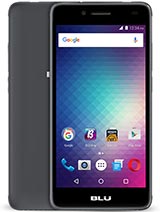
Studio C 8+8 LTE
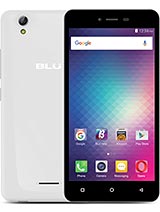
Studio M LTE
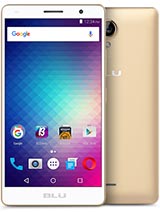
Studio G Plus HD
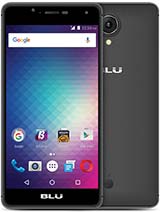
R1 HD
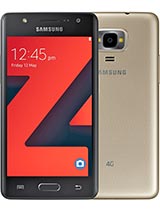
Z4