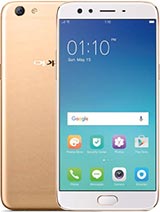
BLU Studio G Plus HD review
The BLU Studio G Plus HD was a budget device eight years ago and has aged poorly. It suits only the most basic user in a market without 4G coverage, or someone who absolutely needs dual SIM and is willing to accept severe slowdowns. Anyone with a real budget should look elsewhere—even used phones from 2018 onwards offer better performance, modern security, and faster connectivity at similar or lower prices.
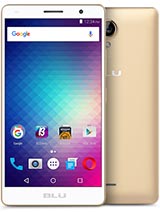
This review is written with AI assistance from BLU’s published specifications and public benchmark data for the BLU Studio G Plus HD, and the rating is spec-based. GoSolo does not physically test devices; where we estimate real-world behaviour such as battery life or charge time, we say so. How we rate phones.
Overview
The BLU Studio G Plus HD is a bare-bones budget phone from 2016 with a 5.5-inch display and 1GB RAM running Android 6.0—adequate for light use and calls, but underpowered and outdated even by 2016 standards. At its launch price, it was a compromise device that cut corners on every front, and today it is only worth considering if you need a simple dual-SIM phone with no budget at all.
Design & Build
At 148.7 x 77.4 x 8.9 mm and 189g, the Studio G Plus HD is a chunky brick by modern standards, yet still larger and heavier than flagship phones today. The 8.9mm thickness and plastic construction are typical of budget phones from 2016, and while the color options (Gold, Gray, Rose Gold) try to echo premium aesthetics, the overall effect is distinctly dated. The dual-SIM slot is genuinely useful for international users or anyone managing two phone numbers, but there is nothing remarkable about the industrial design itself.
Display
The 5.5-inch IPS LCD screen with 720 x 1280 resolution and 267 ppi is unspectacular. By 2016 standards, a flagship would offer Full HD (1080p) at this size; BLU went budget and it shows. The pixel density is just barely acceptable for text readability at arm's length, but fine details are noticeably soft. IPS LCD gives decent viewing angles and color reproduction, which is the one bright spot here. For basic email, messaging, and web reading, it suffices; watching video or playing games will expose the limitations quickly.
Performance
The MediaTek MT6580 quad-core CPU clocked at 1.3 GHz paired with just 1GB of RAM is underpowered even for a 2016 budget device. Apps will launch slowly, switching between them feels sluggish, and any moderately demanding task—even casual gaming or heavy web pages—will cause noticeable lag and stuttering. The Mali-400MP2 GPU is ancient and weak. There is no meaningful performance headroom; this phone is built for nothing more than calls, basic texting, and occasional light web use. Anyone accustomed to even mid-range phones from the same era will feel the slowdown immediately.
Software
Android 6.0 Marshmallow was current in late 2016, but by any measure today it is ancient. Security patches likely dried up years ago, and the OS itself lacks modern conveniences and security hardening. You will be stuck running legacy apps and missing years of UX and privacy improvements. The 8GB internal storage is cramped; even after the OS takes its share, you will have little room for apps and media. The microSD card slot provides some relief, but it cannot fix the fundamental constraint of tiny RAM and storage for the OS itself.
Camera
Both the 5MP rear and 5MP front cameras are mediocre. The rear does offer autofocus and an LED flash, which is useful in dim light, and it captures basic 720p video. However, 5MP was already a compromise at that price point in 2016, and the lack of detail in low light or at distance is noticeable. Video at only 720p resolution feels particularly limited if you ever want to share clips on modern platforms. The front camera is passable for quick selfies or video calls but nothing more. In bright daylight, stills are acceptably sharp; anywhere else, expect soft, low-detail images.
Battery & Charging
The 2500 mAh battery is tiny by modern standards and was already considered modest in 2016. BLU claims up to 20 hours of talk time on 3G and up to 625 hours of standby, but real-world battery life depends heavily on signal strength and how much you actually use the phone. With weak 3G data speeds and an inefficient CPU, actual days of mixed use probably amount to a single day or less. The specs make no mention of charging wattage, which suggests it is a slow, basic charger—likely 5W via the microUSB port. Heavy users will find themselves tethered to a charger frequently.
Connectivity & Value
This is where the biggest compromise lies. The phone is locked to GSM and 3G HSPA with no 4G LTE whatsoever, meaning mobile internet is limited to roughly 5–21 Mbps at best. By 2016, even budget phones were moving to LTE; BLU skipped it entirely to save cost. This makes web browsing, messaging apps, and any cloud-dependent task frustratingly slow. You get Wi-Fi 802.11 b/g/n, so at home or in coffee shops it is usable, but away from Wi-Fi the phone feels isolated. The inclusion of FM radio and a headphone jack are rare bonuses today, but they do not offset the lack of modern connectivity. For anyone in a market where 3G is phasing out, this phone is already obsolete.
Verdict
The BLU Studio G Plus HD was a budget device eight years ago and has aged poorly. It suits only the most basic user in a market without 4G coverage, or someone who absolutely needs dual SIM and is willing to accept severe slowdowns. Anyone with a real budget should look elsewhere—even used phones from 2018 onwards offer better performance, modern security, and faster connectivity at similar or lower prices.
- Dual SIM with dual standby, useful for travelers or those juggling two carriers without swapping cards
- 5.5-inch IPS LCD display is reasonable in size and has decent viewing angles, even if the 267 ppi is no longer sharp
- Includes a 3.5mm headphone jack and FM radio, conveniences that few budget phones offer anymore
- MicroSD card slot allows storage expansion beyond the tight 8GB base, with microSDXC support
- 1GB RAM with a slow quad-core ARM Cortex-A7 CPU makes everyday tasks like messaging, browsing, and switching apps sluggish—even basic multitasking was a chore by 2016 standards
- No 4G LTE support, stuck on 3G HSPA, which means mobile data speeds are limited to around 5–21 Mbps on a good day—inadequate for video streaming or responsive web use
- 2500 mAh battery is small and the phone weighs 189g, but combined with the inefficient hardware, real battery life likely falls well short of the claimed 20+ hours, especially on 3G
BLU Studio G Plus HD Key Specifications
The essentials at a glance. See the full spec sheet.
| Released | 2016, November. Released 2016, November |
|---|---|
| Display | 5.5 inches, 83.4 cm2 (~72.5% screen-to-body ratio), IPS LCD |
| Resolution | 720 x 1280 pixels, 16:9 ratio (~267 ppi density) |
| Chipset | Mediatek MT6580 (28 nm) |
| RAM & storage | 8GB 1GB RAM |
| Main camera | 5 MP, AF |
| Selfie camera | 5 MP |
| Battery | 2500 mAh |
| Software | Android 6.0 (Marshmallow) |
| Dimensions | 148.7 x 77.4 x 8.9 mm (5.85 x 3.05 x 0.35 in) |
| Weight | 189 g (6.67 oz) |
| Network | GSM / HSPA |
| NFC | No |
| USB | microUSB 2.0 |
BLU Studio G Plus HD FAQ
Common questions, answered from the spec sheet.
Does the Studio G Plus HD support 5G?
No. The Studio G Plus HD tops out at GSM / HSPA, without 5G.
What chipset does the Studio G Plus HD use?
The Studio G Plus HD runs on the Mediatek MT6580 (28 nm).
What display does the Studio G Plus HD have?
A 5.5 inches, 83.4 cm2 (~72.5% screen-to-body ratio) IPS LCD, 720 x 1280 pixels, 16:9 ratio (~267 ppi density).
How big is the Studio G Plus HD battery?
The Studio G Plus HD has a 2500 mAh battery.
Does the Studio G Plus HD have NFC?
No, the Studio G Plus HD does not list NFC support.
Does the Studio G Plus HD support a microSD card?
Yes, the Studio G Plus HD supports expandable storage (microSDXC).
Does the Studio G Plus HD have a headphone jack?
Yes, the Studio G Plus HD has a 3.5mm headphone jack.
Alternatives to consider
If the Studio G Plus HD isn’t quite right, these are the closest calls.
Studio G HD LTE
R1 HD
Grand 5.5 HD
Studio C 8+8
Z4