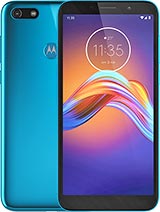
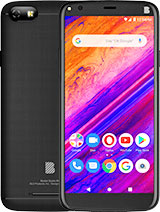
BLU Studio Mini review
This phone suits people who specifically value a removable battery, headphone jack, and minimal software bloat above raw speed or screen quality, and who are comfortable with slow performance and a dim pixel grid in exchange. Everyone else should look at a current budget model, which will feel noticeably snappier and display-wise less dated.
This review is written with AI assistance from BLU’s published specifications and public benchmark data for the BLU Studio Mini, and the rating is spec-based. GoSolo does not physically test devices; where we estimate real-world behaviour such as battery life or charge time, we say so. How we rate phones.
Overview
A 2019 budget phone designed for people who want a compact screen and minimal bloat without paying flagship prices. The specs are genuinely basic—old chipset, 2GB RAM, 720p display—but the removable battery, headphone jack, and FM radio appeal to a shrinking group who prioritize those features over performance or modernity.
Design & Build
The Studio Mini is genuinely handy. At 187 grams and 10.4mm thick, it feels light in the hand and fits one-handed without stretch. The 5.5-inch form factor sits in that rare sweet spot where you can use it all day without shoulder fatigue. Dual Nano-SIM slots mean it works well for people managing two phone numbers on one device—common in markets where work and personal lines are kept separate. The removable battery is a rarity now and matters if your region has spotty power or if you want to swap in a fresh cell to extend usage. The trade-off is obvious: this design philosophy comes from 2015 to 2017, not 2019, and it shows in the plastic build and lack of any water resistance or modern finish.
Display
A 720p IPS panel on a 5.5-inch screen is the weak point here. At 293 ppi, text and icons lack sharpness compared to what most people are used to in 2024. Lines stay visible, edges stay visible. Scrolling web pages or reading small type will feel gritty. The 18:9 ratio is standard for the era, and IPS brightness and colour are fine for outdoor readability, but the resolution itself has not aged well. Rivals at this price now deliver 1080p or even 1440p. This is a compromise you feel every day.
Performance
The Cortex-A55 at 1.6 GHz and 2GB RAM place this phone squarely in the entry-level camp, even for 2019. Browsing, messaging, and light social media work, but expect stutters when opening apps, switching between them, or running anything more demanding. Gaming is out. Video editing or photo processing will frustrate. The IMG8322 GPU does not add enough juice to mask the CPU bottleneck. By today's standards—where even €100 phones ship quad-core or better—this will feel noticeably slow. The 32GB storage leaves little room after Android 9 (which is now five years old), and the microSD slot helps, but performance does not improve with a card.
Camera
The 13MP main sensor with autofocus and LED flash is functional but unremarkable. Daylight shots are acceptable, but night mode does not exist, and low light will look soft and noisy. The 8MP selfie is adequate for video calls and casual snaps. Video is capped at 1080p@30fps, which is fine for clips but not cinematic. For the €70 price point in 2019, this was acceptable; today it is a liability because competitors at similar prices now deliver noticeably sharper lenses and computational photography. Do not expect impressive detail or colour accuracy.
Battery & Charging
The 3000 mAh removable cell pairs with the old, power-hungry chipset to deliver roughly 12 to 14 hours of mixed use—watchable video, web browsing, calls, messaging. Power efficiency was not a priority in this era. Fast charging does not exist (no charging speed is specified, so assume basic microUSB at standard speeds). The removable battery is the saving grace: if you carry a spare and can swap it in an afternoon, you add hours to your day. But if you rely on a wall outlet, you will need to charge every night.
Software
Android 9 Pie shipped in 2018; by 2019 launch, it was already aging. Security patches and OS updates for this phone likely ended years ago. Modern apps increasingly drop support for Android 9, so future compatibility is uncertain. The base installation leaves minimal breathing room on the 32GB drive, forcing users onto the microSD slot fast. BLU's software overlay is light, which is a plus, but you are running a phone with a five-year-old OS and minimal ongoing support.
Value & Verdict Context
At €70 in 2019, the Studio Mini was honest: you got a small, light phone with a headphone jack and removable battery for people who explicitly did not want a modern flagships's bells and whistles. Today, discontinued and old, it has no reason to be anyone's first choice unless they are building a retro collection or live in an area where used phones are the only option and this shows up cheap. The specs were already behind in 2019, and time has not been kind. A modern budget phone—even at the same price—will feel faster, display sharper, and last longer between charges. The removable battery and jack are nice-to-haves, not dealbreakers in 2024.
Verdict
This phone suits people who specifically value a removable battery, headphone jack, and minimal software bloat above raw speed or screen quality, and who are comfortable with slow performance and a dim pixel grid in exchange. Everyone else should look at a current budget model, which will feel noticeably snappier and display-wise less dated.
- Removable battery and microSD slot in an era when even budget phones drop them
- Headphone jack and FM radio still intact
- Compact for a 5.5-inch phone at 187g, pocketable without effort
- Dual SIM support for regional users or those managing work and personal lines
- The 1.6 GHz Cortex-A55 and 2GB RAM were dated even in 2019; everyday tasks like app-switching and web browsing will feel slow by today's standard
- 720p display on a 5.5-inch screen leaves text noticeably pixelated—293 ppi is well below the 300+ threshold where the eye stops seeing grain
- 3000 mAh battery paired with an inefficient older chipset means roughly 12 to 14 hours of mixed use, not all day
BLU Studio Mini Key Specifications
The essentials at a glance. See the full spec sheet.
| Released | 2019, September. Released 2019, September |
|---|---|
| Display | 5.5 inches, 78.1 cm2 (~72.5% screen-to-body ratio), IPS LCD |
| Resolution | 720 x 1440 pixels, 18:9 ratio (~293 ppi density) |
| RAM & storage | 32GB 2GB RAM |
| Main camera | 13 MP, AF |
| Selfie camera | 8 MP |
| Battery | 3000 mAh |
| Software | Android 9.0 (Pie) |
| Dimensions | 150.5 x 71.5 x 10.4 mm (5.93 x 2.81 x 0.41 in) |
| Weight | 187 g (6.60 oz) |
| Network | GSM / HSPA / LTE |
| NFC | No |
| USB | microUSB 2.0 |
BLU Studio Mini FAQ
Common questions, answered from the spec sheet.
Does the Studio Mini support 5G?
No. The Studio Mini tops out at GSM / HSPA / LTE, without 5G.
What display does the Studio Mini have?
A 5.5 inches, 78.1 cm2 (~72.5% screen-to-body ratio) IPS LCD, 720 x 1440 pixels, 18:9 ratio (~293 ppi density).
How big is the Studio Mini battery?
The Studio Mini has a 3000 mAh battery.
Does the Studio Mini have NFC?
No, the Studio Mini does not list NFC support.
Does the Studio Mini support a microSD card?
Yes, the Studio Mini supports expandable storage (microSDXC).
Does the Studio Mini have a headphone jack?
Yes, the Studio Mini has a 3.5mm headphone jack.
Alternatives to consider
If the Studio Mini isn’t quite right, these are the closest calls.
Studio Mega 2019

G5 Plus
Vivo X5
Vivo XL5
J2