BLU Tattoo review
This phone is not for anyone in 2025. It is discontinued, obsolete by network standards, and a collector's piece at best. If you find one in a drawer, it is a nice reminder of how far mobile technology has moved in fifteen years; if you are actually shopping for a device, do not waste a second on it.
This review is written with AI assistance from BLU’s published specifications and public benchmark data for the BLU Tattoo, and the rating is spec-based. GoSolo does not physically test devices; where we estimate real-world behaviour such as battery life or charge time, we say so. How we rate phones.
Overview
The BLU Tattoo is a 2010 feature phone with a 2-inch screen, 750 mAh removable battery, and basic GSM connectivity—a relic from the pre-smartphone era that offers nothing to a modern buyer but historical curiosity value.
What this phone is
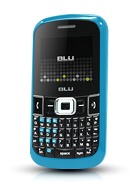
The Tattoo is a decade-old GSM feature phone, not a smartphone. It launched in mid-2010 when the iPhone 4 already existed, positioning itself as a budget, colorful alternative for calls, texts, FM radio, and MP3 playback. By 2010 standards it was ordinary—a bare-bones candybar with no ambitions beyond basic mobile communication. Today it is a historical artifact.
Design & build
At 104g and 13.7mm thick, the Tattoo is compact and pocket-friendly by any era's standard. The colorway options (black, white, blue, pink, yellow, green) hint at the playful identity the brand was chasing. The removable battery was standard then and a practical advantage if you needed spare power. Beyond those surface traits, there is nothing to unpack: it is what a budget phone looked like in 2010.
Display
A 2.0-inch TFT screen with 220 x 176 pixel resolution and 65K color support was acceptable for a phone of that era—enough to read SMS and navigate simple menus. By today's standards it is unusable for anything beyond extremely basic tasks. The pixel density is so low that text looks chunky and any image is barely recognizable.
Camera & features
The 0.1-megapixel CIF sensor captures images so crude that calling them photos is generous. There is no video recording, no front-facing camera, and no autofocus. The camera exists mainly as a checkbox on the spec sheet. The phone does offer an MP3 player, organizer, predictive text input, and FM radio—genuinely useful for 2010, entirely irrelevant now.
Connectivity & battery
GSM-only networking means it cannot connect to modern 3G, 4G, or 5G networks. Even if you turned it on today, most carriers have shut down their 2G infrastructure entirely, so it would be a paperweight. The 750 mAh battery claims 6 hours of talk time and up to 450 hours of standby—figures that are believable for such a frugal device. Storage is limited to 16MB internal plus microSD expansion, but useless when the phone cannot access the internet or modern apps.
Why it matters (and doesn't)
The Tattoo is a fossil. It represents a time when phones did one job—make calls and send texts—and did it well enough. It has no operating system to speak of, no app ecosystem, no touchscreen, and no way to survive in a world that abandoned 2G networks over a decade ago. It belongs in a museum or a personal collection of tech nostalgia, not in anyone's pocket as a working device.
Verdict
This phone is not for anyone in 2025. It is discontinued, obsolete by network standards, and a collector's piece at best. If you find one in a drawer, it is a nice reminder of how far mobile technology has moved in fifteen years; if you are actually shopping for a device, do not waste a second on it.
- Removable battery—a practical feature that disappeared from modern phones but was invaluable for extended use without electricity access
- Colorful design options that gave it personality in an era of silver and black
- Genuinely compact and light (104g), fitting easily into any pocket
- GSM-only; incompatible with modern cellular networks that have phased out 2G coverage worldwide
- Meaningless storage (16MB) and no modern connectivity (no Wi-Fi, no 3G/4G/5G) render it offline and locked out of the internet
- Feature phone OS with no apps, no smartphone capabilities, and no security updates—a functional dead end even as a backup device
BLU Tattoo Key Specifications
The essentials at a glance. See the full spec sheet.
| Released | 2010, June. Released 2010, June |
|---|---|
| Display | 2.0 inches, TFT, 65K colors |
| Resolution | 220 x 176 pixels |
| RAM & storage | 16MB |
| Main camera | CIF |
| Selfie camera | No |
| Battery | 750 mAh |
| Software | Android |
| Dimensions | 111 x 56 x 13.7 mm (4.37 x 2.20 x 0.54 in) |
| Weight | 104 g (3.67 oz) |
| Network | GSM |
| USB | Proprietary |
BLU Tattoo FAQ
Common questions, answered from the spec sheet.
Does the Tattoo support 5G?
No. The Tattoo tops out at GSM, without 5G.
What display does the Tattoo have?
A 2.0 inches TFT, 65K colors, 220 x 176 pixels.
How big is the Tattoo battery?
The Tattoo has a 750 mAh battery.
Does the Tattoo support a microSD card?
Yes, the Tattoo supports expandable storage (microSD (dedicated slot)).