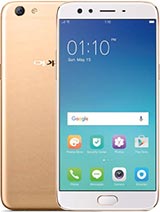
BLU Vivo 5R review
The Vivo 5R made sense for ultra-budget dual-SIM shoppers in 2016 who could tolerate a slower processor in exchange for expandable storage and a second SIM slot. Anyone else would have been better served by a Snapdragon-based competitor, and today it's simply an aging budget phone with no practical reason to choose it over any current-generation device, even at the entry level.
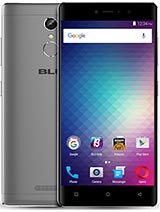
This review is written with AI assistance from BLU’s published specifications and public benchmark data for the BLU Vivo 5R, and the rating is spec-based. GoSolo does not physically test devices; where we estimate real-world behaviour such as battery life or charge time, we say so. How we rate phones.
Overview
The BLU Vivo 5R is a budget mid-ranger from 2016 with a competent 5.5-inch 1080p display and decent build, but it's held back by an entry-level MediaTek chipset and LTE Cat4 connectivity that were already long in the tooth even at launch. For its time it offered decent value as a dual-SIM option with a headphone jack, but the hardware foundations were weak enough that it's now just an old phone with little reason to revisit.
Design & Build
At 166g and 8.3mm thick, the Vivo 5R sits comfortably in the hand for a mid-range 5.5-incher. The dual-SIM and micro-SIM setup was practical for travelers and international users, though the trade-off of losing a dedicated microSD slot sidecar stung. The fingerprint sensor on the rear was a reasonable cost-cut compared to front-facing rivals, placing it where your finger naturally rests. Build quality was adequate but unremarkable for 2016—no IP rating, no standout materials, just a phone that felt like it cost $200-250 and held up day-to-day without impressing anyone.
Display
The 5.5-inch IPS LCD hitting 1080p and 401 ppi density was standard fare for mid-range phones in 2016, and it delivered what you'd expect: good viewing angles, reasonable color accuracy, and acceptable brightness in daylight. It's not a display that jumps out as a strength, but it's not a weakness either. By that year's standards, a 71.4 percent screen-to-body ratio was ordinary; modern flagships would push past 85 percent within a few years.
Performance
The MediaTek MT6753 at 1.3GHz was a budget chip even when this phone launched. Rivals like the Snapdragon 430 and 650 already offered faster single-core and multi-threaded performance in the same price range, and that gap showed in everyday use: apps took noticeably longer to open, gaming stuttered at anything demanding, and multitasking felt sluggish. Android 6.0 shipped unadorned and bloat-free enough, but software couldn't paper over the chipset's limitations. By 2017, this processor was obsolete, and by 2020, it struggled even with basic tasks.
Camera
The 13MP main camera with f/2.0 aperture and PDAF was respectable on paper for 2016, but execution was mediocre. Daytime shots held reasonable detail and the LED flash was bright enough indoors, but low-light performance fell apart quickly—noise crept in aggressively, and HDR processing was slow and unreliable. The 1080p@30fps video was standard but unstaibilized, making handheld footage look jittery. The 8MP front camera with LED flash did the job for selfies and video calls, but nothing about either camera made them standouts even at the price.
Battery & Charging
The 3150mAh capacity was tight for a 5.5-inch phone, and real-world stamina fell short of BLU's optimistic 16-hour 3G talk time claim. Heavy users would hit a warning by late afternoon; moderate use could squeeze past a full day if you weren't streaming or gaming much. No fast charging is listed, so the microUSB port likely took hours to refill. Contrast this to rival budgets that pushed 4000mAh and beyond, and the battery weakness becomes clear.
Software
Android 6.0 Marshmallow arrived on this phone before Android 7 was even announced, putting it ahead of competitors at launch. But BLU's update track record was spotty, and security patches were infrequent; by 2017, you'd have been lucky to receive Android 7, and most units stalled on Marshmallow for the rest of their lives. The OS felt lean and responsive at the start, but without timely updates, the phone aged poorly in terms of security and compatibility.
Value & Context
In late 2016, the Vivo 5R sat in a crowded budget-to-mid tier where Motorola, Lenovo, and even OnePlus were fighting for attention with faster chips and comparable prices. The dual-SIM and headphone jack were genuine conveniences, but the MediaTek processor and LTE Cat4 connectivity handicapped it against Snapdragon-based rivals that cost the same or less. It was a phone that appealed to budget-conscious dual-SIM buyers who could live with slower performance, not a standout value proposition even at launch. Today it's thoroughly obsolete—Android security stopped in 2017, the chipset can't handle modern apps, and there's no reason to revisit it unless you find one for almost nothing as a throwback novelty.
Verdict
The Vivo 5R made sense for ultra-budget dual-SIM shoppers in 2016 who could tolerate a slower processor in exchange for expandable storage and a second SIM slot. Anyone else would have been better served by a Snapdragon-based competitor, and today it's simply an aging budget phone with no practical reason to choose it over any current-generation device, even at the entry level.
- Dual-SIM and microSDXC card slot for expansion, a practical combo at the budget level
- 5.5-inch 1080p IPS display with decent viewing angles and brightness typical of that era
- Rear-mounted fingerprint sensor, a nice-to-have convenience feature at the budget tier in 2016
- Compact and light at 8.3mm thick and 166g, easy to handle for a 5.5-inch phone
- MediaTek MT6753 octa-core 1.3GHz was underpowered even in 2016; rivals at the same price point had faster Snapdragon options
- LTE Cat4 maxes out at 150Mbps download, a notable lag behind the Cat6 and Cat9 speeds competitors already offered
- 3150mAh battery is lean for a 5.5-inch phone; real-world use fell short of the claimed 16-hour 3G talk time
BLU Vivo 5R Key Specifications
The essentials at a glance. See the full spec sheet.
| Released | 2016, September. Released 2016, September |
|---|---|
| Display | 5.5 inches, 83.4 cm2 (~71.4% screen-to-body ratio), IPS LCD |
| Resolution | 1080 x 1920 pixels, 16:9 ratio (~401 ppi density) |
| Chipset | Mediatek MT6753 (28 nm) |
| RAM & storage | 32GB 3GB RAM |
| Main camera | 13 MP, f/2.0, 1/3.1", 1.12µm, PDAF |
| Selfie camera | 8 MP |
| Battery | 3150 mAh |
| Software | Android 6.0 (Marshmallow) |
| Dimensions | 154.5 x 75.6 x 8.3 mm (6.08 x 2.98 x 0.33 in) |
| Weight | 166 g (5.86 oz) |
| Network | GSM / HSPA / LTE |
| NFC | No |
| USB | microUSB 2.0, OTG |
BLU Vivo 5R FAQ
Common questions, answered from the spec sheet.
Does the Vivo 5R support 5G?
No. The Vivo 5R tops out at GSM / HSPA / LTE, without 5G.
What chipset does the Vivo 5R use?
The Vivo 5R runs on the Mediatek MT6753 (28 nm).
What display does the Vivo 5R have?
A 5.5 inches, 83.4 cm2 (~71.4% screen-to-body ratio) IPS LCD, 1080 x 1920 pixels, 16:9 ratio (~401 ppi density).
How big is the Vivo 5R battery?
The Vivo 5R has a 3150 mAh battery.
Does the Vivo 5R have NFC?
No, the Vivo 5R does not list NFC support.
Does the Vivo 5R support a microSD card?
Yes, the Vivo 5R supports expandable storage (microSDXC (uses shared SIM slot)).
Does the Vivo 5R have a headphone jack?
Yes, the Vivo 5R has a 3.5mm headphone jack.
Alternatives to consider
If the Vivo 5R isn’t quite right, these are the closest calls.
R1 HD
Energy Diamond Mini
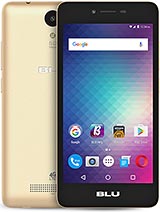
Studio G HD LTE
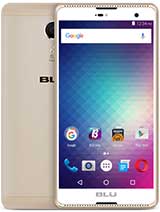
Grand 5.5 HD
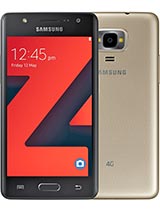
Z4