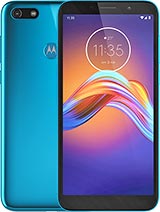
BLU Vivo XL5 review
This phone suits someone with absolutely minimal needs and a tiny budget who values screen size and does not expect smooth performance; everyone else should spend a few dollars more on a used mid-range phone from a more recent year, which will be faster, more secure, and have a clearer display.
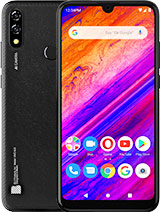
This review is written with AI assistance from BLU’s published specifications and public benchmark data for the BLU Vivo XL5, and the rating is spec-based. GoSolo does not physically test devices; where we estimate real-world behaviour such as battery life or charge time, we say so. How we rate phones.
Overview
The BLU Vivo XL5 is a big, budget-friendly phone from 2019 that prioritizes screen real estate over performance or camera quality. It's decent value for someone who just needs calls, texts, and basic apps on a large display, but the 720p resolution, weak processor, and dated Android 9 make it feel bargain-basement today.
Design & Build
The Vivo XL5 is a straightforward slab: 161.4 x 78 x 9.6 mm, 181g. It's neither slim nor light by today's standards, but for a 6.3-inch phone, the 181g weight and under-10mm thickness feel balanced and not burdensome. The body specs don't mention material or finish, so assume plastic throughout—standard for this tier in 2019. Dual Nano-SIM slots made sense for markets where people juggle carriers or work/personal lines, and the inclusion of a headphone jack and FM radio showed BLU catering to buyers in regions where those still mattered. By 2024, both are relics, but they were not unreasonable calls five years ago.
Display
The 6.3-inch IPS LCD panel uses a 19:9 aspect ratio and 720 x 1520 resolution, which works out to 267 ppi. That density is the weak point. At arm's length, you will see the pixel grid, especially on text and UI elements. For comparison, budget phones in 2019 were already moving to 1080p at this size, and rivals cost no more. The 78.7% screen-to-body ratio is ordinary for a 6.3-inch phone; BLU did not cram the display edge-to-edge like flagships do, so bezels are visible. IPS LCD color reproduction is fine and viewing angles are decent, but the low resolution undercuts what should be the phone's main selling point on paper.
Performance
An octa-core 1.6 GHz Cortex-A55 with the IMG8322 GPU and 3GB RAM is decidedly entry-level, even for 2019. The A55 cores are power-efficient but not quick, and 3GB of RAM leaves little headroom once the OS and a few apps are loaded. Expect lag when switching between apps, stuttering in heavy games, and general sluggishness if you multitask. LTE Cat4 tops out at 150 Mbps download, which is adequate for browsing but not speedy by 2019 standards. Performance here is a step below what most buyers shopping mid-range would have chosen; it is the trade-off BLU made to hit a very low price.
Software
Android 9.0 Pie shipped in August 2018, so the Vivo XL5 arrived with a version that was nearly a year old. BLU's track record on timely updates is poor, and this phone was discontinued in 2019, meaning it likely received at most one or two security patches. By 2024, it is severely outdated, missing years of bug fixes and security improvements. If this phone is still in someone's hands, they are on a security risk.
Camera
Both the rear (13MP with autofocus) and front (13MP) cameras shoot 1080p video at 30fps. The rear camera has an auxiliary lens and LED flash, which on paper sounds functional. In practice, 13MP on a budget sensor with basic optics will produce noisy, flat images in low light and unremarkable daylight shots. No ultra-wide, no night mode, no computational photography—just basic point-and-shoot capture. The front camera is similarly basic. For a 2019 budget phone, this was acceptable but not compelling.
Battery & Charging
The 4000 mAh Li-Po battery is modest for a 6.3-inch display and low-performance chipset. The spec sheet lists no charging wattage, which typically signals a slow, basic charger—likely 5W. With light use on this low-power SoC, the battery could last a full day, but heavy use or video playback will require a top-up. No fast charging was included, so a 5W charger would take about four to five hours for a full cycle. By 2019, rivals at this price were already offering 10–15W charging, so this is one area where the Vivo XL5 definitely fell behind.
Value & Verdict
The Vivo XL5 was a budget phone for markets where price trumped everything else. A 6.3-inch display, dual SIM, and headphone jack offered practical features for a low cost. But the 720p screen resolution, weak processor, minimal RAM, and no fast charging meant buying it meant accepting significant compromises in daily comfort. Even in 2019, more capable alternatives existed for similar money or slightly more. Today, it is a phone that should not be sought out, whether new (unlikely) or used. The security situation alone makes it unsuitable for anyone with internet banking or sensitive apps, and the performance was marginal even five years ago.
Verdict
This phone suits someone with absolutely minimal needs and a tiny budget who values screen size and does not expect smooth performance; everyone else should spend a few dollars more on a used mid-range phone from a more recent year, which will be faster, more secure, and have a clearer display.
- 6.3-inch IPS LCD display gives you genuine screen space for the money, still useful for reading or video despite the low resolution
- Rare headphone jack and FM radio for the era; microSD expansion keeps you from getting stuck with just 64GB
- Dual SIM with LTE support covers most networks in emerging markets at a low price
- 181g weight and 9.6mm thickness keep it reasonably pocketable despite the large frame
- 720p on a 6.3-inch screen is visibly grainy at normal viewing distance (267 ppi); rivals were already hitting 1080p budget screens by 2019
- 1.6 GHz Cortex-A55 octa-core and 3GB RAM struggle with multitasking and anything more demanding than email and social media
- Android 9 shipped in 2019 and received minimal updates; the phone is now several years behind on security patches
BLU Vivo XL5 Key Specifications
The essentials at a glance. See the full spec sheet.
| Released | 2019, July. Released 2019, July |
|---|---|
| Display | 6.3 inches, 99.1 cm2 (~78.7% screen-to-body ratio), IPS LCD |
| Resolution | 720 x 1520 pixels, 19:9 ratio (~267 ppi density) |
| RAM & storage | 64GB 3GB RAM |
| Main camera | 13 MP, AF Auxiliary lens |
| Selfie camera | 13 MP |
| Battery | 4000 mAh |
| Software | Android 9.0 (Pie) |
| Dimensions | 161.4 x 78 x 9.6 mm (6.35 x 3.07 x 0.38 in) |
| Weight | 181 g (6.38 oz) |
| Network | GSM / HSPA / LTE |
| NFC | No |
| USB | microUSB 2.0 |
BLU Vivo XL5 FAQ
Common questions, answered from the spec sheet.
Does the Vivo XL5 support 5G?
No. The Vivo XL5 tops out at GSM / HSPA / LTE, without 5G.
What display does the Vivo XL5 have?
A 6.3 inches, 99.1 cm2 (~78.7% screen-to-body ratio) IPS LCD, 720 x 1520 pixels, 19:9 ratio (~267 ppi density).
How big is the Vivo XL5 battery?
The Vivo XL5 has a 4000 mAh battery.
Does the Vivo XL5 have NFC?
No, the Vivo XL5 does not list NFC support.
Does the Vivo XL5 support a microSD card?
Yes, the Vivo XL5 supports expandable storage (microSDXC).
Does the Vivo XL5 have a headphone jack?
Yes, the Vivo XL5 has a 3.5mm headphone jack.
Alternatives to consider
If the Vivo XL5 isn’t quite right, these are the closest calls.
Vivo X5
G5 Plus
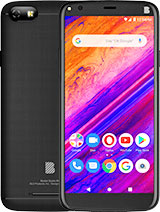
Studio Mini
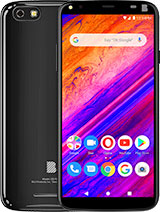
Studio Mega 2019
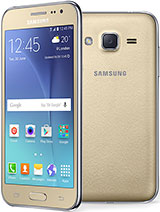
J2