BLU Win JR review
The BLU Win JR suited budget-conscious first-time smartphone users in 2014 who were willing to bet on Microsoft's mobile vision and accept tight RAM and HSPA-only speeds. Today, it is simply not viable; there are no circumstances under which someone should use this phone if an alternative exists, and anyone curious about Windows Phone 8.1 should do so purely for historical curiosity, not as a daily driver."
This review is written with AI assistance from BLU’s published specifications and public benchmark data for the BLU Win JR, and the rating is spec-based. GoSolo does not physically test devices; where we estimate real-world behaviour such as battery life or charge time, we say so. How we rate phones.
Overview
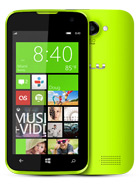
The BLU Win JR is a 2014 Windows Phone 8.1 budget device with a 4-inch TFT display and entry-level Snapdragon 200 chipset—a relic positioned squarely for first-time users or developing markets willing to embrace Microsoft's discontinued mobile ecosystem. It delivers on the basics of portability and dual-SIM flexibility, but the 512MB RAM and aging HSPA-only connectivity already felt limiting even by 2014 standards, and it's a dead platform today.</ai_summary> <parameter name="pros">[ "Lightweight and pocketable at 125g with a 4-inch screen, making it genuinely comfortable to carry one-handed", "Dual SIM support and microSD expansion allow working with two carriers or stretching the tight 4GB storage", "Windows Phone 8.1 offered a distinct, if now-defunct, experience; Live Tiles and integration with Microsoft services appealed to Office-centric users" ]
Design & Build
At 125 grams and 10.6mm thick, the Win JR prioritizes portability over durability. The small 4-inch body fits easily in a pocket and is light enough not to tire the hand during extended use—a real plus for users commuting on tight budgets. The dual mini-SIM slots were useful for switching carriers without hunting for a phone shop. The removable battery was standard in 2014 and meant users could carry a spare or swap it out when the original degraded, a practical feature that flagships have since abandoned. Build quality details are not disclosed in the spec sheet, but the plastic construction typical of this price tier was unremarkable even then.
Display
The 4-inch TFT LCD with 480×800 resolution and 233 ppi sits at the lower end of usability for 2014. Colors were muted compared to AMOLED or IPS panels, and the 57% screen-to-body ratio meant substantial bezels—a waste of the compact footprint. That said, the modest resolution meant snappier rendering on low-power hardware and acceptable text clarity for casual browsing and messaging. Viewing angles were poor, a common weakness of TFT LCDs, making the screen hard to read from anything but head-on.
Performance
The Snapdragon 200 quad-core 1.2 GHz Cortex-A7 with Adreno 302 GPU was entry-level even by 2014 standards. It handled light daily tasks—messaging, calling, simple web browsing—but choked under load. The real bottleneck was the 512MB RAM, which is genuinely embarrassing: even budget Android phones at this price point had begun shipping 1GB, doubling the room for apps and background services. Switching between apps felt sluggish, and any attempt to do more than one thing at once triggered noticeable slowdowns. Gaming or demanding productivity work was off the table.
Software
Windows Phone 8.1 delivered a unique interface with Live Tiles, a genuinely clever take on home-screen widgets, and tight Outlook and OneDrive integration appealed to users already in the Microsoft ecosystem. However, the app store was always thin compared to iOS and Android, and many popular third-party apps never arrived. Today, Windows Phone is completely abandoned—no updates, no security patches, no new apps—making this a museum piece. Users relying on modern services (banking, messaging, navigation) would find themselves locked out or forced to use outdated mobile-web alternatives.
Camera
The 5MP rear camera with autofocus, LED flash, and HDR promised more than it delivered. In bright daylight, it captured acceptable snapshots, but detail was soft and colors were flat even on the tiny display. Low-light performance was poor, a predictable weakness of a small sensor and basic flash. 720p video at 30fps was a bare minimum in 2014; rivals offered 1080p at this price. The VGA front-facing camera was fine for video calls but useless for selfies—a non-issue then, but a sign of how much phone priorities have shifted in a decade.
Battery & Charging
The 1950 mAh removable battery promised up to 700 hours of standby, 19 hours of 2G talk time, or 15 hours on 3G. In practice, light users might eke out a full day, but the small capacity and the inefficiencies of HSPA connectivity meant heavier users would need a midday charge. No fast-charging data was provided, and USB 2.0 (not 3.0) meant a slow trickle. The removable battery was a real advantage if you carried a spare, but today's expectation of multi-day battery life was not met.
Value & Verdict Context
The BLU Win JR was positioned as an entry-point Windows Phone for markets where sub-$100 devices dominate. At launch, it cost less than equivalently specced Android alternatives, making the unique software experience somewhat defensible. Today, it is merely a historical artifact: a device built on an extinct platform with sub-par RAM and no 4G, stranded without security updates or practical app support. Its only genuine strength—portability and removable battery—cannot overcome the crippling software reality.
Verdict
The BLU Win JR suited budget-conscious first-time smartphone users in 2014 who were willing to bet on Microsoft's mobile vision and accept tight RAM and HSPA-only speeds. Today, it is simply not viable; there are no circumstances under which someone should use this phone if an alternative exists, and anyone curious about Windows Phone 8.1 should do so purely for historical curiosity, not as a daily driver."
- 512MB RAM is painfully low even for a budget 2014 device; Android rivals at this price had begun shipping 1GB, and multitasking was a practical nightmare
- HSPA-only connectivity—no 4G LTE—dates the device badly; downloading anything, streaming, or mobile web browsing felt sluggish compared to contemporaries
- Windows Phone ecosystem is completely dead; app selection was already thin in 2014 and is useless today
BLU Win JR Key Specifications
The essentials at a glance. See the full spec sheet.
| Released | 2014, September. Released 2014, September |
|---|---|
| Display | 4.0 inches, 45.5 cm2 (~56.9% screen-to-body ratio), TFT LCD |
| Resolution | 480 x 800 pixels, 5:3 ratio (~233 ppi density) |
| Chipset | Qualcomm Snapdragon 200 (28 nm) |
| RAM & storage | 4GB ROM, 512MB RAM |
| Main camera | 5 MP, AF |
| Selfie camera | VGA |
| Battery | 1950 mAh |
| Software | Microsoft Windows Phone 8.1 |
| Dimensions | 125 x 64 x 10.6 mm (4.92 x 2.52 x 0.42 in) |
| Weight | 125 g (4.41 oz) |
| Network | GSM / HSPA |
| NFC | No |
| USB | microUSB 2.0 |
BLU Win JR FAQ
Common questions, answered from the spec sheet.
Does the Win JR support 5G?
No. The Win JR tops out at GSM / HSPA, without 5G.
What chipset does the Win JR use?
The Win JR runs on the Qualcomm Snapdragon 200 (28 nm).
What display does the Win JR have?
A 4.0 inches, 45.5 cm2 (~56.9% screen-to-body ratio) TFT LCD, 480 x 800 pixels, 5:3 ratio (~233 ppi density).
How big is the Win JR battery?
The Win JR has a 1950 mAh battery.
Does the Win JR have NFC?
No, the Win JR does not list NFC support.
Does the Win JR support a microSD card?
Yes, the Win JR supports expandable storage (microSDXC).